








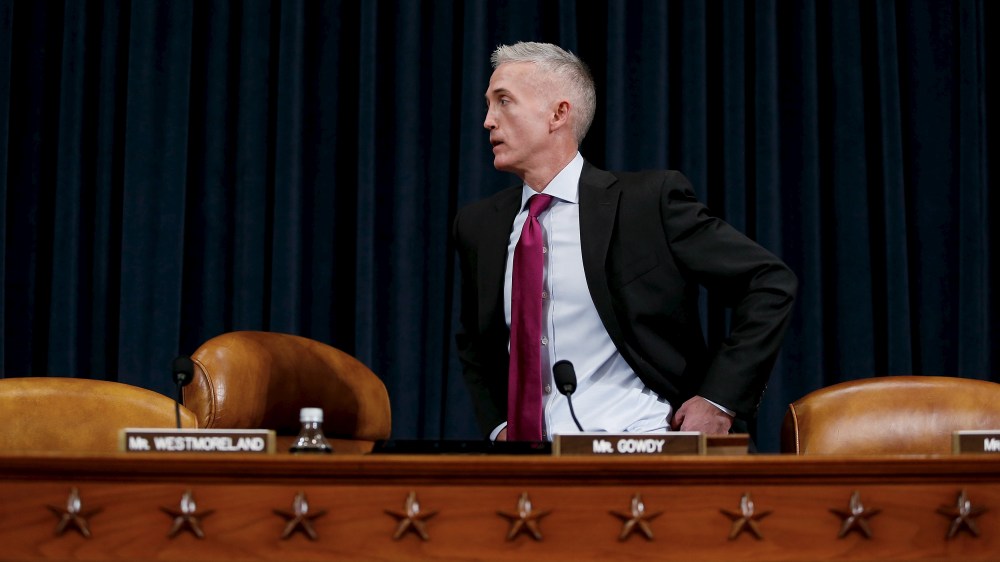
A federal judge appointed by President Barack Obama will oversee the new lawsuit against the House Benghazi Committee and its chairman, Rep. Trey Gowdy.
The judge, Randolph Moss, was assigned the case Tuesday, a day after former Benghazi investigator sued the committee for discrimination and personally sued Gowdy for defamation. He has served on the federal district court for a year, since the Senate confirmed him by a vote of 54 to 45 last November.
RELATED: Ex-Benghazi investigator sues Trey Gowdy for discrimination and defamation
Moss previously worked in the Clinton Justice Department and clerked for Supreme Court Justice John Paul Stevens — the kind of federal government experience that will be relevant to key controversies in the Benghazi case.
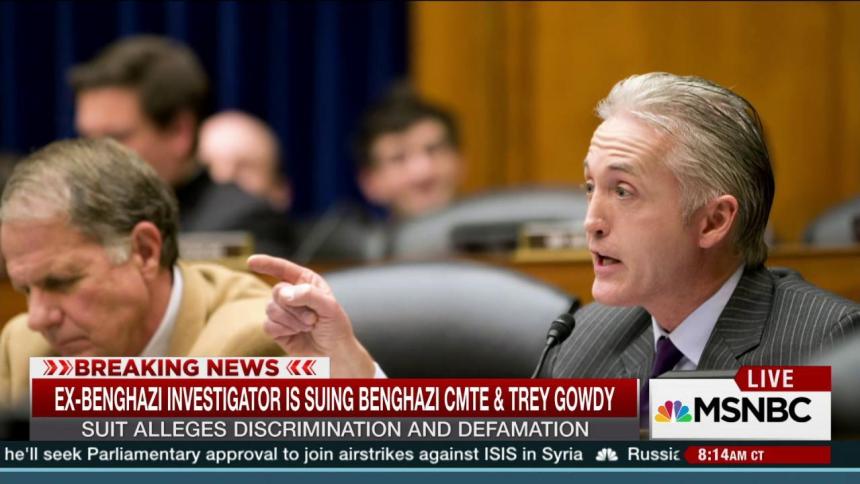
Podliska alleges the House committee had a political agenda against Hillary Clinton, and that senior staff retaliated against him over that agenda and his absence from the committee for Air Force reserve duties. The committee categorically denies those allegations.
In a statement to MSNBC Monday, spokesman Jamal Ware argued the lawsuit strikes “at the heart of the committee’s legislative functions” — alluding to a legal defense that courts cannot meddle in certain activities reserved to the Congress.
Some of the first disputes Moss must decide will focus on the clash between Congress’s constitutional powers and an individual’s rights, including protections Podliska says he is entitled to as a member of the military. In a typical civil lawsuit, both sides would be forced to provide extensive information through the discovery process. But a Congressional Committee may argue it should be exempt from such obligations when private legislative functions or national security are involved.
The suit also personally sues Gowdy for defamation, alleging his accusations that Podliska mishandled classified information on the committee were false and malicious. As a member of Congress, however, Gowdy may seek protection from the Constitution’s “speech and debate clause,” which protects a wide range of speech and actions by legislators.
RELATED: Trey Gowdy defends Benghazi hearings In his work as assistant attorney general for the Clinton Justice Department, Moss ran the office which analyzes legal limits on federal government power, the Office of Legal Counsel, offering an immersion in issues like constitutional boundaries and separation of powers between the three branches of government. In electoral politics, he also volunteered for both Obama presidential campaigns, focusing on election law, provided paid counsel to the John Kerry presidential campaign, and worked on the “vice-presidential public records vetting team” for Kerry’s campaign, (according to Moss’s judicial nomination filing with the U.S. Senate). Moss also did volunteer work for Gary Hart’s 1984 presidential campaign, and has fundraised for Democrats like Chris Van Hollen and John Hickenlooper. While the government and political experience of judicial nominees are extensively scrutinized, the hottest legal issues in the Benghazi case may be more constitutional than partisan. A precedent limiting the confidentiality of a congressional committee or bolstering immunities for a member of Congress, for example, could endure far longer than a decision suggesting conclusions about the political bias or independence of the Benghazi Committee itself, which is scheduled to disband 30 days after it issues its final report.
Ari Melber
Ari Melber, an Emmy Award-winning journalist, writer and attorney, is the host of “The Beat with Ari Melber” airing nightly at 6 p.m. ET on MSNBC. He also serves as MSNBC’s chief legal correspondent and an NBC News legal analyst. Before joining MSNBC, Melber practiced First Amendment law and served as a legislative aide in the U.S. Senate. He received a J.D. from Cornell Law School and is a member of the New York Bar. Recommended


