








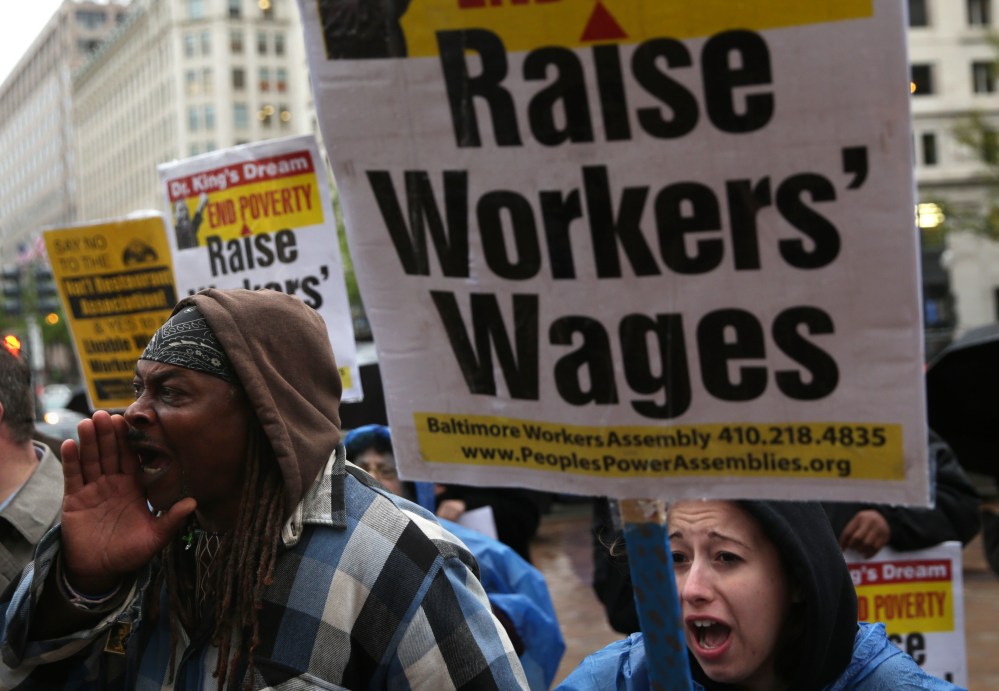
The Obama administration says they are considering delaying another promised action for a key Democratic constituency. A federal regulation that is on the books and set to extend minimum wage and overtime laws to home care workers in January may be postponed, the Department of Labor tells msnbc.
The Department of Labor says it is receiving letters requesting the rule be implemented in January as scheduled, while also receiving letters requesting a delay. “We are carefully considering these requests,” Department of Labor Spokesperson Jason Surbey said in an email.
While it might seem like an innocuous statement, the fact that the administration is even considering requests to delay the pay rules indicates they have moved away from their stated position that this was settled policy. Secretary of Labor Thomas Perez announced the administration’s final rule extending minimum wage and overtime to home care workers last September. The regulations were published last October in the Federal Register, the federal government’s record of all rules and regulations.
The process was set in motion by President Obama, who held a White House event with home care workers in 2011 declaring, “Today, we’re guaranteeing homecare workers minimum wage and overtime pay protection.” Obama’s announcement led to an extensive, nearly two-year process of rule-making that involved the public.
“The DOL public comment period that was extended twice gave stakeholders plenty of time to weigh in on the issue,” Deane Beebe, media director for the home care worker’s group PHI, wrote in an email to MSNBC. “DOL considered their opinions before they published the final rule.” Beebe notes that the rule-making period extended far beyond the typical 30-60 days.
Cathy Ruckelshaus of the National Employment Law Project argued that there would be serious consequences if there were a delay in implementing the regulation already on the books.
“The women who devote their working lives to caring for others can ill afford to continue to be denied their labor rights and fair pay,” said Ruckelshaus. “It is now time to implement these much-needed and long-delayed protections.”
Home care workers bathe, feed, clean and care for the elderly and disabled in their homes and are one of the nation’s fastest growing occupations, but they are some of the few remaining workers still not covered by wage and hour protections first established in the 1930s. They were passed over before when minimum wage and overtime were extended to domestic workers in the 1970s.
Kansas and Oregon have submitted letters requesting a delay of the January 1 deadline. At conference of the National Home and Community Based Services last week, a Powerpoint presentation by the Department of Labor highlighted Oregon’s request for delay. “Governor Kitzhaber states that the rule carries significant policy implications and all of the necessary changes cannot be made and implemented prior to January 1, 2015.” The National Association of Medicaid Directors which represents state Medicaid programs has requested an 18-month delay in the new pay rules. In a letter to the Obama administration, the group argues that “many states are increasingly concerned that the tools and technology to comply with the rule do not exist in some areas and may require a significant investment of resources in other areas.” Public funding pays for three-quarters of home health care services. Home care workers are key members of President Obama’s winning electoral coalition— more than 90% are women and a majority are African-American, Latino, and Asian-American. These were the crucial voters that helped Obama win the White House twice. As he was preparing for his first presidential bid in 2007, Obama spent a day with SEIU home care worker Pauline Beck. “One of the things I remember about Pauline was her patience,” Obama said of Ms. Beck, who was at the White House in December 2011 for the president’s announcement. “She was patient with me even when I didn’t wring out the mop properly or didn’t shake out the sheets before putting them in the laundry bin.” But if the Obama administration delays labor protections for Beck and the two million other home care workers – will this key element of the Obama coalition continue to have patience with the president?
Krystal Ball
Anne L. Thompson Recommended


