








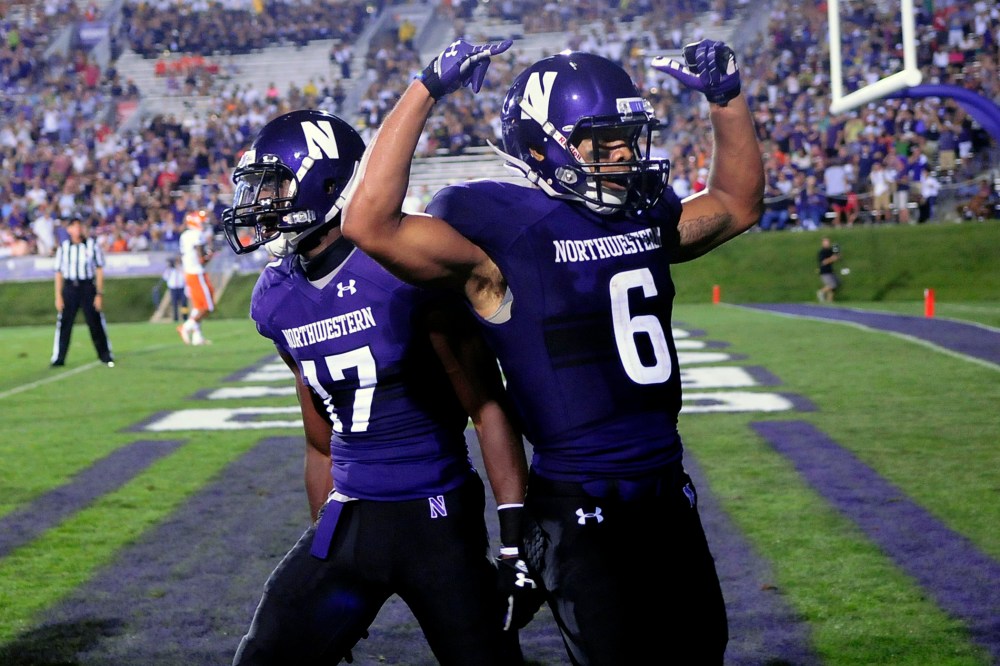
Under American labor law, a vote to unionize is theoretically supposed to mark the end of a labor struggle. But for the NCAA Division I football players at Northwestern University, Friday’s vote is just one scene in a much longer drama.
Last month, National Labor Relations Board Regional Director (NLRB) Peter Sung Ohr ruled that Northwestern’s college football team has the legal right to form a union. He ordered an election to be held as soon as possible, and April 25 was the day chosen for student-athletes to vote on unionization. That vote is still taking place, but its legal status is very much up in the air, thanks to an appeal filed by Northwestern’s administration. The ballots the players cast on Friday will remain sealed until the NLRB decides whether to uphold Ohr’s ruling.
That means the outcome of the election could remain secret — and in legal limbo — for months, according to Marquette University labor law professor Paul Secunda.

“There’s no legal status to the vote because the vote won’t be official until the NLRB hears the appeal,” Secunda told msnbc. “And from what I understand, this appeal process could be pretty lengthy.”
Northwestern University argues that players do not have the legal right to form a union because they are students, not employees of the university. If the NLRB rules in favor of the school, then the Northwestern players’ vote will have been meaningless in the eyes of the legal system. Yet it will remain a powerful act of symbolism because it marks the first time college athletes have ever held a vote ordered by one of the federal labor board’s regional offices. The case is already have national reverberations, as legislators in both Connecticut and Ohio debate whether to legislate the question of student-athlete labor rights.
Meanwhile, Northwestern University hasn’t been taking it for granted that the vote will be nullified. Instead, the administration has been waging an aggressive on-campus PR campaign to persuade the football players not to unionize. The team’s coach, Patrick Fitzgerald, has been one of the most outspoken opponents of unionization.
“Understand that by voting to have a union, you would be transferring your trust from those you know — me, your coaches and the administrators here — to what you don’t know — a third party who may or may not have the team’s best interests in mind,” Fitzgerald told the students in an e-mail obtained by The New York Times.
Times reporter Ben Strauss writes that Fitzgerald “framed a vote for the union as a personal betrayal” in his email. Secunda described himself as “flabbergasted” by Fitzgerald’s remarks, which could potentially have legal consequences for the university. “It doesn’t appear, based on what he’s alleged to have said, that he understands that you’re not allowed to engage in intimidation or engage in non-objective predictions about what unionization might lead to,” said Secunda. In an NLRB election, threatening statements from management are seen to contaminate the laboratory conditions of the election, potentially resulting in an unfair labor practice charge (ULP) against the employer and an order to re-do the election. A spokesperson for Northwestern denied the claim that Fitzgerald’s remarks are grounds for a ULP. “Northwestern has conducted its campaign regarding the possible unionization of scholarship football players according to the procedures and rules established by the NLRB,” wrote vice president for university relations Alan K. Cubbage in an email to msnbc. “That includes the statements by Coach Fitzgerald and other University officials.”
Ned Resnikoff is an urban policy analyst, researcher, writer, and editor. His byline has appeared in a variety of publications, including the New York Times, San Francisco Chronicle, Dissent, and The Nation. He writes the newsletter Public Comment, which can be found at publiccomment.blog. Recommended


