








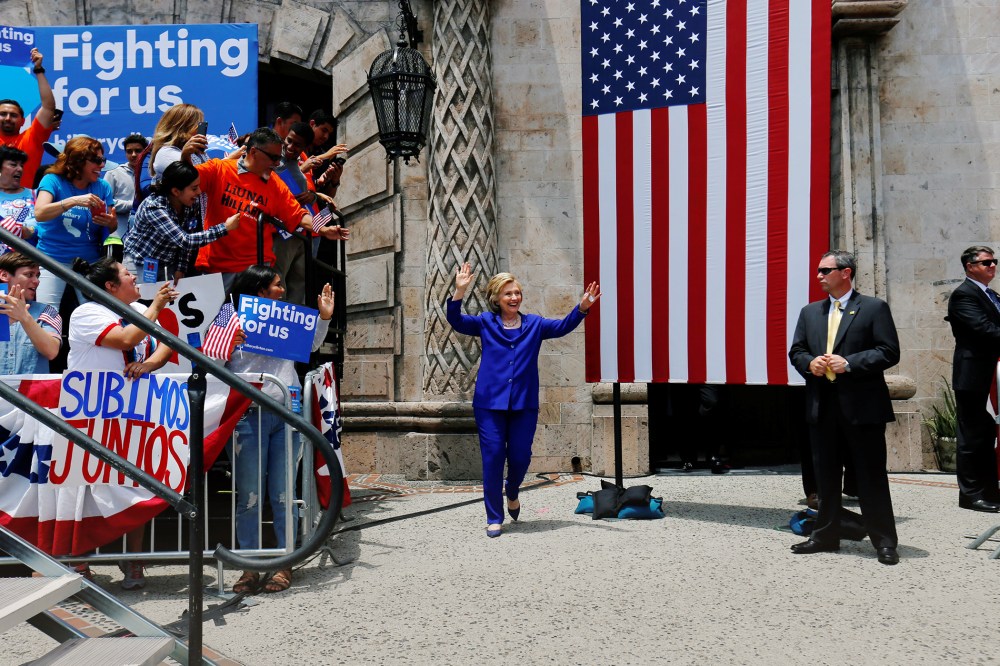
No one wanted Hillary Clinton to win the Democratic nomination Monday night — not even Hillary Clinton.
The Associated Press’ surprise decision to declare Clinton the party’s presumptive nominee the night before voters headed to the polls in six states Tuesday has muddled the impact of Clinton’s historic accomplishment and salted the wounds of Sanders supporters.
The declaration, based on a survey of superdelegates, was quickly followed by other news outlets, including NBC News. It sent reporters scrambling and put both candidates and the rest of the Democratic Party in an awkward position as the race was called when few expected it to end.
For Clinton, this is not how she wanted to become the first woman to be a major political party’s nominee. During a monumental moment, Clinton kept the party under a lid, instead of breaking out the champagne.
RELATED: How Clinton clinched
Although Clinton was on track to win the party’s nomination for months, making a call 24 hours away from all-but-guaranteed clean victory led to a lackluster response. The campaign wanted to wait until after delegates won in Tuesday’s primaries pushed her over a delegate threshold that does not include controversial superdelegates.
But the campaign was stuck.
“This is an important milestone, but there are six states that are voting Tuesday, with millions of people heading to the polls, and Hillary Clinton is working to earn every vote,” said Clinton campaign manager Robby Mook.
Once Clinton passes that pledged delegate threshold, it will be clear she won the primaries and caucus elections held in all 50 states, even though she will still need superdelegates to pass a separate milestone needed to clinch the nomination. Sanders’ only hope at that point would be to have superdelegates overrule the results and the will of the Democratic primary voters — a highly unlikely scenario.
Clinton’s campaign planned a large rally with supporters in Brooklyn Tuesday night to mark the occasion. And though Clinton will still celebrate, the cat being let out of the bag early made the night a bit less momentous.
Party pooping aside, Clinton’s more important concern is how Sanders supporters are reacting to news. So far, it’s not going well.
For Sanders and his diehard fans, the call plays into all of their darkest suspicions about a system they believe is rigged against them, thanks to collusion between Clinton, the media (in this case the AP), and the Democratic establishment (superdelegates).
“This is the perfect symbolic ending to the Democratic Party primary: The nomination is consecrated by a media organization, on a day when nobody voted, based on secret discussions with anonymous establishment insiders and donors whose identities the media organization — incredibly — conceals,” wrote Glenn Greenwald, the liberal journalist who has been sympathetic to Sanders’ candidacy.
Top Sanders aides and advisers called the AP’s call “scandalous” and “appalling” and warned it could suppress the vote. Spokesperson Michael Briggs Monday night slammed the media’s “rush to judgment.”
“Let those people vote and decide before the media tells them that the race is over,” Sanders campaign manager Jeff Weaver said on CNN. “What’s the point of suppressing voter turnout in six states across the country to have a quick news hit that could easily have been done tonight?”
The Vermont senator’s supporters took to social media to express their outrage, and even harassed reporters for calling the race in Clinton’s favor. New York Times reporter Amy Chozick, who wrote the paper’s front page story about Clinton securing the nomination, said she had to stop answering unlisted numbers after receiving three calls from Sanders supporters threatening to hunt her down. The pre-primary call also has effectively put an asterisk on Tuesday’s elections, and perhaps Clinton’s victory overall — at least for a moment. Now, if Sanders loses California, his supporters will allege the media suppressed the vote by discouraging voters from turning out. If Clinton loses California, her allies could also blame the media, but, in her case, for stoking a sense of complacency that kept supporters home. Either way, the legitimacy of the largest contest of the entire primary calendar has been undermined and could be called into question. RELATED: What voters think of the primary process Meanwhile, it’s a bitter denouement for Sanders’ campaign. His David and Goliath candidacy began with big ideas and a focus on substance, but lately has been bogged down in esoteric and process issues. One of his final major acts as a candidate may be fighting the media over differing interpretations of Democratic Party bylaws relating to how superdelegates are counted. The senator says they shouldn’t be counted until the Democratic National Convention in July, the press has always counted them as they make public declarations of support. Either way the outcome — Clinton’s victory — will be the same. Meanwhile, the Democratic National Committee still seems unsure of how to handle Clinton’s presumptive nomination while Sanders remains in the race. They have no good options. Agree that Clinton is the nominee and risk alienating Sanders supporters, whom the party desperately need in November. Avoid calling Clinton the presumptive nominee and look disingenuous. They may wait until President Obama makes his own endorsement of Clinton, which aides say could happen as soon as this week. The clock is ticking on the time the party needs to prepare for the general election and Sanders’ decision to stay has delayed the nominee’s typical takeover of the party machinery.
Alex Seitz-Wald Recommended


