








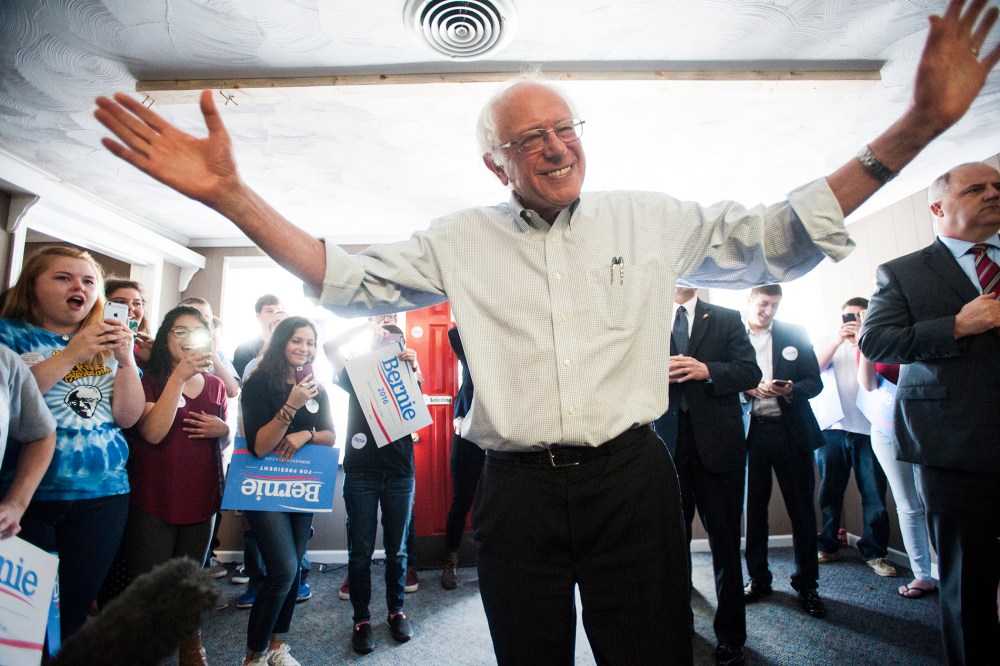
Bernie Sanders’ decision to stay in the Democratic presidential race until the end has complicated what is typically one of the first orders of business for any new presidential nominee: taking over the party apparatus ahead of the national convention.
Donald Trump will soon begin co-opting the Republican National Committee while Democrats wait anxiously in the limbo between the effective end of their primary and its formal conclusion. If Hillary Clinton assumes control of the Democratic National Committee now, that would declare the primary over, which would likely not sit well with Sanders supporters, whom Democrats need in November.
The delay is a nuisance for now, Democrats say. But it would be a catastrophe if they waited until after after the Democratic National Convention, which is the earliest Sanders says he’ll withdraw.
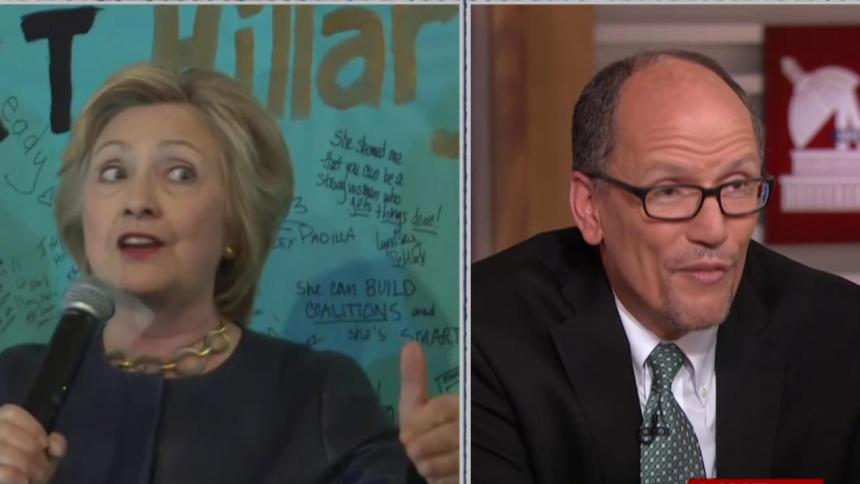
So the DNC and the Clinton campaign will have to execute the merger earlier, with one candidate still in the race and potentially over his fierce objections. But the clock is ticking on the general election, and Democrats are eyeing the day after the California primary as a likely time to end this.
Typically, party nominees move quickly to lead the national parties, which essentially become arms of the campaign.
“In 2000, when I was chair, after [Al] Gore beat [Bill] Bradley in Iowa and New Hampshire, Bradley essentially withdrew. A week later, someone arrived at DNC headquarters and said, ‘Hi, we’re taking over,’” said former Pennsylvania Gov. Ed Rendell, who ran the DNC during the final years of Bill Clinton’s administration. “They really take over. And you know, as DNC chair, that you are now working for the campaign.”
Party chairs usually stay on — and there’s no sign Clinton wants to replace Rep. Debbie Wasserman Schultz — but now the campaign calls the shots.
When Barack Obama sent Paul Tewes to run the DNC in 2008, the former Iowa organizer went about layering his own staffers over existing DNC officials and redirecting virtually every aspect of the party’s work.
Howard Dean, who was chairman at the time, said it was very clear that he was now the one taking the orders. “So I went on a bus tour” to promote Obama, Dean recalled. “Debbie’s staff will not be making the decisions — Hillary’s staff will be making the decisions.”
The transition can be a wrenching process for DNC staffers, who are today fretful about what may happen to them in what is thought to be a few short weeks.
A full house cleaning is not expected. But Clinton will have extraordinary leverage to remake the party as she fits, thanks to the $46 million her joint Victory Fund has raised for the DNC and state Democratic parties.
That money, which makes up a significant portion of the DNC’s incoming cash flow each month, has helped keep the cash-strapped party solvent.
While it’s not usual for one party to have a nominee before the other, it’s less common for a candidate to extend the race — especially to the convention — when he or she has little hope of victory.
But Sanders’ unique small-dollar fundraising machine and commitment to change the party at the convention have kept him alive, and that makes the DNC’s transition process this year especially fraught. Luis Miranda, the DNC’s communications director, said the work the party is doing now would help either candidate. “We’re working with both of our campaigns, and we’ve been building out the infrastructure to make sure that we’re running a strong national campaign,” Miranda said. Sanders and his supporters already have a hair-trigger response to any perceived DNC favoritism towards Clinton, and they may not allow Clinton to take over the party without a fight. Sanders sued the DNC in federal court this year, and just on Friday, he threatened a convention floor fight if they don’t change what he views as an “unfair, one-sided” committee makeup. Waiting until Sanders concedes is out of the question if he makes good on his promise to go to the convention. The convention is the first major endeavor of the nominee, who carefully manages every detail of the show for maximum impact. Democrats are instead discussing June 8. That’s the day after the California primary, when Clinton is likely to have hit the so-called magic number of delegates needed to clinch the nomination. Rendell, who supports Clinton, said the former secretary of state needs to tread carefully. “I think it would be a mistake for them to begin overtly to take over the process. It would tick off the Sanders campaign, it would tick off Bernie, etc., etc. But somewhere along the line, particularly after June 7, they will come in and take over the convention,” he said. Back-channel conversations have already begun between Clinton’s campaign and the DNC and what role the party will play in the general election. These discussions are happening out of sight for now to avoid the appearance of collusion before the party has formally selected a nominee.
Alex Seitz-Wald Recommended


