








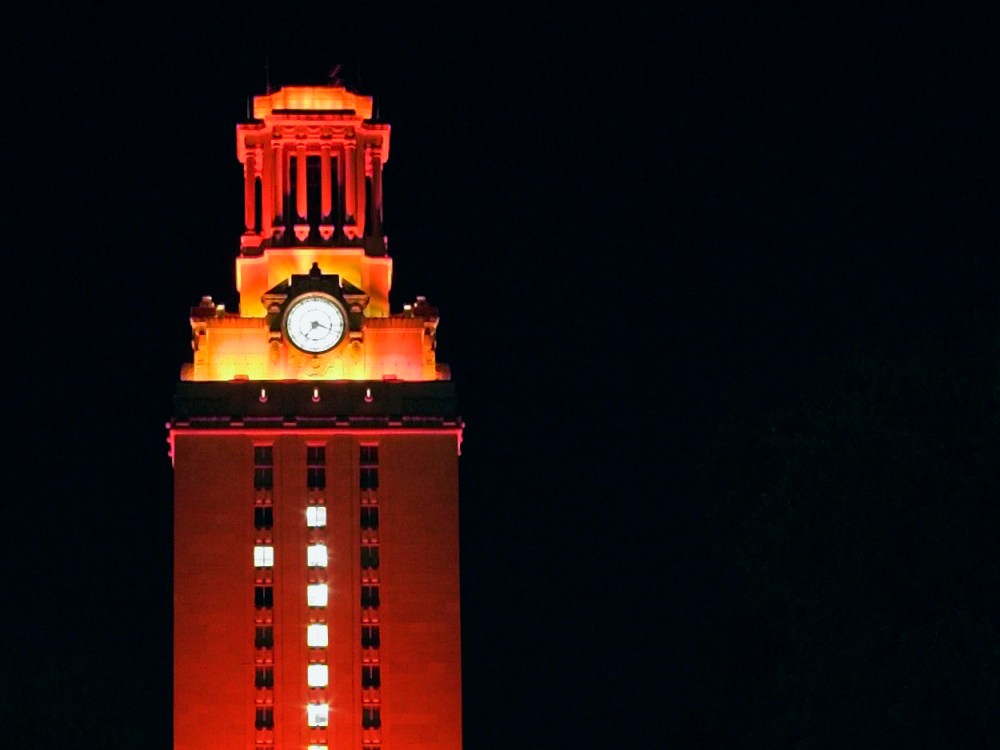
On August 1, 1966, a tragedy that was unthinkable then but all too commonplace now occurred at the University of Texas in Austin. A deranged gunman named Charles Whitman opened fire on innocent people from the top of the school’s iconic clock tower, killing 14 people and wounding dozens of others in what was for many years the worst mass shooting in US history.
Fifty years later, on that very same day, the victims of the massacre will be commemorated for the first time with an official memorial on campus. But that cathartic moment will also coincide with the start of a new law, pushed through the Texas state legislature by conservatives last June, which will allow students to carry concealed handguns on campus. The measure drew a strong rebuke from faculty and students, in addition to over 86,000 signatures on a petition that called it a “direct assault on our free speech rights.”
These events provide the context for “TOWER,” a powerful new documentary about the 1966 UT Austin shooting, which is debuting at SXSW this Sunday. The film, which uses state-of-the-art rotoscoping animation to recreate the chilling events of that day and features real-life interviews with the survivors, is poised to re-open conversations about our country’s propensity for gun violence and how the people affected by it most process their experiences.
RELATED: Is Iowa really giving handguns to children?
“The generation that lived through the tower shooting has realized there was a missed opportunity there,” the film’s director Keith Maitland, who is a Texas native and UT Austin alum, told MSNBC on Friday. He first learned of the massacre as a seventh grader because his history teacher had been a witness. Her first-person perspective fascinated Maitland, who was later frustrated by mainstream preoccupation with Whitman’s motivations and the university’s unwillingness at the time to “engage with its darkest history.” He saw this project as an “opportunity to right that wrong.”
When English professor Lisa Moore first came to UT Austin 24 years ago, the shadow of the Whitman shooting was very much still over the school. The upper deck of the tower remained closed for years, and although the institution had done little to acknowledge what had happened, it was prevalent in student and faculty minds.
“The whole event was just buried,” she told MSNBC on Friday. “I think people were ashamed. I think they thought it made Texas look bad. The assumption was it was better not to talk about it; it would be better not to re-open old wounds.”
But lawmakers’ insistence on backing pro-classroom carry legislation had the unintended effect of galvanizing gun control advocates on campus. While, according to Moore, some of her peers thought that the decision to have the new law go into effect on the anniversary of the 1966 massacre was “shocking,” others believed it’s “not a coincidence, that they wanted to make a point that they can basically force this law on UT, and there’s nothing you can do about it.”
“The reaction on campus was ‘Are you kidding me?’” she said.
Ana Lopez, a 19-year-old pre-med freshman at UT, was stunned to learn about the campus carry law last fall and told MSNBC on Friday that had she been aware of it, she wouldn’t have accepted admission to the school, even though the university had been her top choice.
“I don’t want to be in an unsafe situation where my life is at stake every day,” she said. “I do not feel safe on campus.”
She is a member of Students Against Campus Carry and has petitioned hundreds of her classmates in opposition to the gun law. While there was a minority of students who declined to get involved and at least one who argued that he felt guns on campus made them safer, the overwhelming majority of students she spoke to were mortified about the consequences of “campus carry.” Lopez points out the potential dangers of armed college students drinking, and she believes as a Latina that some ethnic groups on campus could be at greater risk for violence as the law comes into effect.
“My mom and dad are livid — they come with me to rallies, and they support me being an activist,” Lopez said. But she is not naive about the depth of the opposition her side faces, acknowledging that she has had heated clashes with counter-protesters. And even though the legislative process has run its course, she sees real value in getting more students informed and involved, especially in light of the fact that similar laws are being promoted by pro-campus carry advocates around the country.
“If we engage enough students, this is going to become a national issue,” she said. “If I have to walk around campus wearing a bulletproof vest to be able to speak my mind, that’s what I am going to do.”
She cites Moore, whom she studied world literature under, as one of her inspirations. Moore is an active member of Gun-Free UT, an alliance of students, faculty, alumni and parents dedicated to expressing the widespread dissent at the university against the campus carry law. “Not a single department on campus has published a statement saying they are in favor [of it],” said Moore. “We are a university, we are persuaded by rational arguments and data.”
Still, Moore is sympathetic to the concerns of proponents of the bill, especially parents anxious about sending their children to school in a potentially hostile urban setting. But the facts don’t support the premise that civilians with guns are a successful crime deterrent or that supposed “good guys” with guns would be able to effectively disarm a mass shooter.
RELATED: Florida Atlantic University fires professor who questioned Sandy Hook massacre
This is a dichotomy that “TOWER” makes abundantly clear. Most of Whitman’s victims couldn’t even see him, let alone confront him. Claire Wilson James, the first person wounded by Whitman’s shots from the tower, was eight months pregnant. Should she have been carrying a gun? Her boyfriend Thomas Eckman, who was next to her at time, was shot and killed seconds after her. If he had been armed, would that have made a difference? “There is nothing they could have done to prevent getting shot,” Maitland argued. And those police officers and civilians that did initially shoot back didn’t have the vantage point to really connect with the killer. It is also unclear how much accidental collateral damage “the nonstop barrage” of return fire might have caused. “Those bullets had to fall somewhere,” added Maitland. In “TOWER,” Aleck Hernandez Jr., one of the people who was wounded that day, says, “Maybe out of this movie, one potential shooter will have second thoughts.” Maitland’s goal for the project is perhaps less ambitious, but no less important. “I knew from the beginning we were not going to solve the problems of school shootings with this film,” he said. “The most important thing to me is that we start a dialogue and inspire conversation around this subject. And that smarter people than me enact some sort of path forward.” “It’s aimed squarely at high school and college students who live under the threat of the school shooting phenomenon every day,” he added. Meanwhile, although Moore has no way of preventing campus carry from going into effect, that won’t stop her from engaging her students on the issue. “That’s going to become a topic I teach on in every class, every semester,” she said. Although Moore has received some pushback for her vocal opposition to the gun legislation, by and large she says the school’s administration has been supportive of her activism. That has apparently not been the case statewide. “On other campuses, people’s jobs have been threatened,” she said. She said she was recently approached by a younger member of the faculty who wanted to get involved in Gun-Free UT but has resisted because she was “afraid of being a target.” The professor, who has young children, told Moore that she doesn’t know if she can return to the campus next fall and has begun seeing a therapist to grapple with the fear she has of a culture of guns permeating her workplace. Moore says that the professor’s therapist told her that it’s a commonly heard issue. Moore herself is no stranger to threats. She teaches a class on LGBT literature and has had students register for her classes just to intimidate openly gay people. She has also seen her office broken into, her property damaged, her windows spray-painted with messages of hate. “I definitely feel concerned for the safety of [the LGBT] population of students,” she said. But nothing is going to stop her from taking a stand against the campus carry law. “We’ve made it water cooler conversation again … Gun Free UT gives us a platform,” she said. “Our role is to amplify dissent.” As for Maitland, his journey with this material is just beginning. On August 1, he will be launching a new initiative in coordination with UT’s official alumni organization, Texas Exes, called “Beyond the Tower.” It’s an oral history and user-guided documentary that will encompass the perspectives of hundreds of survivors and witnesses to the 1966 shooting. “I want those people to feel heard, and I want those people to have an opportunity to engage in a personal way with their own history,” Maitland said. “Those who ignore their history are bound to repeat it.”
Adam Howard Recommended


