








TEANECK, N.J. — The teenager had a pistol in his pocket, and when the cops came, he bolted.
They chased him into a backyard. He stopped and began to turn. One of the officers, fearing he would shoot, fired his service revolver.
The 16-year-old victim was black. The officer was white. And that gunshot, fired nearly 26 years ago, sparked a cataclysm.
It marked the end of a life, a career and a community’s idealism. It took a terrible toll on the teen’s family, and on the officer, who withdrew for more than two decades before breaking his silence last week.
But the aftershock also opened a long path to healing that remains relevant today, as a wave of unrest over police killings has swept the country, cleaving communities and raising thorny questions about America’s relationship with law enforcement.
TEANECK%20STILL%20STRUGGLES%20TO%20MAINTAIN%20RACIAL%20AND%20ETHNIC%20UNITY%2C%20BUT%20THE%20TOWN%20NOW%20STANDS%20AS%20A%20POSSIBLE%20LESSON%20FOR%20PLACES%20LIKE%20FERGUSON%2C%20NORTH%20CHARLESTON%2C%20CLEVELAND%2C%20BALTIMORE.’
The crisis unfolded in Teaneck, a small suburb five miles from New York City long considered a model of racial harmony. Decades earlier, the township had fought “block-busting,” a ploy by real-estate speculators to induce fear of black homeowners, and had voluntarily integrated its schools, telling the world it welcomed newcomers of all faiths and shades.
Beneath that equanimity, however, was a festering resentment over the predominantly white police force’s treatment of blacks. The bullet that pierced the boy’s heart shattered the façade.
That fatal encounter transformed Teaneck from a symbol of unity into one of intolerance, and plunged it into a long period of self-examination, and, eventually, recovery.
The journey remains unfinished. But Teaneck stands as a possible lesson for communities still roiling from recent police shootings: Ferguson, North Charleston, Cleveland, Baltimore, Chicago.
This wasn’t supposed to happen in Teaneck. The township seemed to have it all: neat neighborhoods of single-family homes, a stable commercial district, solid schools. Decades earlier, the Army Corps of Engineers had picked Teaneck — believed to be named after a Native American term for “villages” — as an archetype of small-town America. But what made this place special in 1990 was its fiercely cultivated image of harmonious multiculturalism.
A quarter of Teaneck’s 38,000 residents were black, many enticed across the Hudson River from New York to pursue middle-class lives. Another third were Jewish. Many minorities were concentrated in small areas, but the mix made most people proud.
Phillip Pannell’s family moved to Teaneck chasing that middle-class dream. But his father, Phillip Sr., struggled with drugs and alcohol, which spun him into a cycle of unemployment and jail that broke the family apart. Phillip, meanwhile, was getting into fights with kids from neighboring Englewood, part of an old rivalry between the towns. The situation worsened when his mother, Thelma, moved him and his younger sister there. As a new student in Englewood, Phillip became a target.
Friends and family said Phillip felt threatened. That, they said, probably explained why, on April 10, 1990, he was carrying a beat-up starter’s pistol, converted to hold bullets, that he’d found among his mother’s things.
Early that evening, a man called Teaneck police and said he’d seen a boy with a gun among kids in a schoolyard. Two officers responded. One of them was Gary Spath, 29, who was born and raised in town and had followed his father onto the force.
He chased Phillip behind a house. In a quick confrontation, Spath opened fire, hitting Pannell in the back.
Some witnesses said the teen appeared to be surrendering. Spath believed otherwise.
“He had a gun in his pocket and he was going to shoot me,” he later testified.
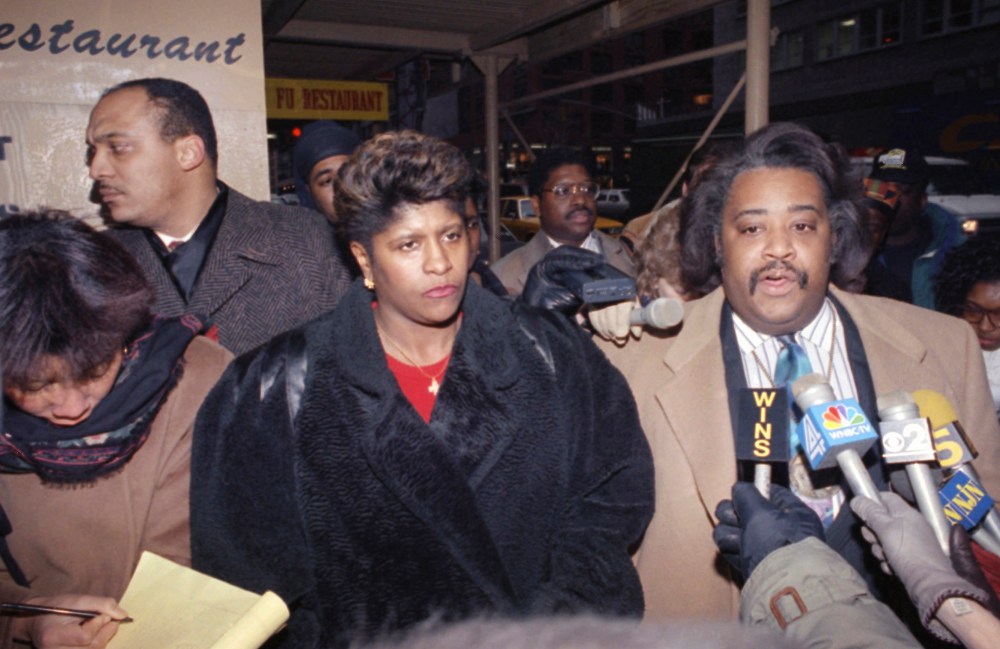
Pannell’s death split residents into camps: those who believed Spath acted properly in response to a grave threat, and those who saw it as the culmination of years of harassment by biased cops. The day after the shooting, a group of black youths overturned police cars and broke shop windows. The national media showed up.
“This really opened the eyes of people,” said Theodora Lacey, a civil rights leader and retired teacher. “There were these sweet young people who had grown up in an integrated setting. So it was just seemingly contrary to what we thought we were teaching and bringing about through integration — that you could have a young, white cop shoot and kill.”
The marches began: college students one day, local and out-of-town activists the next, cops on another. They went on for years as the case progressed through the legal system — a grand jury’s decision not to indict Spath, claims of a botched autopsy, a second that concluded bullet holes showed Pannell’s hands were in the air, a new grand jury’s charging Spath with manslaughter and, finally, Spath’s 1992 acquittal by an all-white jury.
In 1994, Pannell’s family settled a civil rights lawsuit against Teaneck for nearly $200,000. The U.S. Justice Department decided against a criminal case. Eventually, the calls for justice subsided.
But not the soul-searching.
From the first sign of unrest, Teaneck leaders began organizing community meetings, tapping into a long tradition of consensus-building that had helped the township through prior crises, including a 1964 school integration fight. At these forums, students, police, elected officials and civil-rights activists confronted their differences on a range of issues: the distrust between cops and blacks, the dearth of minorities in the police department, institutional racism in the schools, white flight, falling home values. Many whites were surprised to hear blacks’ complaints of everyday racist treatment.
It became clear that while their township was integrated, the people of Teaneck didn’t truly know each other.
A sister’s despair
Natacha Pannell was 13 when she accompanied her mother to Holy Name Hospital and watched doctors pull back the sheet that covered Phillip’s body. Thelma fell to the table; Natacha picked grass out of her older brother’s hair.
They didn’t see the body again for several weeks, at a wake that drew hundreds, including dozens of Phillip’s former classmates as well as firebrand ministers Al Sharpton and Louis Farrakhan. Clergy and activists placed his death on a national list of black and Hispanic people killed by white police officers.
Natacha’s mother withdrew in grief. Her father joined the protesters. Natacha, desperate to understand Phillip’s death, joined him.
The answers didn’t come easily.
On the surface, Natacha seemed to do OK. She graduated high school and college, had a son, and went into community-service work. But she felt out of step with the world: picked on, angry, distrustful.
She and her mother grew distant. Her father, who’d gotten clean after Phillip’s death, returned to alcohol, and for a time was homeless.
Natacha wrestled with guilt. In the weeks before the shooting, she’d seen Phillip looking for the old starter’s pistol. She told him where it was, but made him promise to never take it. “For years, I felt like it was my fault,” she said.
It would take decades to forgive herself.
‘It’s a horrible thing’
Gary Spath, a married father of young children, was suspended with pay after the shooting. Protesters accused him of racism. Jesse Jackson called him an “executioner.” The media examined his service record, and found several commendations but also prior incidents in which he’d fired his weapon without hitting anyone. Spath’s supporters rallied to his side, but the officer himself did not speak publicly, quietly enduring what he later described as “a living hell.”
When the jury acquitted him two years later, Spath held his wife, Nancy, in a long embrace and wept, while Thelma Pannell was escorted from the courtroom, wailing. Afterward, he said his family was praying the Pannells would find peace. He retired on an accidental disability pension, for which he received monthly payments of $3,622.
For a long time, Spath was angry and bitter at having been cast as a racist, trigger-happy cop. Those feelings subsided, but returned whenever he saw his name resurface in local coverage of a police shooting, or a racially charged issue.
His breaking point came in August 2014, when Ferguson, Missouri erupted in riots following a white police officer’s fatal shooting of a black teenager. He saw a lot of similarities with his experience, and was maddened by new mentions of his name in the press. He began to feel the need to tell his story.
%22IT%27S%20WITH%20ME%20EVERY%20DAY%20OF%20MY%20LIFE.%20BUT%20I%20KEEP%20GOING%20FORWARD.%22%20-%20Gary%20Spath’
In a brief interview with NBC News, Spath, now 55 and a grandfather, said he would never get over taking Phillip Pannell’s life, but didn’t regret what he did, because the teen posed an immediate danger.
“As right as I was in the eyes of the law, I’m a human being, and it’s a horrible thing that happened,” Spath said. “But I don’t think I could have responded in any other way.”
He broke his public silence on Wednesday, when he appeared as the keynote speaker at a police union convention in Atlantic City. In a Caesar’s banquet hall, Spath shared what it’s like to be the white officer who kills a young black person.
Growing up in Teaneck felt straight out of Norman Rockwell painting, he said. But the shooting’s aftermath taught him about the brutal intersection of race and politics. He described the second grand jury as a “witch hunt,” recalled out-of-town protesters as “thugs,” and said the media “crucified me.”
Today, he said, his best memories were not of the “guts and glory” aspects of police work but of playing stickball with kids, shoveling someone’s driveway, changing a tire. “Those are the things I miss most,” he said. Spath credited his wife for keeping him together, saying his life was “nothing short of a miracle.” Doing “positive things” helped — to an extent. “My shooting will never go away,” he said. “It’s with me every day of my life. But I keep moving forward. I take each day as it comes.” Reckoning Paul Tiernan was a lieutenant in the Teaneck Police Department, studying for a master’s in criminal justice when Pannell was shot. His research focused on community policing. Most of the early programs were used in high-crime urban neighborhoods, but Tiernan saw potential in the increasingly diverse American suburbs, including his own. Tiernan saw a link between Teaneck’s troubles and an enforcement-driven police strategy that dominated in the years leading up to the Pannell shooting. The approach, driven by ticket quotas, made residents — especially blacks — feel that officers were always trying to catch them doing something wrong. Those grievances fueled the post-shooting unrest, which in turn decimated morale among police officers, who couldn’t understand why the community didn’t support them. Teaneck officers still recall being heckled for years with shouts of, “Don’t shoot me!” “There had been a total break with the community, and then we got everyone talking to each other,” Tiernan recalled. The program was regarded as a success, and got Tiernan appointed chief in 2003. Similar efforts were underway elsewhere in town. The school district worked to resolve complaints that black students were being marginalized. The township built a new recreation center for kids who otherwise had few after-school opportunities. In homes and houses of worship, residents discussed the township’s racial divisions. Gradually, Teaneck regained control of its journey. “We found that if we spoke to one another … looked each other in the eye and understood each other’s perspective, there was more civility, more respect for one another,” said Paul Ostrow, who was elected to the Township Council a few weeks after the shooting. “You just had to pick the right adjectives. And rather than picking hate, mistrust, separate, we picked understand, get together, rebuild.” ‘I believe in this town’ Shawn Robinson counted Phillip Pannell as his friend. He was 14 at the time of the shooting and lived across the street from the house where it occurred. “At that time, nothing like that had happened in our neighborhood, or to me,” he recalled. “I was hurt. Traumatized.” For a long time, Robinson said, he had a hard time trusting police. But he didn’t hold grudges against them, or white people. He credits Teaneck for that. “I always had white friends, Hispanic friends,” Robinson said. “I still have friends of different backgrounds, and that really comes from our upbringing, and how the town handled (the shooting). They didn’t push hate on us.” %22I%27M%20PROUD%20OF%20THE%20WAY%20WE%20HANDLED%20IT%2C%20IN%20TERMS%20OF%20BROTHERHOOD%20AND%20MANKIND.%20I%20BELIEVE%20IN%20THE%20TOWN.%22%20-%20Shawn%20Robinson’ Teaneck, he said, can show the country how to move forward. “We didn’t get the justice that we were seeking, but I’m proud of the way we handled it, in terms of brotherhood and mankind,” Robinson said. “I believe in the town.” Teaneck still touts itself as a little United Nations. The mayor is a black woman. The township council includes a black, a Muslim and an Orthodox Jew. The black population has remained about the same since 1990, while many whites have left and been replaced with Hispanics. More than a third of teachers, and about 14 percent of police, are minorities. An officer hasn’t shot someone since Pannell’s death, police say. The community policing bureau was discontinued in 2010, then resurrected in a more modest format. “As tragic as the event was, something good did come out of it,” said Robert Carney, who was a young officer on the night of the Pannell shooting and is now the police chief. “There’s a better relationship and understanding between the community and Police Department.” But many worry that Teaneck has grown complacent. With the influx of Orthodox Jews, many of whom send their children to private schools, and the departure of other whites, the public schools have become 87 percent non-white. That leaves fewer opportunities for residents of different backgrounds to know each other. Two years ago, parents accused the police of overreacting to a prank in which 63 students, many of them black, were arrested for vandalizing the high school, drawing national headlines. Allison Davis, a former NBC News journalist who now runs an arts advocacy organization, said the generation of residents who lived through integration and the Pannell shooting are moving away or dying. “And so what we’ve got now is a community with a very, very short, or no, memory,” Davis said. “We’ve got a community that is not quite as concerned or enlightened or cares much about what happens in these kinds of incidents.” But she added that Teaneck also has something important going for it: a history of confronting its problems. Moving on It took more than 20 years, but Natacha Pannell learned to cope with her brother’s death. She sought grief counseling. She practiced yoga. She started a youth service organization, Corner to Corner Community Empowerment. She enrolled in graduate school. She became active in the Black Lives Matter protest movement, and began advocating for improved relationships between police and young people. “I started realizing that I don’t want to live my life like this anymore,” she said. “I don’t want to live my life hating police officers. I don’t want to live my life hating white people. I don’t want to live my life being angry … I want to be able to move on in my life, to be happy about something.” Her mother noticed the change, and agreed to get counseling herself. Last year, they shared their story at a Black Lives Matter event near Teaneck. As they walked from the podium, the song “Spread My Wings” by Troop came on. It was Phillip’s favorite song in early 1990. Natacha started dancing. She told Thelma it was a sign that he approved. The family is not healed. Natacha’s father lives in a nursing home, hobbled by a stroke and diabetes. He weeps when someone brings up his son. But Natacha believes they’re on the right path. Sometimes, people ask her advice on recovering from trauma. She tells them: “Whatever happened to you, that’s not who you are. It doesn’t define who you are. Only you can define who you are.” Producers John Makely and Emily Christensen-Flowers contributed to this story.
Jon Schuppe Recommended


