








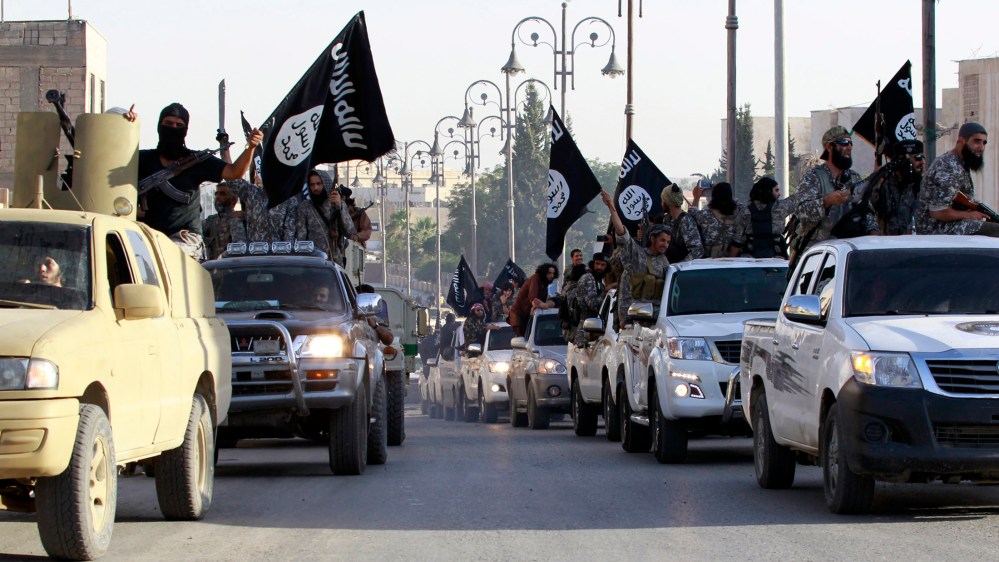
As Congress begins to debate a new resolution endorsing the U.S. use of military force against the Islamic State (ISIS), policymakers also need to stay focused on another key part of the fight: cutting off the terror group’s financing.
RELATED: Obama asks for new war powers
ISIS presents sanctions officials with a different challenge than other recent targets of economic pressure, such as Russia and Iran. Those targets had deep ties to the formal financial system and to international markets, which made them susceptible to the banking and financial sanctions that the U.S. and our allies developed over the past several years. The Islamic State, by contrast, has at best limited direct access to the banking sector, given that few banks operate in ISIS territory, and no major international companies will actively contemplate business dealing with ISIS.
Yet according to the U.S. Treasury Department, ISIS is one of the richest terrorist groups in history. It derives money from extortion and shakedowns of the 6 million people who live in ISIS-controlled territory, selling oil, looting Syria’s rich cultural patrimony, and ransoming hostages.
%22Cutting%20off%20ISIS%E2%80%99s%20financing%20is%20not%20a%20panacea.%20But%20bankrupting%20ISIS%20needs%20to%20remain%20a%20key%20part%20of%20the%20U.S.%20strategy.%22′
Fortunately, there is broad international support for cutting off ISIS’s financing. A new U.N. Security Council Resolution supported by an improbable coalition of Russia and the United States will likely be adopted Thursday to reiterate the international prohibitions on doing business with ISIS, condemn its trade in oil, and set up a new international program to restrict the sale of stolen Syrian antiquities.
The targeted military strikes against Islamic State oil wells and small refineries — along with diplomatic pressure on Turkey, Kurdish Iraq, and other regions bordering Islamic State territory to stop the flow of trucks transporting crude oil out of Islamic State territory — has been the single biggest success in fighting ISIS financing so far. Administration officials once estimated ISIS’s oil revenues to be as high as $1 million per day but now say that the total is much lower. Global low oil prices have also cut into the financial incentives for smugglers to try to move ISIS oil onto the market.
While this progress is welcome, more can — and should — be done. Irina Bokova, the head of UNESCO, has estimated that the market value of antiquities looted out of Syria since the civil war began in 2011 is more than $7 billion, though it is impossible to know precisely how much of that sum has benefited the Islamic State. What is indisputable is that looting is both a lucrative source of revenue for ISIS and causing the destruction of Syria’s greatest historical and archeological treasures.
A U.N. report last year estimated that ISIS made $35-$45 million from ransom payments. While that number will almost certainly decline as ISIS has fewer hostages to ransom — and as ISIS displays its horrific brutality by executing the hostages it continues to hold — all countries should join the United States in adopting a “no concessions” policy of refusing to spend government money to ransom hostages.
Enforcement will be key. To date, the U.S. has sanctioned only a handful of fundraisers acting on ISIS’s behalf, and neither the United Nations nor the United States has imposed sanctions on any businesses outside of Syria and Iraq for engaging in trade with ISIS. The task of identifying people and companies doing business with ISIS is complicated work, but strong enforcement is needed to send a message to grey- and black-market middlemen that the international community has a zero tolerance policy for business with ISIS. Private companies have a role as well, particularly in the energy and antiquities businesses, to do due diligence on their business partners to make sure that no ISIS-related business in entering global markets.
RELATED: Is war against ISIS the answer? Wealthy donors have not been as significant a part of ISIS fundraising as some other terrorist groups, but their role may be increasing. Several U.S. allies in the Gulf, particularly Kuwait, remain lax in enforcing counter-terror finance laws and the international community needs to keep up the pressure to crack down on ISIS fundraising. Assistance to help Turkey and Iraq beef up border controls on abutting ISIS territory should also be expanded to crack down on cash, oil, and goods smuggling. Finally, economic targets need to remain on the table as part of the evolving military strategy. Even if the international community is successful in cutting off ISIS’s external business, ISIS will be able to extort cash from the people who live in territory it controls. Strikes on economic targets, like all military strikes, need to be governed by the laws of war, used only when able to maximize impact on ISIS, and when civilian casualties can be avoided. But without continued military action on ISIS’s economic targets, the financial campaign will be incomplete. Cutting off ISIS’s financing is not a panacea — military force and global efforts to prevent people from joining ISIS are at least as important to our success. But bankrupting ISIS needs to remain a key part of the U.S. strategy. Peter Harrell is the former Deputy Assistant Secretary of State for Counter-Threat Finance and Sanctions, and Adjunct Senior Fellow at the Center for a New American Security.
Peter Harrell Recommended


