








Every religion has a tradition of respect for the God-given natural world. But the summer of 2015 has become a surprise season of revival for these oft-ignored lessons in creation care.
Jews, Catholics, Protestants, Muslims and Buddhists have all heard a fresh call for stepped-up guardianship of the planet. In the process, many religious leaders have broken an uneasy peace with the marketplace, attacking the great wheel of capitalism—once trusted to pull us all skyward—for plunging the world into a state of corruption, injustice and ecological ruin.
%22What%20will%20future%20generations%20say%20of%20us%2C%20who%20leave%20them%20a%20degraded%20planet%20as%20our%20legacy%3F%20How%20will%20we%20face%20our%20Lord%20and%20Creator%3F%22′
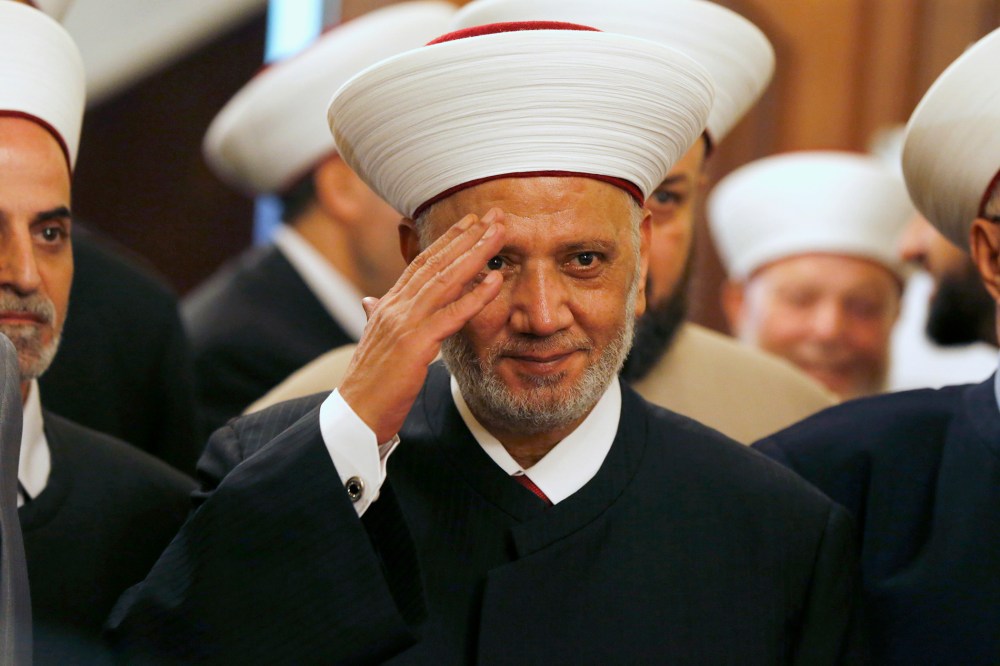
The Islamic community became the latest to reaffirm a duty of stewardship on Tuesday, when prominent Muslims from 20 countries urged all 1.6 billion followers of the Prophet Muhammad to “set in motion a new model of well-being.”
In the 8-page declaration, signed at a gathering in Istanbul, Turkey, religious leaders including the Grand Muftis of Lebanon and Uganda issued an urgent message to madrasses and mosques worldwide.
To avoid “ending life as we know it,” they called for “a rapid phase-out of fossil fuels,” which scientists blame for global warming. They also urged a swift transition to “100% renewable energy” by mid-century.
RELATED: Obama unveils ‘biggest step we’ve ever taken’ on climate
But the document also veers into the social and cultural, asking Muslims everywhere “to tackle the habits, mindsets, and root causes of climate change, environmental degradation, and loss of biodiversity.”
That’s where the dictates of Islam collide with capitalism itself. The scholars affirm that our “relentless pursuit of economic growth and consumption” has caused not only climate change but a degradation of the land, air and sea that gave rise to life in the first place. And they demand “an urgent and radical reappraisal” of the way we have gobbled up natural resources since the Industrial Revolution.
In perhaps the document’s most radical passage, Muslim leaders called on “oil-producing” states to keep their oil in the ground, and “re-focus their concerns from unethical profit from the environment, to that of preserving it and elevating the condition of the world’s poor.” That’s unlikely to go over well in Saudi Arabia, home to the now contradictory prizes of Islamic holy sites and epic fossil fuel reserves.
The statements are not the first pangs of environmental conscience from the Islamic community, nor do they constitute official doctrine in a religion that has no recognized central authority. But they are nonetheless a new chapter in the ecological story now being told by many of the world’s religions.
In June, Pope Francis called on the world’s Catholics to care for “our common home,” warning “every living person on this planet” about wrecking the place with “consumerism,” “individualism,” and “an unprecedented destruction of ecosystems.”
RELATED: Pope takes new stand on climate change
He also directly attacked “the deification of the market,” inviting “a bold cultural revolution” in the way we live and work. He asked his followers to slow down, drop the iPhone, and give up on the idea of infinite growth and boundless, buyable pleasures. More than 100 Catholic and evangelical leaders quickly agreed, buying full-page newspaper ads and spreading their support from pulpits both real and digital. That same month, more than 300 rabbis added their voice to the movement. Since climate change and the global economy now affect us all, we have to develop a sense of the oneness of humanity. In a letter to the Forward, they called on Jews to “turn our science and our moral wisdom toward shaping a world of shared, sustainable resources” — one where “eco-social justice” is the norm. The same message has been shared by the Dalai Lama, who chimed in the same month with a post on Twitter. “Since climate change and the global economy now affect us all,” he wrote, in defiance of capitalisms vaunted fruits of competition, “we have to develop a sense of the oneness of humanity.” Other groups have decided to use the market against itself, divesting from fossil fuels in an effort to choke the cash out of companies that trade in non-renewable resources. The World Council of Churches, Unitarian Universalists, Union Seminary, the Episcopal Church, and the Church of England have all joined that movement. But will this reawakening be enough to tilt the earth toward sustainability? That’s far from clear. In Paris this coming November and December, climate ministers will gather in hopes of negotiating a new agreement, one that keeps the world within what scientists consider to be a safe level of warming. So far, however, researchers say the plans don’t go far enough.
Tony Dokoupil Recommended


