








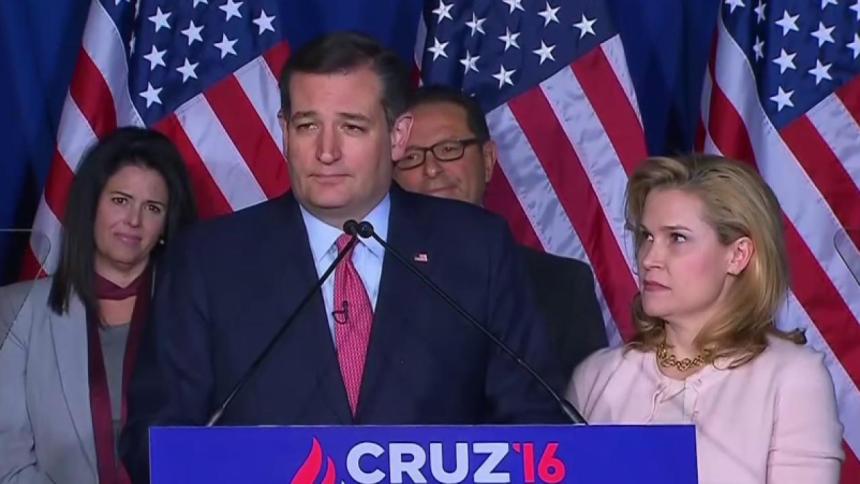
The effective end of Ted Cruz’s presidential campaign came on a conference call late Monday night, as a half-dozen people dialed in to determine the Texas senator’s political future.
Leading the call? Cruz himself, soliciting the input of his closest confidantes.
With Indiana polls set to open in just hours, the internal data looked grim. Barring a surprise upset, Cruz would likely lose.
It was decision time — and the advice from his advisers was not unanimous, according to a high-level source familiar with the discussions. Two aides wanted him to stay and fight, to give the conservatives who rallied around Cruz’s campaign an option other than Donald Trump.
Two others eyed Cruz’s sinking favorability ratings. The numbers plummeted last week to the lowest they’d been since Gallup began tracking the senator in July. Dropping out now could help preserve the political brand Cruz built up during his 13-month campaign.
None of it escaped the notice of the senator’s wife, Heidi Cruz, also on the call. “She saw what was happening to him,” the source said, though “she was supportive of whatever Ted thought was best.”
The decision ultimately came down to the candidate himself.
RELATED: Ted Cruz ends 2016 presidential campaign
Cruz felt what was happening in the Republican race was getting “out of hand.” He ran the risk of railing at political windmills if he stayed in the race, and worried a prolonged fight could tear apart the conservative movement. In the end, he determined setting aside his presidential bid “was the right thing to do for the country,” according to a top aide.
A more cynical observer might also argue Cruz understood he had nothing to gain politically by moving forward.
The decision wasn’t set in stone. Had exit polling in Indiana shown some indication of a victory, the campaign might have reconsidered. But once multiple networks called the race for Trump seconds after polls closed Tuesday, the writing was on the wall.
Cruz, now home in Houston, is doing what 14 other candidates had to do before him: come to terms with the end of a battle that — for Cruz — lasted longer than almost anyone had predicted.
It was a well-run and well-organized campaign — no leaks, little drama. It simply wasn’t the campaign — or the candidate — the majority of Republican voters wanted. While Cruz successfully embraced Trump for six months, he couldn’t replicate the raw authenticity that has propelled Trump to become the likely GOP nominee. One question that remains: Will Cruz endorse Trump? He hasn’t definitively said whether he’d support Trump as the nominee, though he’s been asked — and asked again. What seems clear: Trump would have an easier time earning Cruz’s endorsement now if he hadn’t gone after Heidi and Rafael Cruz, the senator’s father. Those two moments in this campaign, more than any other, struck Cruz on a deeply personal level. They also sparked the most authentically emotional responses from a candidate who’s often criticized for coming off as overly rehearsed. Cruz will head back to the Senate soon, rejoining colleagues who openly loathe him. Does he have an eye on 2020? His concession speech didn’t indicate otherwise. For now, he’s spending time with his family, readjusting to life off the campaign trail and — it’s safe to say — considering what kind of role he’ll have moving forward as Republican leaders work to unify a fractured party.
Hallie Jackson
Hallie Jackson is senior Washington correspondent for NBC News. Recommended


