








With America’s Latino electorate projected to potentially double by 2030, Democratic and Republican strategists alike are grappling with what America’s changing demographics mean for their party’s future.
In the last year, congressional Republican leaders flirted with passing immigration reform to improve their standing with Latinos only to back away after meeting fierce resistance from their base. On the other side, Democrats are still struggling with how far they’re willing to go to on the issue. President Obama recently outraged Latino groups by delaying a promised overhaul of deportation procedures amid complaints from Democrats in conservative states that dramatic action could drag down their campaigns.
Few people have studied this phenomenon as closely as political scientist Matt Barreto, who co-founded the influential polling firm Latino Decisions with fellow academic Gary Segura. In a new book, “Latino America: How America’s Most Dynamic Population is Poised to Transform the Politics of the Nation,” the two combine census data, opinion surveys and focus groups to recount the prodigious rise of the Latino electorate and predict the ways their influence will be felt decades into the future. Barreto spoke to msnbc on Tuesday about their findings.
msnbc: Based on your polling, you write: “Latinos are significantly to the left of non-Hispanic whites on virtually every issue of policy,” especially on economic issues. Many conservative critics of immigration reform have cited the same data to argue there’s no political upside to passing it. Can the GOP win Latino voters even if they get immigration out of the way?
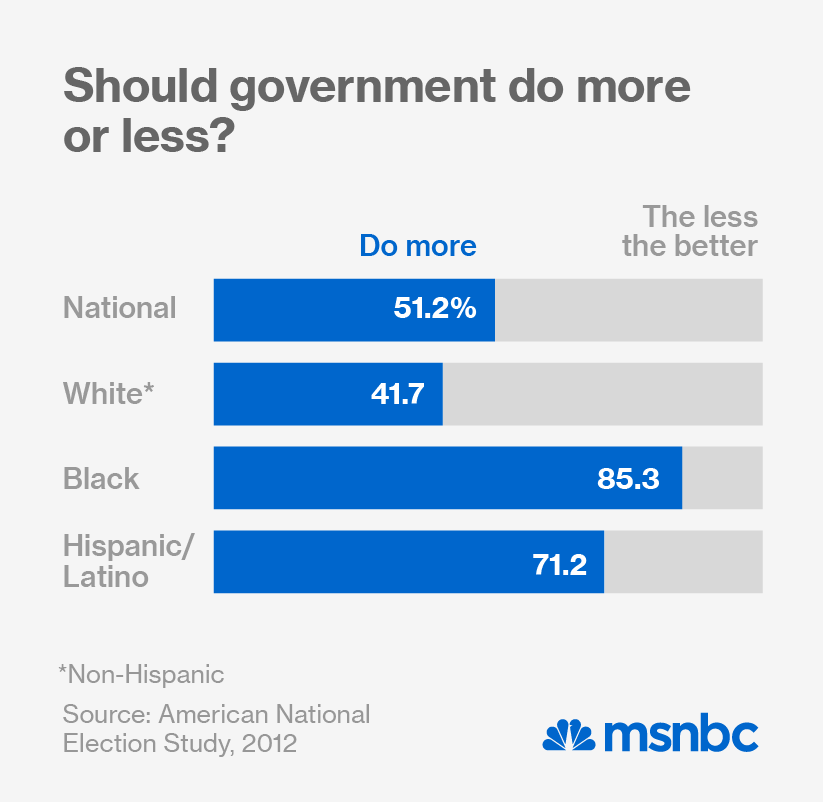
Barreto: I think absolutely, yes. What we lay out there I think has a very important keyword in it, which is “on policy.” When it comes to public policy, Latinos do expect an active and efficient federal government to be involved. They do not have any knee-jerk sort of reaction to “big government,” or the idea that taxes are “too high” at all.
But that’s on the policy side. Where Republicans have hope and opportunity is in the old-fashioned face-to-face politics. Latinos as individuals still tend to be more conservative and that’s in terms of how Latinos view their personal lives, how they view their religious lives, and how they view issues of family values.
There are opportunities there for Republicans to start those discussions. That’s what George W. Bush [who won an estimated 39% of the Latino vote in 2004] did well: It wasn’t always harping on policy. He’d talk about his religion and how it was important and about family values, and he would also talk about respect for immigrants, things that just made him seem like a nice, compassionate conservative. That’s the part that resonates with Latinos. Republicans aren’t going to win 70% of Latinos, but they’re not destined to win 20% or 25%.
On that note, your book quotes Ronald Reagan’s famous quip that “Hispanics are Republicans, they just don’t know it yet.” You say that Latinos’ faith and personal values give the GOP an opening, but your research also indicates that Latino voters, while slightly more conservative than white voters on topics like abortion, don’t place much political weight on religious issues. What’s going on there?
I’d say two things. First, Latinos are not as socially conservative as people think they are or as they used to be 30 years ago. The Latino community is itself evolving on many of these social issues and they’re much more open minded on issues of same sex marriage, abortion, the death penalty, all sorts of issues where they’re often painted as having a strong Catholic faith. Are they more conservative on those issues than the 25% of the vote Romney won? Yes, so there is some truth to it.
But what we found when we asked about these issues is Latinos tell us that when they evaluate politics today, they do not evaluate it through the lens of their religion. They’re privately religious with very high rates of church attendance and personal faith, and they report that they try to live their day-to-day life through a moral and religious lens. But when it comes to politics, they check those at the door. That’s something that white evangelicals, for example, don’t do — they enter the polling place with the religious identity on.
That doesn’t mean Latinos will always operate through that lens. If we had asked the same questions in 2004 we might have found more Latinos saying religion was important to how they evaluate politics, but it was a different time. We can’t stress enough how much the divisive politics of immigration has led Latinos to shed more of these conservative aspects of their identity. If you’re thinking: “My religious faith and family values issues are important to me, I’d like to see politicians who embody those,” then you look at those politicians and what you hear from them is how much they hate immigrants … it’s a gateway litmus test for Latinos. Then Latinos push down those religious issues as political issues.
It’s a conundrum: Republicans need to get back very strongly to the George W. Bush compassionate conservative approach, and we think they can get into the high 30s with Latinos. It may take time, they may nominate someone like a Jeb Bush, and he may hit only the low 30s. But if they continue to nominate candidates who are moderate to good on immigration, we think that Latinos’ personal family values and religious values issues could start to creep back into the picture.
What’s the single biggest myth or misconception about Latino voters?
I would say the largest myth or misconception is that Latinos are apathetic and don’t care about politics. It’s easy for some strategists to make this argument when they look at voter turnout rates in the Rio Grande Valley or the Latino electorate in a place like North Carolina, which has not emerged as quickly per its population. We think that’s completely misguided. When we do surveys and interviews we find that Latinos are very interested, they’re very informed, they’re very knowledgeable about politics today, but they’re also savvy consumers. The parties have to reach out to Latinos and mobilize them.
The question in Latinos’ minds is “Do the parties care about us? Do they want our vote?” Every time we ask in national surveys, Latinos always come in third place in polls that ask whether any campaign called you, asked for your vote, sent you mail, or otherwise contacted you. White and black voters are always on top. It’s a two-way street; we shouldn’t just ask Latinos why aren’t you voting, we should ask campaigns why aren’t you mobilizing Latinos at the same rates as other communities.
A number of Latino activists have argued that President Obama is alienating Latino voters by reneging on a promise to reform deportation procedures before the election. Is there a danger of Democrats losing Latino voters even if Republicans keep moving right on immigration, or do Latinos just have no place to go?
I think that’s the most important question that the political parties and strategists need to be grappling with: What happens to Latino voters if the Democratic Party seems to be ignoring Latinos at times, then coming back to them at other times, and the Republican Party continues to push them away. What we suggest is that it’s going to be mostly felt by rates of civic incorporation. So whether you measure it by rates of voter registration, turnout, campaign donations, willingness to volunteer, you’ll probably see a plateau or even a decline in Latino interest in politics if one party is perceived as ignoring Latinos and the other party is perceived as being hostile. We don’t expect that they’ll move to the GOP in large numbers, because the Republicans have not been good on this. But if the Democrats continue to be perceived as ignoring Latinos, it does continue to leave the door open to Republicans. If a Jeb Bush surfaces or a Marco Rubio who finally gets his policy straight on immigration or someone we don’t even know yet, perhaps [New Mexico Gov.] Susana Martinez or someone who hasn’t emerged, that door is still open. It may only be open a crack, but it’s still open. If Democrats are smart, just speaking as a strategist, they will close that door. What will determine the role immigration plays in future elections? If immigration reform passes and if it passes in a very partisan way where there’s virtually no Republican support, then you start to create this legacy, just like you did with African-Americans, in which Democrats are identified as pro-civil rights and Republican are identified as anti-civil rights. That would be a very bad outcome for the Republican Party, which is why they need to be part of the solution. As long as they hold the House they can prevent it from going through, but if there’s some scenario, whether 2016 or whenever, where Democrats get unified control of government again and are able to pass reform, they could get 100% of the credit and Republicans would get 100% of the blame. That’s Republicans’ worst possible scenario, because then you move from losing 70% to 80% to 85% of the Latino vote just like with African-Americans. This immigration issue could also go away. It could virtually fall off the map if reform passes. Then people might be focused on education reform or housing reform or whatever the next issue might be. Probably education would be next, and that’s actually a good issue for Republicans. Latinos are very split on school choice, they want money for private schools, and they support a lot of principles President Obama also supports about rewarding teachers and schools based on performance. We think there are big opportunities there. You write in your book, “The demography is relentless — live births contribute more to population growth among Latinos now than immigration does and over 93% of Latinos under age 18 are citizens of the United States.” How much of the coming demographic shift in the electorate is dependent on policy — for example, whether Congress creates a path to citizenship or expands legal immigration levels — and how much of it is due to existing factors already “baked into the demographic cake,” so to speak? Right now, we’ve crossed the path where the population growth of Latinos is being driven more from US births among either immigrants or US-born Latinos. If there is policy change and more people are able to naturalize or if there is just advocacy outreach and the people who are currently eligible to naturalize do so — there are a lot of people who are legal residents who could become citizens with money and effort — that would only quicken or heighten the demographic changes that are coming. But it’s happening regardless of immigration. The extent to which Republicans can defuse it is the extent to which they can do sincere and good faith outreach to the Latino community. This interview has been edited for length and clarity.
Benjy Sarlin Recommended


