








Last week, Congressional leaders reached a compromise budget agreement that averts yet another disastrous fiscal fight. On its face, that’s a commendable achievement but not worthy of the political preening that took place after Congress simply did its job. That’s because there is a catch.
While the budget agreement may help to avert another government shutdown, it does so in no small part through unprecedented cuts to veterans’ benefits, including a 1% reduction in promised cost-of-living increases for military retirees under 62 years old. That amounts to a $6 billion cut in benefits.
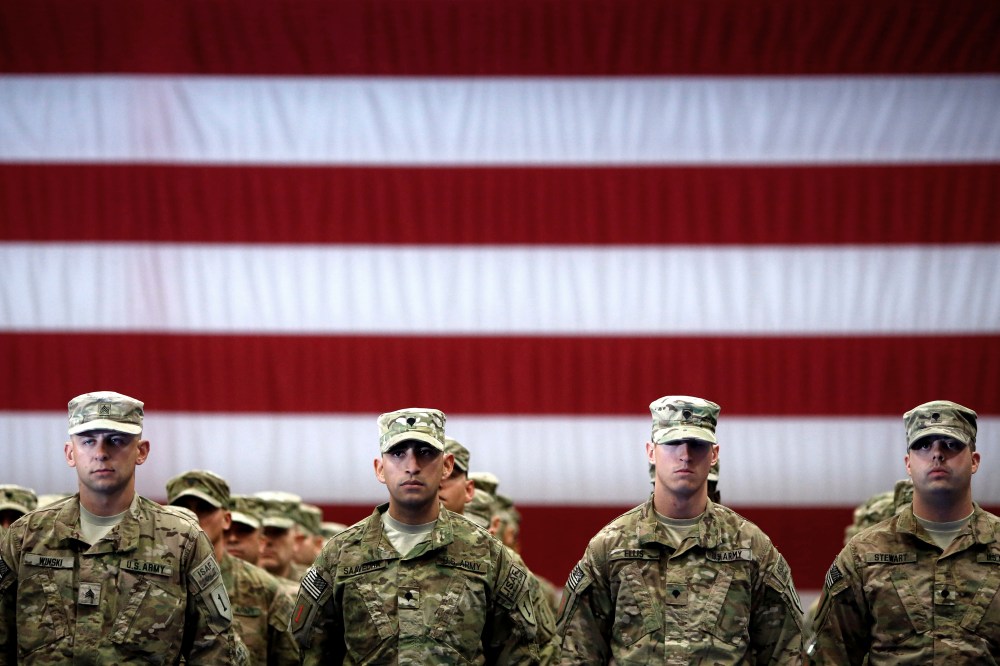
Congress usually waits until after our troops come home before they start gutting benefits. But 47,000 troops are spending Christmas on the ground in Afghanistan. Troops who just watched their elected leaders kneecap their retirement security. Just when you thought Congress couldn’t get any lower, they broke faith with our troops once again.
A sergeant first class with two decades of service earns roughly $32,000 annually ($2637/month). Under these cuts, his or her pension will lose some $80,000 over the next 20 years. The Republicans pushing these cuts claimed the agreement wouldn’t affect the benefits of disabled veterans, many whom can’t work and rely disproportionately on their pensions to pay their bills and feed their families.
But the agreement was rushed through Congress – breaking the 72-hour rule that affords members the time to actually read the bills they’re voting on. Disabled veterans, some 866,000 from the wars in Iraq and Afghanistan alone, didn’t escape the cuts.
In the richest, most powerful nation on earth, Congress is balancing the budget on the backs of our bravest men and women. That’s simply inexcusable, and Republicans are overwhelmingly to blame. Even some of the staunchest conservatives agree. Of the cuts to veterans’ benefits, Erick Erickson, Editor-in-Chief of RedState.com, wrote: “Republicans are going to have to own this.”
Paul Ryan himself went on the Hugh Hewitt Show and boasted that while Democrats wanted no cuts, he “got 70% of what [he] wanted.” Ryan further defended these cuts in a USA Today op-ed while writing that we owe our troops “a secure retirement when they come home.”
This is terrible policy, but the politics are just as bad. Republicans in vulnerable swing districts are frantically drafting bills to restore the funding they just fought to cut. Some face a particularly acute challenge: they may run against veterans next November.
In Michigan’s 1st Congressional District, Republican Congressman Dan Benishek could face Iraq War veteran and retired Army Major General Jerry Cannon. Down in Virginia, Suzanne Patrick is a retired Navy Commander and former Deputy Undersecretary of Defense – a Bush appointee and centrist Democrat– running to unseat Republican Scott Rigell. In Bucks County, Pennsylvania, Republican Mike Fitzpatrick’s potential opponent is former Army Ranger and decorated Iraq and Afghanistan veteran Kevin Strouse. Veterans understand that America has built a sacred trust with those who serve and protect our nation. This commitment begins at enlistment, but it doesn’t end when an American soldier returns to our shore. We must honor our commitments to veterans and their families. To put it simply, we must serve them as well as they have served us. Cutting their much-deserved retirement benefits is no way to honor their service. It’s a lump of coal from Congress, and Congress needs to fix it. Patrick Murphy is a former Army captain and Iraq War veteran who served in the U.S. House of Representatives as a Pennsylvania Democrat. He is also an MSNBC contributor and the Host of “Taking the Hill.”
Patrick Murphy Recommended


