








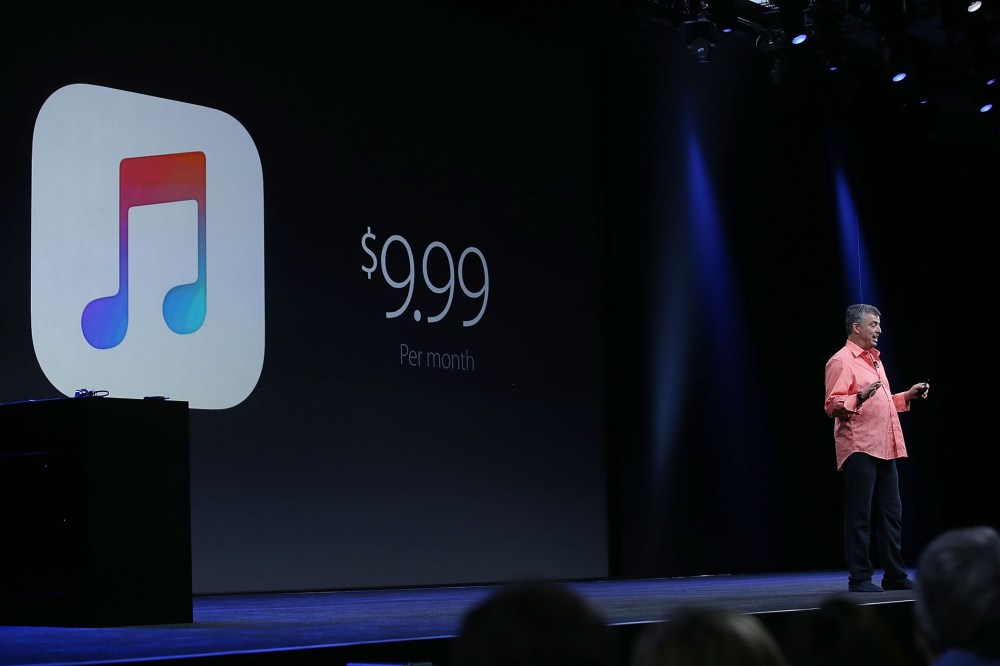
Tuesday, the company launches Apple Music. After a free, three-month trial period, members will pay $9.99 a month, or $14.99 per family, for access to an on-demand streaming music service with more than 30 million songs; a 24-hour radio station boasting celebrity DJs such as Zane Lowe; and a new social service allowing artists to connect with their fans.
RELATED: Apple CEO Tim Cook: Orders are ‘great’ for Apple Watch
Eddy Cue, Apple’s senior vice president of Internet software and services, refers to the new service as “revolutionary.”
“We love music, and the new Apple Music service puts an incredible experience at every fan’s fingertips,” Cue said in a statement.
Apple is introducing a streaming service because that’s where the growth is in this market. In 2014, according to the Recording Industry Association of America, revenue from streaming music services jumped 29 percent to $1.87 billion. Meanwhile, sales from digital downloads fell 8.7 percent to $2.58 billion.
The launch of Apple Music came with its own set of headline-making dust-ups. Pop superstar Taylor Swift publicly objected to Apple’s decision not to pay artist royalties during the free trial period. The company then changed its policy.
How should investors think about this service?
Apple Music will not have a material financial impact for the company, at least in the near term. Piper Jaffray’s Gene Munster notes that, even if Apple increases its subscriber base to match Spotify’s, it would add less than 1% to Apple’s revenue in 2016.
But Munster notes that the service is important for broader strategic reasons. Specifically, he points out that Apple Music, if successful, could be one more way to motivate consumers to buy iPhones, which still account for more than 55 percent of the company’s total sales.
“Apple Music matters because music broadly is fundamental to the mobile phone experience,” Munster said. “By having a compelling music experience, the hope is Apple will sell more iPhones.”
Apple is entering a crowded field with many entrenched players. For instance, Rhapsody, which launched in 2001, helped pioneer the model for subscription-based streaming music. The company now claims 2.5 million paying subscribers in 33 countries.
RELATED: Apple Watch reviews are positive, with caveats Ethan Rudin, Rhapsody’s CFO, says he isn’t concerned by competition from the world’s most valuable company. He contends that Apple will broadly increase knowledge of the benefits of streaming music, which will benefit his company. “Apple coming into the market is going to increase the level of awareness,” Rudin told CNBC. “While people will try the service for free, when you have to pay for it, you’re going to do some comparison shopping. Ultimately, people are going to be really excited about what they see when they try us.” There are challenges for Apple as it enters this market including the fact that many of its iTunes customers are already subscribers to other services including Spotify, Rhapsody, Deezer, Tidal and Rdio. But Mark Mulligan, a music industry analyst with research firm Midia, said the tech titan also boasts real competitive advantages. “Apple has a host of platform advantages that streaming competitors do not,” Mulligan said. “It controls the platform which Spotify and the rest rely on for more than half of their subscriber bases. It controls the payment for most of those, the devices on which the music is streamed, and knows more about their musical tastes than anyone.” Mulligan adds: “But most crucially Apple has the ability to lose money. Music is a loss leader for Apple to sell more hardware so it can afford to spend on marketing and promotions in a way the likes of Spotify could only dream of.” This article first appeared on CNBC.com.Recommended



Josh Lipton