








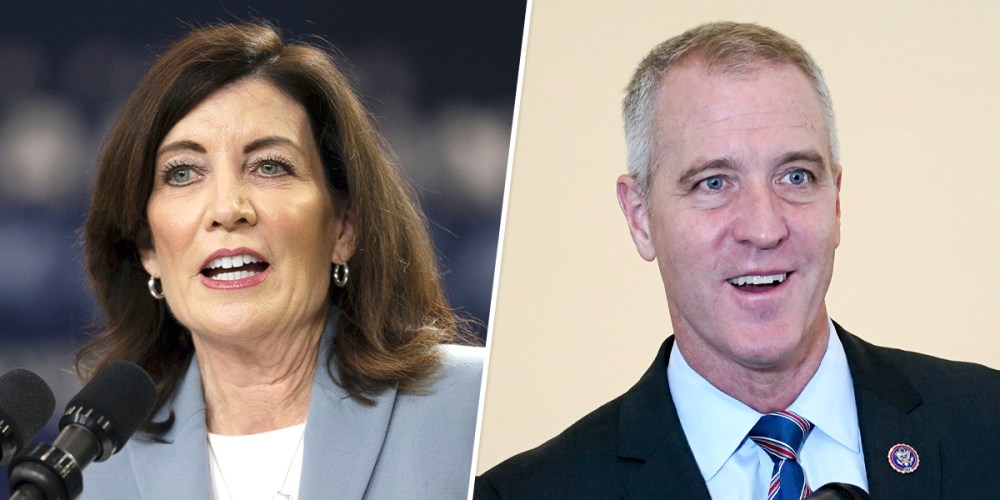
Gov. Kathy Hochul wasn’t supposed to have a tough election this year. Neither was fellow New Yorker and five-term Rep. Sean Patrick Maloney. But with just days to go before the 2022 midterms, both races are tightening. The entire ballgame will come down to what motivates people to turn out. And the answer, at least for Democrats, isn’t simple.
In Croton, Ossining and Mount Kisco, the issues enraging voters weren’t the costs of gas or child care.
Just two weeks ago, I followed canvassers in the working-class community of Braddock, Pennsylvania. The voters I spoke with cared about abortion rights, but worries about child care, groceries and the job market felt much more urgent.
Yet in Croton, Ossining and Mount Kisco, the issues enraging voters weren’t the costs of gas or child care. Instead of the economy, a surprising number of people were outraged not just by the Dobbs decision, which overturned Roe v. Wade, but also by election deniers and the spread of disinformation.
Follow our 2022 midterm elections live blog at msnbc.com/midterms for the latest results, news and expert analysis in real time.
I met Alex Smoller when he was walking home with his daughter. “The misinformation that’s out there right now and seeing some of the candidates who are pushing these, like, absurd agendas” were really motivating his vote, he told me. “Because I think it’s poison in our society.”
And he wasn’t alone. Across the street, Andy Newberg didn’t hesitate when he was asked what issues make his blood boil. “The whole idea of election fraud just burns me up,” he said. “I can see people lying so openly and with confidence, and it’s just … terrifying and disgusting.”
When I asked residents what issue they worried would prevent their candidates from winning, the same topic came up again and again — crime and bail reform. And yet, these are neighborhoods, and, indeed, counties, where crime has actually decreased for the most part over the last few years. Walking along tree-lined streets, it felt more likely that we’d get hit by a falling Halloween decoration.
But it’s the type of fear-based dog whistling that might have an effect on the election. For these predominantly white Hudson Valley communities, resident Jeanne Claire Cotnoir told me, it wasn’t about the actual threat of crime but instead about the threat of change.
“If you look at every single advertisement,” she said, people of color are always the representatives of fear and “the other.” Republicans sense this and are pushing these messages hard.
Republican outside groups have spent around $6 million attacking Maloney, often on crime. It doesn’t matter that crime has been going down for the most part in all of the counties in the district or that his opponent, state Rep. Mike Lawler, supported cuts in police pay and the county police force when he was working for Westchester County. With Maloney’s and Hochul’s elections coming down to the wire, it appears these attacks may, indeed, be working. This presents a core challenge to Democrats as they attempt to close the enthusiasm gap benefiting Republican candidates across the country. Republicans have found a unified, if disingenuous, theme. From New York to Nevada, they are pushing the ideology of fear. But to keep the Senate, fight for the House and win governor’s mansions around the country, Democrats will have to motivate a big, diverse group of people who don’t have uniform concerns, fears or motivations. The stakes are incredibly high. Next Tuesday we will find out whether Democrats have convinced voters of this fact — or whether Republicans were, instead, able to scare enough card-carrying liberals and override logic with anxiety.
Jen Psaki is the host of "The Briefing with Jen Psaki" airing Tuesdays through Fridays at 9 p.m. EST. She is the former White House press secretary for President Joe Biden. Recommended


