








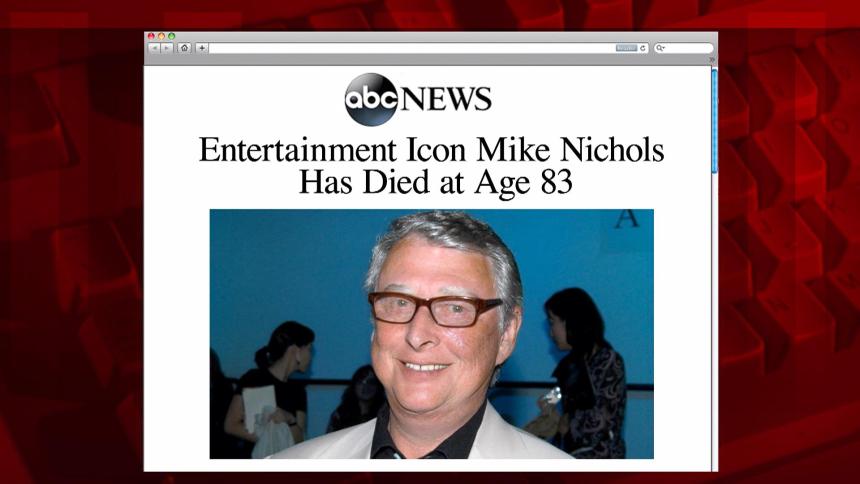
The prolific theater and film director Mike Nichols, who died Thursday at age 83, was for decades one of the most important figures in Hollywood. While never overtly political, Nichols’s movies addressed hot button topics like sexism in the workplace, gay culture, and, in the case of his most famous film, “The Graduate”, the existential angst and sexual curiosity of 1960s-era youth.
Nichols, who first gained national exposure with his highly influential improvisational comedy act alongside actress-writer-director Elaine May, brought a heavy dose of wit, charm and the counterculture into America’s movie houses.
His very first film, an edgy adaptation of Edward Albee’s “Who’s Afraid of Virginia Woolf?” sparked controversy for its use of what was considered at the time incredibly vulgar language. The movie was a huge, critically-acclaimed hit and it helped set the stage for “The Graduate.”
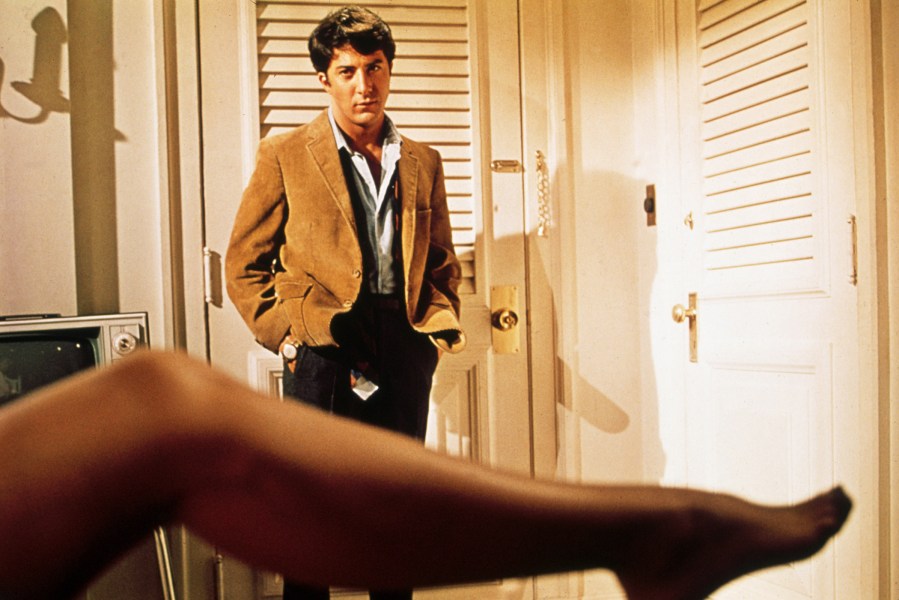
Before “Easy Rider” or “Bonnie & Clyde,” Nichols’s comic masterpiece about a disaffected college graduate who plunges into a affair with an older woman who’s friends with his parents charted new ground in the portrayal of youth culture. Nichols broke Hollywood traditions by casting an unconventional leading man, Dustin Hoffman, over the studio-preferred Robert Redford. He also shook up the status quo by letting a youth-oriented act, albeit a folk one — Simon & Garfunkel — compose the soundtrack.
The result was one of the biggest hits of the decade, powered in large part by an audience of younger moviegoers who were hungry for a hipper, more cynical take on society. This sense of alienation is captured perfectly in the classic scene where Hoffman’s character is cornered by an unctuous older man at one of his parent’s cocktail parties and urged to get into “plastics.”
Nichols broke boundaries again with his sexually explicit (again, for its time) comedy-drama “Carnal Knowledge.” The film was a showcase for the up-and-coming star Jack Nicholson, whom Nichols would re-team with three more times during his career. It is a darkly funny satire of sexual politics and the depths of insecurity and immaturity many men share. A controversial film when it was first released, “Carnal Knowledge” has lost none of its power over the years.
A string of flops kept Nichols out of the limelight for the next several years, but he made a triumphant comeback with 1983’s “Silkwood” — featuring another one of his frequent collaborators, Meryl Streep, in the lead role. The film, which dramatizes the true-life story of Karen Silkwood, a nuclear plant technician who became a whistleblower about unsafe working conditions, marked a decidedly message-based shift in Nichols’ filmmaking. For instance, 1988’s “Working Girl,” despite its anachronistic title, was an early attempt to address the inherent sexism and classism of the corporate world of the 1980s. That film, which made a household name out of Melanie Griffith, was one of Nichols’ biggest hits. He had another blockbuster with the 1996 comedy “The Birdcage,” which, despite its detractors, presented mainstream America with a loving, plausible gay couple. “Primary Colors,” Nichol’s 1998 adaptation of writer Joe Klien’s thinly veiled parody of the Clintons, featured John Travolta’s peerless imitation of the 42nd president. Nichols’s 2007 Tom Hanks film “Charlie Wilson’s War” dramatized a Democratic congressman’s single-minded attempts to arm and organize the Afghan mujahedeen in their war against the Soviets. And his HBO miniseries “Angels In America,” itself an adaptation of an award-winning stage production by Tony Kushner, captured not only the early days of the HIV-AIDS crisis but also closeted bigots like the late Roy Cohn (played by Al Pacino is one of his greatest late-career performances). Nichols, who was married to “Good Morning America” anchor Diane Sawyer and won an Oscar, Tony, Emmy, and Grammy in his illustrious career, was a rare breed. Equally adept at both comedy and drama, he was an actor’s director and a charismatic performer in his own right. He made adult movies that weren’t about superheroes or 80-foot monsters. He changed the way movies look and sound, but most importantly, how they feel. Hollywood will never be the same without him.
Adam Howard Recommended


