








The gun control debate is heating up as members of Congress return to their home districts for what will likely be a contentious two-week holiday break. In town halls and fundraisers, lawmakers will face opponents and supporters of universal background checks and other key components of newly proposed gun legislation.
Americans overwhelmingly support universal background checks on gun purchases, according to a recently released Quinnipiac University poll. Some 88% of voters polled nationwide believe that guns purchased from private sellers and from gun shows should be subject to background checks, while 10% opposed the checks. Thirteen percent of gun owners said they opposed them.
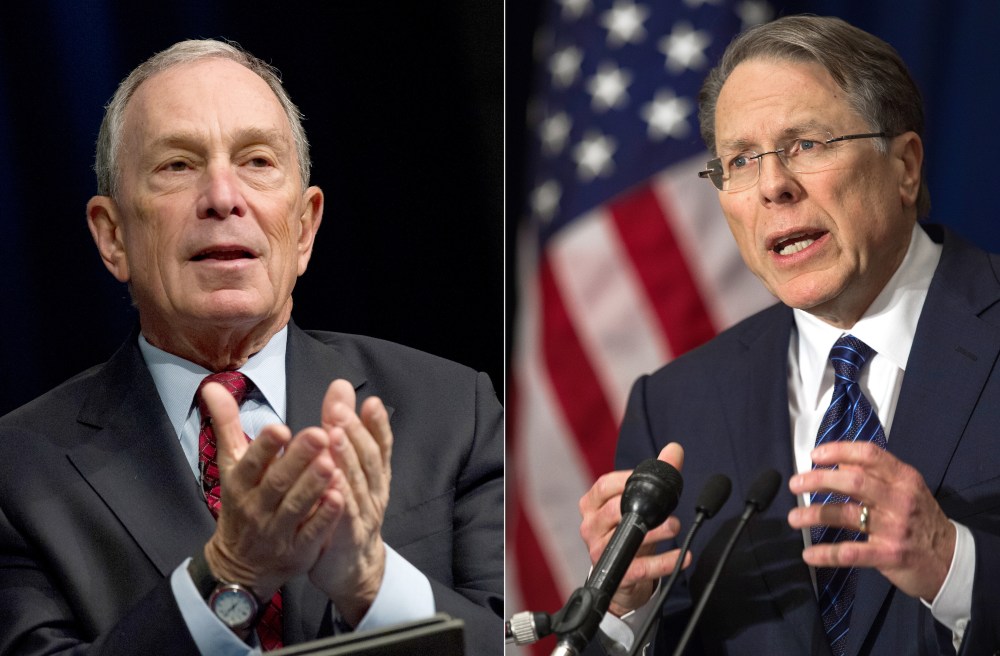
Activists on both sides of the issue are gearing up for what will likely be the most serious debate over gun control in Congress in more than a decade. And some of the fiercest voices for and against stricter gun legislation, including New York City’s anti-gun violence, billionaire Mayor Michael R. Bloomberg and the National Rifle Association are already bombarding voters and policymakers with a flurry of ad campaigns over the new measures.
Senate Majority Leader Harry M. Reid, a Nevada Democrat, moved a package of gun-related bills to the legislative calendar late last week. The package, to be heard once the Senate returns to Washington on April 8, would expand background checks, increase federal gun trafficking laws, and provide funding for improved school safety.
On Tuesday, three Republican senators, including Rand Paul, Ted Cruz and Mike Lee, wrote a letter to Reid in which they threatened to filibuster any new gun-control measures.
“We will oppose the motion to proceed to any legislation that will serve as a vehicle for any additional gun restrictions,” read the letter, which was first obtained by POLITICO.
While the new provisions have ruffled feathers of pro-gun groups and the lawmakers who support them, what’s not in the new bill is also indicative of the politically hostile environment in which the package is being introduced. The bill does not include a much-ballyhooed ban on assault weapons, which even Democratic supporters of stricter gun laws believed would sink any efforts to tighten current laws and background check provisions. Reid instead will introduce an assault weapons ban as an amendment later.
The passage of the latest gun-control proposals would be a victory for Democrats and anti-gun violence activist emboldened after last year’s massacre at Sandy Hook Elementary School, in which 20 young children and six adults were killed at the hands of a seemingly deranged gunman armed with a powerful assault rifle.
But opponents of expanded gun legislation have vowed to fight further restrictions in what they have characterized in print ads and on pro-gun websites as the first steps in the government’s plan to confiscate guns from law-abiding citizens.
“We have two political parties that are far apart on many issues. You have to make certain concessions to compromise, but somewhere you have to draw the line,” said Stephen Barton, who was wounded during last summer’s mass shooting at a movie theater in Aurora, Colo., who now works as an outreach worker with Bloomberg’s Mayor’s Against Illegal Guns. “When it comes to a background check system that’s expanded and inclusive of private sales…we decided to draw the line there.”
Bloomberg said he would spend $12 million of his own money to run ads in 13 states. The ads describe universal background checks as a good sense legislation. In one of Bloomberg’s television ads, a bearded man armed with a shotgun and wearing a camouflaged baseball cap urges voters to support the background checks “so criminals and the dangerously mentally ill can’t buy guns.”
The ads will air in Arizona, Arkansas, Georgia, Indiana, Iowa, Louisiana, Maine, New Hampshire, Nevada, North Carolina, North Dakota, Ohio and Pennsylvania.
Bloomberg says he’s hoping to serve as a counterweight to the NRA which wields tremendous sway over gun-owning voters and many lawmakers.
On Meet the Press Sunday, Bloomberg said he had a responsibility “to try to make this country safer.”
“If I can do that by spending some money, and taking the NRA from being the only voice to being one of the voices, so the public can really understand the issues, then I think my money will be well spent and I think I have an obligation to do that,” he said. “If 90% of the public wants something, and their representatives vote against that, common sense says they are going to have a price to pay for that,” he added. A key sticking point over background checks is in record-keeping. While many on both sides of the political divide believe background checks during gun sales makes sense, bi-partisan negotiations have broken down over whether or not sellers should maintain a record of the checks they run. There’s fear among opponents that keeping such records could lead to some sort of national database of gun owners, which is prohibited under current federal law. Republican-friendly provisions in the law include one that would let rural gun owners use their home computers to conduct background checks and another that would create an appeals process for military veterans who have been deemed mentally unfit to own a gun. Even with the sweeteners and mass public support behind background checks, which are at the core of the package, Democrats will likely face challenges. While there was collective national momentum to enact bold gun legislation in the wake of the Sandy Hook killings, the fever has cooled a bit with time. “It’s definitely frustrating,” said Barton, of the political fights waged over gun legislation. “Most people want instant gratification or you want to see something change quicker than it often does. I realize just how long term this issue has been and will continue to be. I understand we have to keep fighting for this issue. It isn’t going to end today, tomorrow or next year.” Meanwhile, Reid said the gun control package will be the first order of business when lawmakers return in April, as President Obama urged listeners of his Saturday radio and internet address to call for a vote on the assault weapons ban. “I hope negotiations will continue over the upcoming break to reach a bipartisan compromise on background checks, and I am hopeful that they will succeed,” Reid said in a statement last week. “If a compromise is reached, I am open to including it in the base bill. But I want to be clear: in order to be effective, any bill that passes the Senate must include background checks.”
Trymaine Lee
Trymaine Lee is an NBC News correspondent. Recommended


