








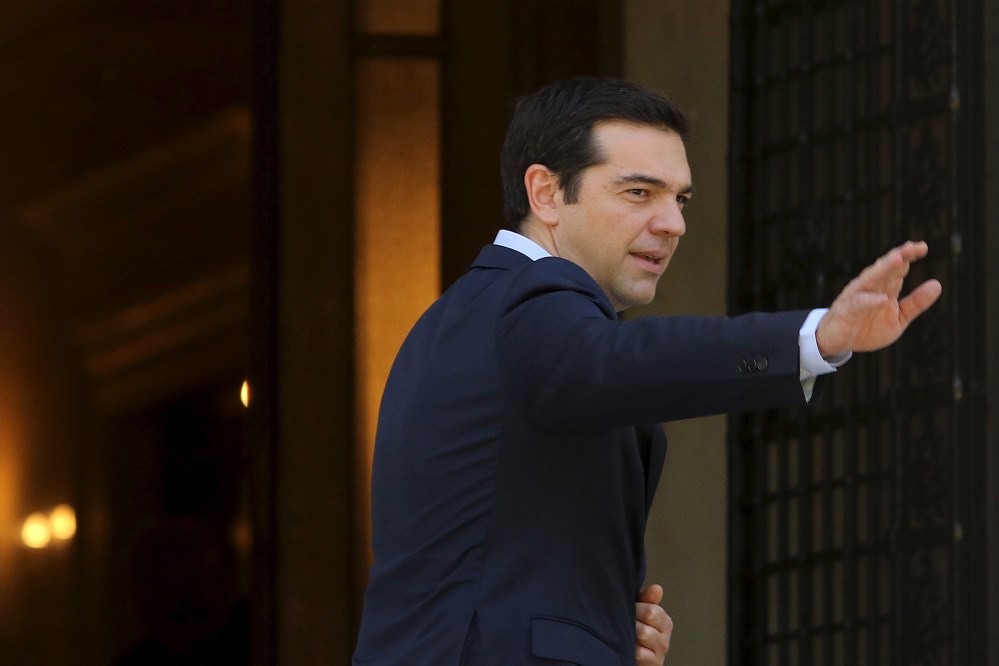
Greek Prime Minister Alexis Tsipras announced his resignation on Thursday amid ongoing political wrangling over the country’s bailout agreement with creditors.
The move was meant to clear the way for early elections on Sept. 20, a government official said. Tsipras effectively lost his parliamentary majority after a rebellion by hardliners in his Syriza party who oppose a bailout agreement struck with international lenders.
RELATED: Greek Parliament pass austerity vote despite dissent
Tsipras had been expected to seek early elections to quell a rebellion in his leftist Syriza party and seal support to implement a tough bailout program. Ministers have openly debated for days about what the government should do after a large number of hard left Syriza lawmakers refused to back the 86 billion euro ($96 billion) bailout in parliament on Friday.
Separately on Thursday, the European Central Bank confirmed it received a 3.2 billion euro ($3.58 billion) repayment from Greece, the fulfillment of its last significant obligation to the ECB for the next 11 months. Greece used bailout funds released earlier on Thursday to repay the bonds, held by the ECB and national central banks of euro zone countries.
Tsipras won power only in January and Greece’s complex constitution has special stipulations for holding elections less than 12 months after the previous vote. Under these, President Prokopis Pavlopoulos cannot immediately call an election if Tsipras resigns, but must first consult the other major parties to see if they could form a government — a remote likelihood with the current parliamentary arithmetic.
Tsipras had been expected to call snap polls at some point in the autumn after his bruising seven months in office when Greece nearly crashed out of the euro zone and shut its banks for three weeks during a standoff with its euro zone and IMF creditors.
After campaigning against bailouts, the 41-year-old prime minister accepted last month Greece’s third bailout, which demands tax increases and spending cuts, to avoid a banking collapse.
But the votes in parliament to pass the austerity measures laid bare a revolt by nearly a third of Syriza lawmakers, forcing Tsipras to rely on opposition support and robbing him of a guaranteed parliamentary majority.
Aid disbursed
With the bailout finally approved in parliament and the first installment of aid disbursed — allowing Greece to repay a debt to the European Central Bank that fell due on Thursday — Tsipras is turning his focus to internal politics. Senior aides, such as Energy Minister Panos Skourletis, said the split with the party rebels who are threatening to break away had to be dealt with. “The political landscape must clear up. We need to know whether the government has or does not have a majority,” he told ERT. Syriza is expected to call a party congress in September to resolve differences with the rebels. But, expressing his personal opinion, Skourletis said Tsipras should move faster. “I would say elections first, then the party congress,” he said. Tsipras is weighing at least two options. One is to call elections in September before voters start feeling the new bailout measures including further pension cuts, more value-added tax increases and a “solidarity” tax on incomes. Knock-on effects of capital controls imposed in June, which are likely to stay until Greek banks are recapitalised later this year with bailout funds, will also hurt voters. Read more at CNBC.com.
Reuters Recommended


