








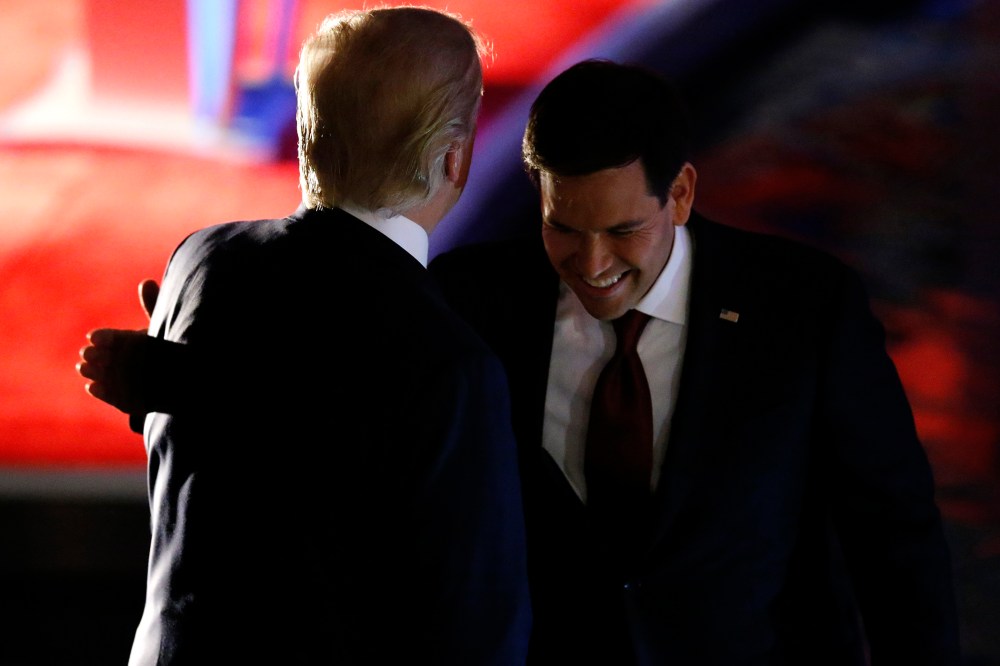
Florida Sen. Marco Rubio emerged as a winner in Tuesday night’s GOP presidential debate, pundits and polls are saying. Riding a wave of momentum and slowly climbing in the polls, Rubio was clear, concise, and optimistic. And he landed memorable one-liners while making the most of his time on the floor.
But his smooth performance was in part the result of how gently he was treated both by the moderators and his opponents—especially on the issue where he’s most vulnerable.
Rubio’s questions were softball after softball. A question on why he disagreed withDemocrats who support debt-free college, universal healthcare, and other social programs was the perfect set-up for Rubio to condemn liberals who want to give away “free stuff.” Then a question on how Rubio stacks up to Hillary Clinton’s resume and experience let him tout his youthful outlook on the future and make his pitch for why he’s best-placed to take Clinton on.
RELATED: Fox debate lets candidates drive the conversation
The other candidates were no tougher on the Florida senator. Though several had telegraphed before the debate that they’d go after Rubio, the only real attack was a jab from Rand Paul who questioned Rubio’s conservative bona fides for wanting to increase military spending—hardly a position that’s likely to hurt him with most Republican voters. Rubio immediately shut Paul down with a feisty comeback, calling the Kentucky senator a “committed isolationist.”
It was a lightning round on immigration, the issue on which Rubio is by far the most vulnerable, that had the greatest potential to hurt him. Rubio was a key architect of the comprehensive immigration reform bill that passed in the Senate in 2013 but stalled in the House, and he’s been running away from his record at a dead sprint ever since. He has been pressed on his position repeatedly while out on the campaign trail. But more often than not, his responses have been mangled word salads, using vague terminology to define what his proposed pathway to permanent residency or legal status would look like. That’s made it difficult to say what his plan would mean for the millions of undocumented immigrants currently living in the U.S.
On Tuesday night, no one pushed him to get more specific. Instead, Donald Trump, John Kasich, and Jeb Bush engaged in a back and forth on Trump’s plan to deport 11 million people, letting Rubio slide by in silence. GOP hopefuls have gone after Rubio in the past. In the lead-up to the debate Trump took to Twitter to jab Rubio as “totally weak on illegal immigration” and in favor of “easy amnesty,” criticisms he has made before. And more attacks are on the horizon. According to The New York Times, the cash-flush Super PAC supporting Bush is set to roll out a $20 million campaign going after Rubio. But on the big stage Tuesday night, no seemed eager to challenge to him. The question now is how long his softball streak will last.
Amanda Sakuma Recommended


