








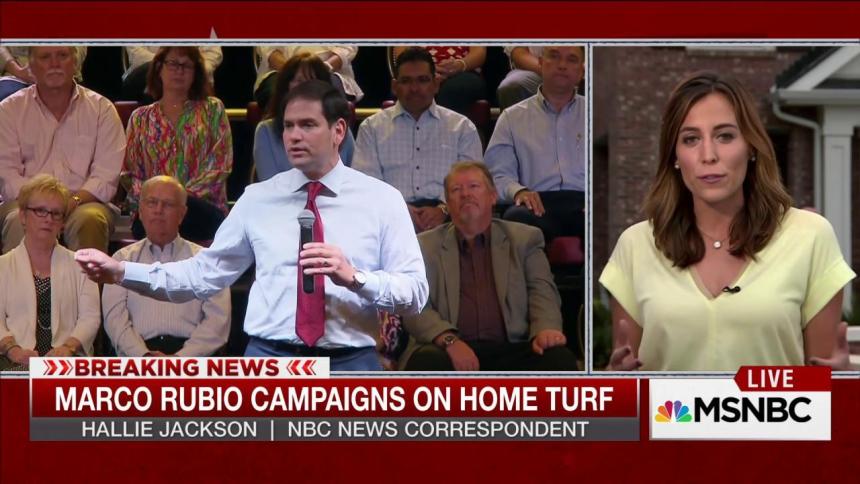
Sen. Marco Rubio on Monday appeared to back off another provision of the bipartisan immigration bill he passed then abandoned, telling CNBC’s John Harwood that he no longer supported the legislation’s path to a green card for undocumented immigrants.
Harwood asked the Republican presidential candidate about the bill’s 10-year route allowing undocumented immigrants to receive green cards if they passed a background checks, paid fines, learned English and civics, and cleared any back taxes.
“If you don’t have a special path, those people are never going to get the green cards. Do you still support that provision?” Harwood asked.
“No, because we can’t pass it,” Rubio said.
RELATED: Marco Rubio vs. Jeb Bush: The inevitable GOP showdown arrives
Rubio said he was “open to people having access to apply for a green card” and did not want to bar undocumented immigrants from becoming full Americans if they were granted temporary work permits at some point after Congress first implemented new border security and enforcement measures, but that he did not favor a “special pathway.”
“If you create a special pathway, you make it impossible to do anything on immigration, because the argument you hear from people: ‘Why should someone who came illegally be able to access citizenship or a green card faster than someone who came here legally?’” Rubio said.
A spokesman for Rubio’s campaign, Alex Conant, said the answer was consistent with the position Rubio expressed in his book “American Dreams,” which was published after he had backed off his immigration bill. In that book, Rubio called for a step-by step legislative process that would eventually require undocumented immigrants — once they get a temporary visa — to “remain in this status for at least a decade” and then allow them to “apply for permanent residency if they so choose,” i.e. a green card. But that still doesn’t answer the question of whether that path to permanent residency would resemble his immigration bill and Conant did not reply to an email asking to clarify the senator’s position.
What’s going on here? Some of this confusion has to do with the complicated vocabulary of spin that’s developed in talking about immigration. Some of it has to do with Rubio’s position, which is vague on the timeline and prerequisites for how undocumented immigrants first become legal, then get green cards, then apply for citizenship. But it’s an important distinction, because how Rubio eventually comes down on the issue could mean the difference between millions of people plausibly becoming permanent residents or being stuck for decades or longer in legal limbo. The current ambiguity also gives him significant leeway to pivot to one side or the other in a general election.
RELATED: What happened to the lawsuit against Obama’s immigration actions?
First, let’s look at the “special path” to legal status Harwood brought up. Part of the difficulty deciphering Rubio’s answer is that there’s no agreed-upon definition of what constitutes a “special path” to permanent legal status or citizenship. At the time he unveiled his bipartisan immigration bill in 2012, Rubio vigorously denied that there was anything “special” about the path to a green card through a new visa category, a contention Conant repeated on Monday. This was true in the sense that some immigrants who are not undocumented immigrants, mainly certain classes of refugees, would also be able to apply for green cards using the same path. But it was clear the category was created primarily to allow the millions of undocumented immigrants — who would gain legal status under the bill — to become permanent residents and citizens. This is critically important, because, as Harwood pointed out, it’s impossible to imagine many of them gaining green cards through today’s legal visa system given its long backlogs, even if they were granted permission to apply.
Rubio seemed to pretty clearly rule out his old immigration bill’s path to green card status in his CNBC interview, but it’s possible, given the context, that he was reacting to the phrase “special path” and his general opposition to the bill’s comprehensive structure. Then again, maybe not. His campaign still hasn’t confirmed whether the route to acquiring a green card outlined in his book is the same as the one in his Senate bill. Here’s where things get even muddier, though. Even assuming Rubio is still open to a 10-year path to citizenship similar to what was outlined in his old bill, a lot of the timeline depends on how Rubio would order his immigration plan as president. Rubio’s said he would pass his plan in three parts: Part one, border enforcement, a crackdown on illegal hiring, and new measures to track people who overstay their visas. Part two, an overhaul of the legal immigration system. Part three, legalization. RELATED: The cruel reality of Trump’s deportation plan What Rubio hasn’t said is how long it would take to get to part three, which is the portion that immigration activists advocating for the estimated 11 million undocumented immigrants in the country are by far most concerned about. Rubio said in Iowa this week he will “prove it” to the American people that enforcement is in place, but he hasn’t named a specific metric for how to judge it. If the measure is that people “feel” like the border is secure, then it may never happen because many Republicans don’t support legal status for undocumented immigrants under any circumstances and many people will be convinced illegal immigration is out of control no matter what — even despite evidence that suggests illegal immigration has plateaued or even reversed (as in more people leaving the country than entering) over the last seven years. If the metric is implementing security provisions and proving that they’re in place, it could happen a lot sooner. As a result, no one knows when this 10-year-or-so clock actually begins. In fact, it’s still not clear when people will gain just temporary protection from deportation, let alone a path to a green card and citizenship. In an interview last month, Rubio seemed to indicate that he might wait 10 to 12 years before even having a conversation about green cards, a timeline that would punt the issue past his hypothetical presidency entirely. And every day the enforcement measures, especially provisions that block hiring undocumented immigrants, are in place without some temporary legalization component, then the plan is effectively Mitt Romney’s “self-deportation.” This fuzziness on his timeline could become especially important in a general election. If Rubio so chose, after he won his party’s nomination, he could tack towards the reform side with a much more specific and achievable plan as to how he would implement legalization without violating any of his present statements. If he decided to go the opposite route and fire up the anti-immigration right, he could name a more specific and extremely difficult criteria for allowing legal status that may never happen. Whether you’re a conservative opponent of immigration reform or a progressive supporter, it’s hard to truly evaluate Rubio’s position — until he fills in the gaps.
Benjy Sarlin Recommended


