








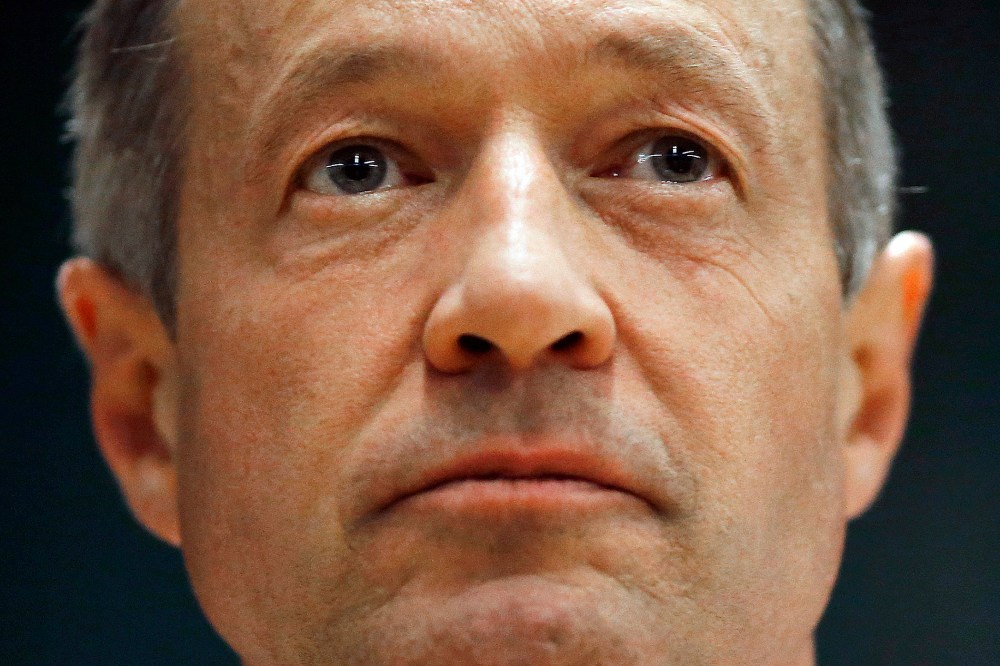
Martin O’Malley certainly looked the part. If a Hollywood casting agent was looking for a commander-in-chief type, the former Maryland governor and Baltimore mayor would have fit the bill. But Democratic primary voters never bought what he was selling and after failing to break the 5 percent mark in polls and a dismal performance in the Iowa caucus, O’Malley’s campaign for the presidency finally came to an end late Monday night.
And while to the untrained eye O’Malley’s candidacy may have appeared to be a footnote on par with the long-shot bids of Lincoln Chafee and Jim Webb, there may be more significant lessons to learn from his 2016 flameout.
The Carcetti candidate
In many ways, O’Malley could never overcome comparisons to the slick, opportunistic character on the cult TV series “The Wire” who was supposedly based on him. In the post-Obama era, Democratic voters want transformational candidates. Sen. Bernie Sanders presents a radical departure from the political status quo, whereas Hillary Clinton provides an opportunity to finally break the gender glass ceiling on the presidency. O’Malley’s résumé and mainstream white male appeal could only take him so far with the 2016 Democratic voting pool. Depending on how the 2016 campaign plays out, he might represent the last of a certain kind of Democratic presidential candidate — one who runs largely on the strength of their establishment credentials.
RELATED: 2016 campaign takes off from Iowa: Where do we go from here?
“White Lives Matter”
It didn’t help that at a pivotal moment in the campaign, when he was first trying to establish himself with Democratic voters, O’Malley made a tone-deaf gaffe on the issue of race from which he never fully recovered. During an appearance at the Netroots Nation conference last summer, O’Malley tried to silence Black Lives Matter protesters by arguing that “white lives matter,” too. He then tried to backtrack and make amends with activists, which only drew more criticism from the right and made him look weak and like a panderer. O’Malley’s inability to deliver at potential turning points like that doomed his candidacy. His political demise speaks to demographic shifts in the Democratic party — it’s increasingly clear that the party’s standard-bearer must connect with youth and minority voters if they hope to stand a chance.
Let us remember Martin O'Malley the way he should be remembered: shirtless. pic.twitter.com/HshCoBLan0
— Jacqueline Green (@jackiecampbell_) February 2, 2016
Baltimore
The persistent racial strife in the city where O’Malley was once mayor seriously undercut his campaign narrative. While O’Malley loved to trumpet his record of accomplishment as governor, bitter feelings over his tenure as mayor of Baltimore remained a permanent thorn in his side. In particular, the tough police tactics he once championed were routinely called into question in the aftermath of the April 2015 death of unarmed African-American man Freddie Gray while he was in police custody. The violent police clashes with protesters that followed presented an image of a city on the brink, still reeling from polarizing positions O’Malley took during his mayoralty. This was not a good season to have to defend your record on combating institutionalized racism.
Immigration loses an advocate O’Malley was the one remaining Democratic candidate who made immigration a centerpiece of his campaign. While Sanders has focused on economic populism and Clinton’s message has centered on building upon the Obama legacy in both foreign and domestic affairs, O’Malley put forward an ambitious agenda which called for the extension of Obamacare subsidies for all immigrants. His campaign made great efforts to motivate Latino voters and activists to turn out, and he was the first candidate to meet face-to-face with hunger-striking immigrants in detention centers. Unfortunately, all of his risks did not pay off, as Latino voters barely registered in Iowa’s entrance polls, which isn’t surprising since they make up only 5.5 percent of the state’s population, three times less than the national average. The abs spoke louder than words It’s telling that even Sarah Palin, while playing a word association game with CNN’s Jake Tapper, came up with “biceps,” when asked about O’Malley. His shirtless photos became a minor campaign phenomenon during the past few months. As did, for more comical reasons, his guitar playing and earnest singing. But Democrats learned the hard way with John Kerry (whose wind surfing became a liability) that sometimes silly superficial qualities can go a long way towards defining a candidate. The question going forward is where O’Malley’s supporters — albeit a small percentage of the Democratic electorate — will go now. O’Malley was far more critical of Clinton during the campaign, frequently accusing the DNC of rigging the process for her benefit. Could he throw his weight behind Sanders’ insurgency? Another burning question: Did the lone undecided voter who came to see him during a brutal snowstorm in Iowa last October end up caucusing for him on Monday? Martin O'Malley courts the large undecided Iowan folksinger vote by singing the Iowa Waltz (C-SPAN) https://t.co/eJajvcxYiz — Additional reporting by MSNBC’s Amanda Sakuma.
Adam Howard Recommended


