









The desire to help people motivates fashion designer Anna Taylor.
Taylor, 22, of Little Rock, Ark., employs Kenyan women — mostly widows — as seamstresses for her company, Judith & James. She follows the mantra: “Led by love. Pursued by joy. Inspired by hope.” And a companion non-profit organization, James127 Foundation, which Taylor helped establish, provides free sewing and jewelry certified training to women for eventual employment with her company or other businesses.
“Recognition is great, but ultimately I will feel like I have achieved something when I can employ more and more women,” Taylor told msnbc. “I need it so I can continue to grow the business and foundation…but what really makes me happy is seeing food on the women’s table.”
Taylor first thought of the idea for Judith & James in 2009 during her freshman year at the University of Arkansas. She was inspired to decorate and sell wire crosses to send to Africa to assist with widows’ expenses after visiting slums in Nairobi, Kenya, and an orphanage in Rwanda before the age of 20.
She first embarked with her parents and two younger siblings on a six-month Christian mission to Kenya in 2007, living and working in an orphanage until violence erupted in the aftermath of an election and they returned to the United States. She later visited Nairobi during her college winter breaks.
In 2010, a Kenyan pastor persuaded Taylor to manage a training sewing program to help widows earn validation and certification in the African sovereign state. The classes eventually became part of the James127 Foundation.
Taylor designed custom pieces for her first two hires to sew for eventual sale in the United States. She later named her company after one of her first employees, Judith. (The “James” in the company’s title comes from the Bible’s James 1:27 verse, which encourages people to care for widows and orphans.)
“The other option for them is prostitution. They don’t have options. So to be able to give them a better option was really important to me,” Taylor said.
She originally enrolled at the University of Arkansas intending to major in art therapy. But her focus shifted to apparel studies after she witnessed the beauty of African fabrics during a trip to Rwanda as a freshman. She admitted to never being a “fashion fanatic” or making her wardrobe a priority. Taylor typically packed the minimum essentials when traveling overseas for long periods of time.
The transition to working in a foreign country didn’t come easily, though. Taylor once asked the women to sew laptop cases, and their finished products resembled massive pillow cases.
“I remember thinking there was such a disconnect between them and me,” she said. “They didn’t know who I was, if my motives were good.”
Taylor quickly learned to communicate more effectively and provided more detailed instructions. The company originally operated in one room with two sewing machines, and the workers attained success on a small scale by learning from industry experts and selling items locally in Nairobi. By October 2011 she introduced 16 women to the program, a step that significantly expanded what later officially became Judith & James and the James127 Foundation.
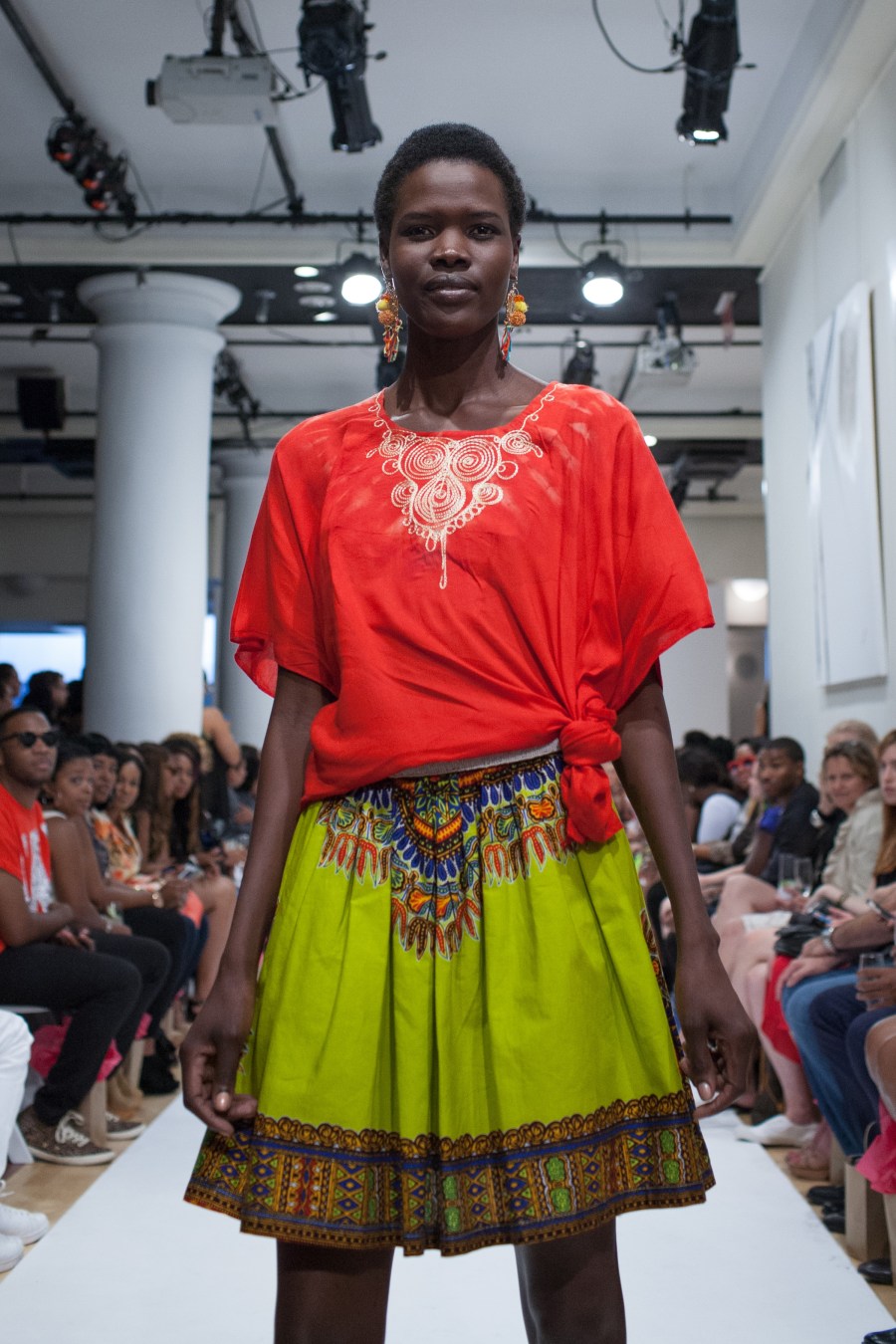
“So many people go to Africa and start businesses but have no idea about the American market,” Taylor said. “I was thankful I learned the right way to do it.” She earned her degree from the University of Arkansas in May 2013. She accepted an offer to debut her 2014 spring and summer collections last September during New York Fashion Week. After her inaugural visit to the eastern city, where she officially launched Judith & James, she hired five recent graduates of the first training program to sew the garments she had featured in the show. She reappeared at New York Fashion Week this year on Feb. 9 to reveal her fall and winter collections. Taylor markets her products toward American shoppers, selling items — ranging in prices from $40 to $250 — online through the company website and at two stores in Little Rock, with hopes to expand throughout the country. The seamstresses create each article of clothing from African fabrics. “I think the whole time I’ve just been doing it out of love for these women,” she said. “I honestly feel they are my family.” Taylor splits her time between traveling on sales trips in the United States to expand her collections to other shops and visiting the women in Kenya. Since her most recent trip to New York last month, Taylor has featured her collections at two fashion events in Arkansas and has attended a local launch party and trunk show. Soon she will travel to Oklahoma, Texas, and Tennessee to introduce her clothing to boutique owners before she flies to Kenya in April for a three-month trip to help with the production of her fall line. Taylor doesn’t see her career commitment and business trips as barriers to her social life. Instead, she said she views her current situation as a way to prepare for the future as a self-sustaining individual. “I see my time as an investment,” she said. “It’s really for my benefit to go full force…the sooner I can get it off the ground, I can have a relationship.”
Michele Richinick Recommended


