








Most people don’t hear the word “vaccination” and think “Fun.”
Nor do many pair Jay Z with sanitation efforts in Northern India. Or Tiësto with girls’ education in Rwanda.
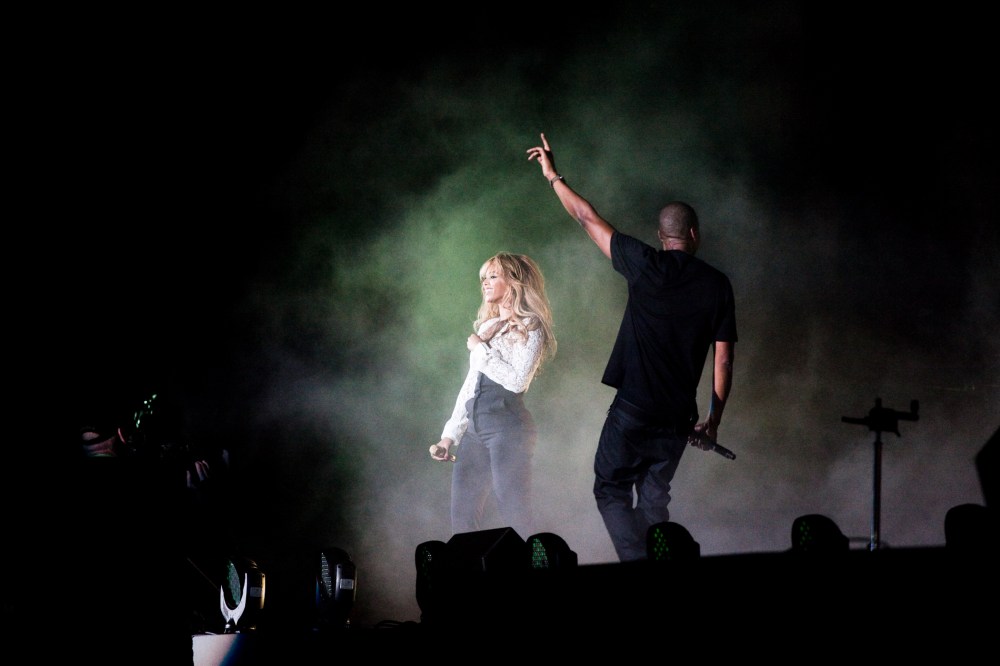
But on Sept. 27, 2014, the music industry’s biggest stars and the world’s humanitarian leaders came together for the third annual Global Citizen Festival to spotlight efforts that could change millions of lives across the globe. Celebrity activists like Adrian Grenier, Hugh Jackman, and Jessica Alba, and world leaders like United Nations Secretary General Ban Ki-moon and Indian Prime Minister Narendra Modi introduced the musical acts: Beyonce, Jay Z, Fun., Tiësto, No Doubt, Sting, Carrie Underwood, and The Roots. The concert was hosted on MSNBC and MSNBC.com by Chris Hayes, Alex Wagner, and Ronan Farrow.
Global Poverty Project (GPP), the organization that hosts the annual festival, aims to end extreme poverty by 2030 by increasing the number of people taking action against poverty. MSNBC partnered with GPP to support that goal, pledging to tell the stories of the suffering so as to encourage our audience to join the movement.
Free concert tickets were awarded to people who completed GPP’s digital “action journey” – a sequence of positive actions meant to secure commitments from charities, corporations, and countries. Actions ranged from petitioning governments to pledge money toward vaccinations to sharing a hope for the world on MSNBC’s Growing Hope Digital Tree. In 2014, the “action journey” focused on improving education, vaccinations, and sanitation.
To echo these efforts, MSNBC spent the three months leading up to the concert traveling to Nigeria, Rwanda, and India, cataloging the strife and survival of people living in extreme poverty.
In Kano State in northern Nigeria, we met Aisha Isyaku, a volunteer community mobilizer and Islam teacher who travels from house to house with UNICEF’s polio vaccination team. She became a champion of polio eradication after her best friend contracted the disease. Nigeria is one of three polio-endemic countries left in the world.
In Rwanda’s Rugamara village, we met Epiphanie Karuranga, an uneducated mother of five who funds her children’s education by weaving baskets. Karuranga says she eats less than her children so that she can afford to buy them school supplies. Only 15.6% of Rwandan girls attend secondary school, but initiatives like Connect to Learn are working to change that.
And in northern India’s Khanpur village in Haryana, we met Surjit Kaur, the leader of a group of local women who banded together to educate their community on the benefits of sanitation using some unusual tactics. Sixty percent of open defecation that occurs in the world happens in India, spreading disease and harming children’s development.
Leading up to the concert, MSNBC aired 34 television segments and produced 30+ digital pieces, including the aforementioned original documentaries, social media campaigns, and interviews with celebrity activists. Our content humanized GPP’s goals; it showed viewers the faces of extreme poverty and urged them to act.
The seven-hour Global Citizen Festival aired both on MSNBC and MSNBC.com, and featured not only world leaders and musical guests, but profiled individual Global Citizens who’d been awarded tickets after taking remarkable actions to end poverty.
By the numbers: Keeping the momentum going MSNBC’s dedication to the 2015 Global Citizen Festival remains vital. “We are thrilled to once again be the official media sponsor of the 2015 Global Citizen Festival,” said Phil Griffin President, MSNBC. “Ending extreme poverty by 2030 is an incredibly important mission and we’re excited to get behind it.” The fourth annual Global Citizen Festival launches on September 26, 2015 on the Great Lawn of Central Park in New York, NY. The star-studded line up of musicians and activists includes Pearl Jam, Beyoncé, Ed Sheeran and Coldplay along with Stephen Colbert, Salma Hayek Pinault, Deborah Lee, Hugh Jackman, Kerry Washington, and Olivia Wilde. MSNBC will air the festival in its entirety on-air and online hosted by Willie Geist, Janet Mock, Thomas Roberts, and Alex Wagner. Leading up to the concert, MSNBC has already begun launching a series of efforts to bring awareness to the impact of global poverty around the world. These efforts include a Snap Challenge that aimed to raise awareness to sanitation, access to clean water, climate change, and educational resources for women and girls. Here the participants were encouraged to use the mobile app Snapchat to post a series of videos featuring their action journey with the incentive of earning free tickets to the concert. Most recently, MSNBC has launched “Picture the Change,” a new campaign where the community is asked to submit a photo or video that best completes the sentence “As a #GlobalCitizen I will…”. Users are encouraged to take inspiration from the roster of celebrities and influencers who’ve already stated their global goals. By taking this action, people will earn 10 points for a chance to win tickets to see the festival live. MSNBC will continue highlighting new global goals and expanding the reach of the message about ending global poverty through the concert and beyond. Stay tuned.
MS NOW staff Recommended


