








DREAMers and allies celebrated the third anniversary of President Obama’s deferred action measure on Monday, a program that in a few short years has dramatically reframed the immigration debate.
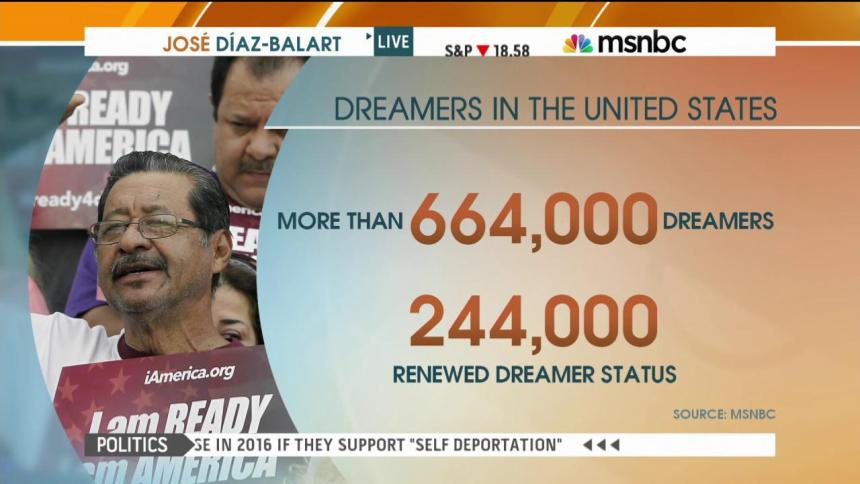
In the last three years, Deferred Action for Childhood Arrivals, or DACA, has become deeply ingrained in communities across the country, opening up career paths, educational opportunities, and effectively creating higher wages for more than 664,000 people. Another 244,000 DREAMers have gone on to renew their temporary status and been shielded from deportation.
But for advocates who won a hard-fought battle by convincing the president to enact DACA, the ripple effects extend far beyond the intent of the measure. Now, deferred action for young immigrants is the new norm for communities and politicians with growing Latino constituencies.
“DACA is a model for progress in what immigration now looks like,” Cristina Jimenez, managing director of the advocacy group United We Dream, said during a conference with reporters Monday. “It has been a huge benefit not only to the immigrant communities and the families directly, but to the entire country.”
RELATED: 5 things you don’t know about DACA
DACA in many ways has been the test case for a more expansive program like what Obama unveiled last November, extending benefits to a larger share of DREAMers and millions of undocumented adults who are the parents of American citizens and legal permanent residents. The program mobilized organizers and community groups unlike anything previously seen before, creating a network of advocates who could tap immigrant communities who have traditionally been afraid to come out of the shadows.
As the latest round of executive actions remains stalled in an ongoing legal battle that could lag on for another year, supporters are highlighting the economic windfall the U.S. could experience should the programs move forward.
New analysis released by the Center for American Progress (CAP) Monday estimates that the executive actions together would accumulate roughly $230 billion in economic growth over 10 years. Breaking down the economic benefits by state, CAP finds that battleground regions like Colorado, where 51% of the undocumented immigrant population likely qualifies for the executive actions, could see a $2.1 billion income increase for all state residents over the same period. “This benefits everyone — when people are more able to fully engage in their community and especially when it comes to the labor market, it has an economic benefit to everyone,” said Lizet Ocampo, associate director for immigration policy at CAP. There are signs that the American public is starting to see immigrants in a different light. Just over half (51%) of Americans say they believe immigrants strengthen the country because of their hard work and talents, a recent Pew poll found, compared to 41% who say immigrants are a burden by taking away jobs, housing and health care from U.S. citizens. Erika Andiola, national director of the DREAM Action Coalition, recalls the lengths prominent DREAMers like herself to make a program like DACA happen and recast the image placed on immigrant communities as stealing jobs.“I believe a lot in moral power,” Andiola said. “There’s monetary power and there’s political power — DREAMers were able to create that moral power.”
Amanda Sakuma Recommended


