








The word “great” in the phrase “Great Wall of China” does not mean what Donald Trump thinks it means.
It means monumental, it means large of scale — but in the context of the architectural structure’s tragic history, “great” does not mean admirable, worthy of imitation or even effective.
Trump has been comparing his plan to build a wall along the U.S.-Mexico border to the Great Wall of China since this past fall. The Republican presidential front-runner has declared that it would be paid for by Mexico and prevent undocumented immigrants from entering the U.S. He also likes to point out that its construction would be an easy feat in comparison to the monumental Chinese structure. At one point, he even suggested calling his proposed national security measure “The Great Wall of Trump.”
For the latest news from New Hampshire, click here
What Trump conveniently glosses over is that the Great Wall of China is a structure fraught with failure and haunted by the death of an estimated 400,000 conscripted laborers. Many of their bodies are literally buried within the structure itself.
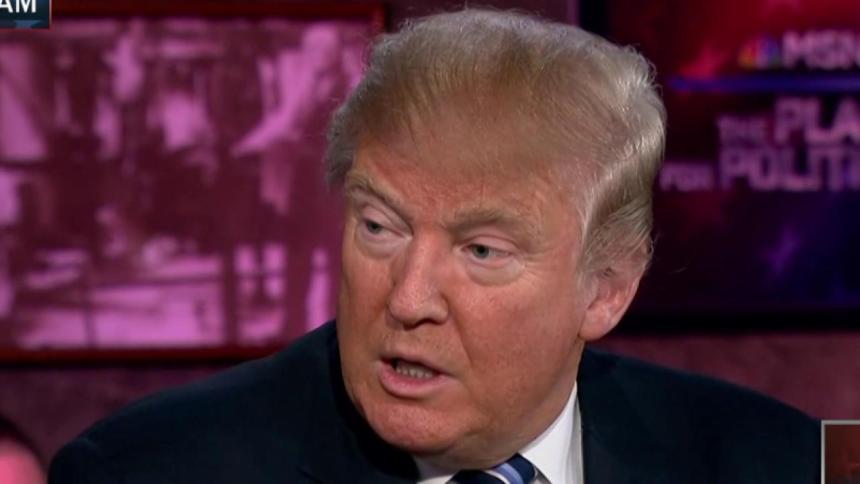
MSNBC host Tamron Hall emphasized the problematic comparison on Tuesday, when she pointed out to Trump that the Great Wall of China was built using slave labor.
With characteristic single-mindedness, Trump pushed past that sticky fact, instead insisting, “I think it’s a good example. You can build a great wall, especially with Caterpillar tractors.”
During an appearance at Liberty University in January, Trump again compared his wall to the historic Asian structure.
“Two thousand years ago, China built the Great Wall of China. This is a serious wall. And they didn’t have Caterpillar tractors,” Trump gleefully told the audience, before taking the opportunity to slam Japanese imports of construction equipment as an aside. “But they didn’t have the equipment. And they built a wall. Think of this: 13,000 miles long, and this is a serious wall, OK? This wall is wide.”
In his references, Trump doesn’t mention that the Great Wall of China took 1,000 years to build and is now largely a crumbling structure. Conveniently, he also doesn’t acknowledge that the fortification failed to keep out invading forces. RELATED: The larger implications of Trump’s p**sy comment To be sure, the Great Wall of China is a breathtaking architectural marvel rumored to the be the only man-made structure visible from space. But in many ways, it was a folly when it came to national security. It cost the lives of hundreds of thousands of people and left the country with little more than bragging rights. When put in historical context, Trump’s comparison of his proposed wall to the Great Wall casts his other remark at Liberty University — in which he claimed his critics “don’t know anything. They don’t know to fix the infrastructure” — in a particularly ironic light.
Joy Y. Wang Recommended


