








In the two weeks since President Obama stood before the United Nations and declared that the United States will stand up for human rights, three people have been sent to the death chamber, making a mockery of his claims.
One of those people did not even commit the murder she was sentenced to die for. Another showed strong signs of intellectual disability. This ghastly juxtaposition speaks to the need to end this cruel, inhuman punishment once and for all.
Horrifyingly, the tally could have been four executions in just over one week’s time but for a bungling of the execution method. The state of Oklahoma was scheduled to execute Richard Glossip the week before last, despite a growing movement to further investigate his claim of innocence.
But Glossip’s assertion that he did not commit the crime isn’t what saved him. It was the state’s own incompetence.
Prosecutors%20like%20to%20say%20that%20capital%20punishment%20is%20reserved%20for%20the%20%22worst%20of%20the%20worst%2C%22%20but%20the%20reality%20is%20far%20more%20arbitrary%20and%20discriminatory.’
Just minutes before the execution, Oklahoma Gov. Mary Fallin issued a temporary stay of execution because state officials suddenly realized they had failed to procure the right mixture of drugs to kill him. The following day, the Oklahoma attorney general requested an indefinite stay on executions while his office investigates what went wrong.
The reality is that just about everything went wrong. Glossip’s case shows, yet again, how fundamentally flawed the capital punishment system is.
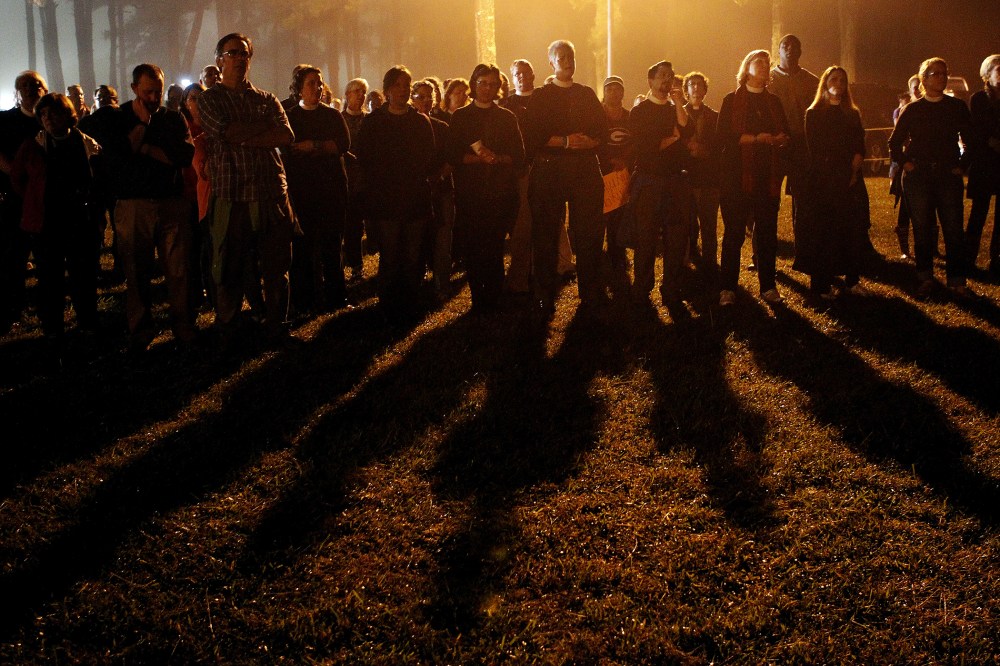
The night before Glossip was nearly executed, the state of Georgia ignored pleas from human rights groups, Pope Francis and many others, and executed Kelly Gissendaner. She became the first woman to be executed by the state in 70 years.
RELATED: Wrong drug used in Oklahoma execution
Gissendaner was convicted in 1998 of the murder of her husband, Douglas, and sentenced to death. Her co-defendant, Gregory Owen, actually committed the murder and is serving a life sentence. He could be paroled in eight years. She’s dead.
At trial, Owen testified that she first raised the idea of murdering her husband and instructed him on how to carry it out. The prosecution signaled it would seek the death penalty and offered both defendants a plea deal: life in prison and no chance of parole for 25 years.
Owen took the deal and testified against Gissendaner. But she rejected it, apparently because she felt she was less culpable than Owen and deserved earlier parole eligibility.
Prosecutors like to say that capital punishment is reserved for the “worst of the worst,” but the reality is far more arbitrary and discriminatory. Many factors come into play, like race, class, geography, quality of legal representation and even the political aspirations of judges and prosecutors. That may help explain why 155 prisoners on death row have been exonerated since 1973.
Despite the recent spate of executions — and more executions could happen this week — the death penalty is in decline in the U.S.
Executions have declined from a high of 98 in 1999 to 35 in 2014, the lowest in 20 years. Last year, there were 72 death sentences handed down, the lowest number on record since 1976.
Since 2007 alone, seven states abolished the death penalty, bringing the total number to 19 plus the District of Columbia. Seven other states have not carried out an execution in 10 years or more. RELATED: Arkansas judge halts 8 upcoming executions A small handful of states, on the other hand, are aggressively pursuing executions in stark contrast to the national trend. Texas, Oklahoma, and Missouri are moving further and further away from national standards of decency. Arkansas, which hasn’t executed anyone in a decade, recently moved to join these states by scheduling eight executions over the next four months. A judge has halted those efforts, at least temporarily, while prisoners challenge the state’s secrecy around lethal injections. The%20United%20States%20–%20driven%20by%20only%207%20states%20–%20executed%20the%20fifth%20most%20people%2C%20after%20Iraq%20and%20ahead%20of%20Sudan.’ Only a tiny fraction of U.S. counties continue to produce the majority of death sentences and executions. Those counties that are home to the highest execution rates — like Los Angeles County and Harris County, Texas — are also home to the highest rates of reversal on appeal, not to mention the most egregious injustices. Meanwhile, 85% of the U.S. population lives in counties that do not use the death penalty at all, either because it’s been abolished in law or abandoned in practice. Of course, those communities that don’t use the death penalty still help foot the bill for the few that do. The death penalty is also in decline globally. As of today, 140 countries have abolished the death penalty in law or practice. Last year, only 22 carried out executions. China, North Korea and Iran executed the most people. The United States was in fifth place, after Iraq and ahead of Sudan. RELATED: Justice Stephen Breyer: Executions are often ‘arbitrary’ As long as the U.S. is employing this ultimate cruel, inhuman and degrading punishment, it can’t claim to be a human rights leader. For reasons moral and pragmatic, the death penalty is irrevocably broken and cannot be fixed. Now is the time to end it for good. Steven W. Hawkins is the Executive Director of Amnesty International USA.
Steven W. Hawkins Recommended


