








Are you a part of the Nerdland Scholar Challenge? Get going by signing up and catching up on past assignments.
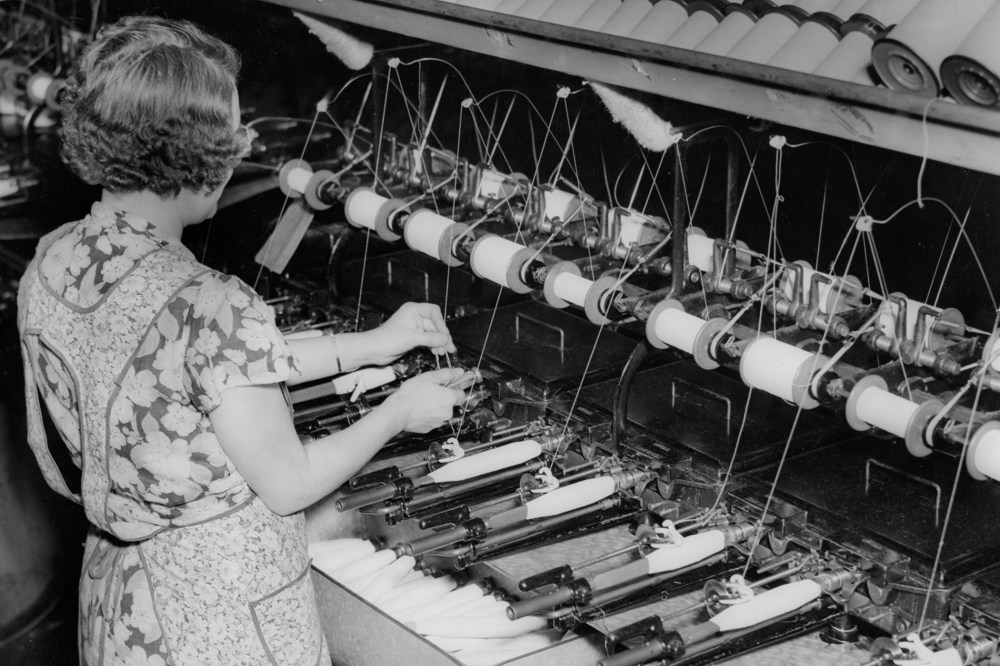
At the time Muller v. Oregon was decided and the Triangle Factory Fire took place, the demographics of the American workplace were changing rapidly.
Take a look at the following statistics from The Grounding of Modern Feminism by Nancy F. Cott and from the Library of Congress:
In 1880, there were 2.6 million women in the workplace. By 1910, that number had jumped to 7.8 million.
In 1900, less than 18% of employed women worked in clerical, managerial, sales, and professional areas.
By 1930, 44% of employed women worked in those fields.
But that doesn’t tell the whole story of women’s movement into the workplace, which was largely stratified by race.
White women were the primary recipients of white-collar jobs; black women were twice as likely to be in the labor force, but were barred from the majority of industry jobs.
In 1920, four-fifths of black female wage-earners not in agriculture were maids, cooks, or washerwomen.
From 1890-1920, 90% of clerical and professional positions went to white women.
Mainstream feminist organizations often celebrated women’s entrance into the workplace. But for some women, the ability to withdraw from the labor force and focus on raising their own children was a liberating practice.
Assignment: Read and reflect on this excerpt from Patricia Hill Collins’ book Black Feminist Thought. Let us know in the comments below what you think – is there an assumption that work is an inherently liberating practice for women? “African-American women who were the wives and daughters of able-bodied men often withdrew from both field labor and domestic service in order to concentrate on domestic duties in their own homes. In doing so they were ‘severely criticized by whites for removing themselves from field labor because they were seen to be aspiring to a model of womanhood that was inappropriate to them’ (Dill 1988b, 422). Black women wanted to withdraw from the labor force, not to mimic middle-class white women’s domesticity but, rather, to strengthen the political and economic position of their families. Their actions can be seen as a sustained effort to remove themselves from the exploited labor force in order to return the value of their labor to their families and to find relief from the sexual harassment they endured in domestic service. While many women tried to leave the paid labor force, the limited opportunities available to African-American men made it virtually impossible for the majority of black families to survive on black male wages alone. Even though she was offered work only as a maid, Elsa Barklet Brown’s college-educated mother was fortunate. From Brown’s perspective, her mother’s ‘decision to be a wife and mother first in a world which defined black women in so many other ways, the decision to make her family the most important priority, was an act of resistance’ (1986, 11). Far too many black women could not make this choice – they continued to work for pay, and their work profoundly affected African-American family life, communities, and the women themselves (Jones 1985).”
Sara Kugler Recommended


