








Florida was just given a rare chance to dramatically influence the debate over whether the nation’s most hardened killers should pay the ultimate price for their crimes.
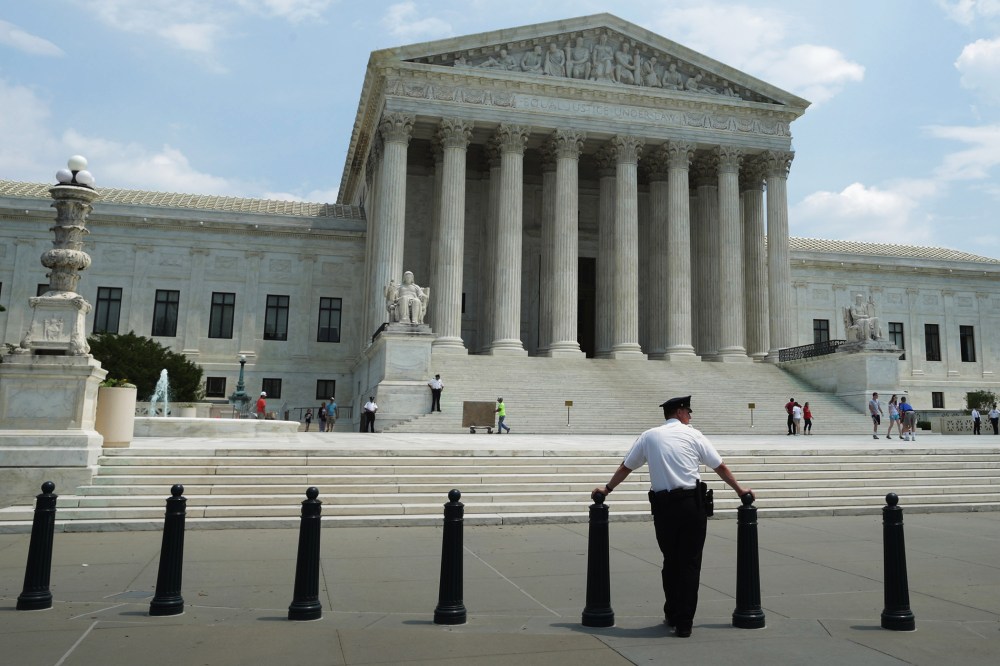
The opening comes after the Supreme Court on Tuesday struck down Florida’s unusual process of sentencing convicts to death row, a system that empowered judges, not juries, to ultimately decide who should be sentenced to die.
With the state’s death penalty law now decidedly unconstitutional, Florida leaders must scramble to revamp and craft a new process that preserves the rights of prisoners already convicted of their crimes. That is, if they overlook the alternative — scrapping the death penalty entirely.
But for a state that ranks fourth in the total number of executions carried out in the U.S., is repealing the death penalty really possible? There’s some indication the option is at least on the table.
RELATED: Supreme Court strikes down Florida death penalty law
State lawmakers are upping death penalty reform as a priority for the start of the 2016 session, The Miami Herald reported on Tuesday, with reform bills among the list of options under consideration.
“Either that or we abolish the death penalty,” Carlos Trujillo, a Miami Republican and chair of the House Criminal Justice Committee, told the Herald. “Those are our two options.”
The legislature had been mulling a major overhaul to Florida’s death penalty system even before the Supreme Court’s ruling Tuesday, but the decision brings a sense of urgency to addressing the many issues raised in recent years.
Florida’s death penalty system is unique from the other 31 states that still have capital punishment on the books. The state’s juries are told expressly that their role in capital cases is merely advisory. They can make recommendations, but even in cases where a death sentence is recommended, juries are not required to reach a unanimous consensus. More to the point, a judge has the authority to override a jury’s advisory opinion and reach his or her own decision.
The Supreme Court ruled in 2002 that convicted murderers had the right to have juries decide whether their crimes warranted the death penalty, but Florida’s system nonetheless put an exceptional amount of power in the hands of the judge. And so in a 8-1 decision, the Supreme Court on Tuesday ruled the structure unconstitutional.
“The Sixth Amendment requires a jury, not a judge, to find each fact necessary to impose a sentence of death. A jury’s mere recommendation is not enough,” wrote Justice Sonia Sotomayor in the majority opinion. Justice Samuel Alito was the only one to dissent.
With Florida being one of the major states still actively carrying out capital punishment, any changes to the system could have a significant impact. There are 400 prisoners in Florida living on death row, and it’s likely that many will seek appeals in the wake of the justices’ decision. What’s unclear is what’s going to happen to those inmates waiting to carry out their sentences. Will the Supreme Court’s ruling retroactively impact their cases? If so, when? RELATED: Florida executes serial killer Oscar Ray Bolin This isn’t the first time the Supreme Court has intervened in Florida’s death penalty practice. In 2014, the court limited the scope of who could be put to death in the state. The justices ruled that IQ tests were too rigid in determining who is or isn’t mentally fit to stand capital punishment. That ruling had a broad impact for other states in the midst of a reckoning over how to gauge a person’s mental fitness to ensure someone who’s severely mentally disabled isn’t being put to death. Tuesday’s decision, however, is limited to Florida and its unique system. But as one of four death penalty cases brought before the Supreme Court this term, there’s a clear indication that justices are slowly inching toward addressing the big moral picture — is the death penalty itself constitutional? Justice Stephen Breyer let that question hang in the air following the last session. The justices had just ruled on a narrow case involving lethal injection protocols, but had found themselves increasingly pressed to address the moral issues being raised out of legal challenges, appeals and exonerations that were becoming impossible to ignore. Alito at the time called the piles of pending litigation a “guerrilla war against the death penalty.” Still even staunch conservatives on the bench have conceded that the courts will inevitably have to decide once again whether to keep the death penalty as the law of the land. That is, unless states beat them to it. Nineteen states have already opted out of capital punishment — which will be the next?
Amanda Sakuma Recommended


