








What keeps you up at night?
That’s the question economist Gary Yohe, one of the architects behind the White House’s 2014 Climate Assessment report, posed to several of his co-authors during a May 6 panel in Washington D.C. Unsurprisingly, the assembled team of climate experts and other academics had no lack of answers, ranging from the possibility of more extreme weather events to the risk of climate-induced mental health degradation. But what keeps Iowa State University climate scientist Gene Takle up at night is what climate change could do to one of humanity’s most basic needs.
“I worry about food security, both globally and in the U.S., because social unrest happens very quickly under food insecurity,” he told the panel. “And I’ve talked about the production side of it, but that’s only one part of food security. It involves transportation, it involves processing, it involves storage. So any breakdown in any of those from any of the factors that we’ve already talked about could lead to food insecurity, which could lead to social unrest very quickly.”
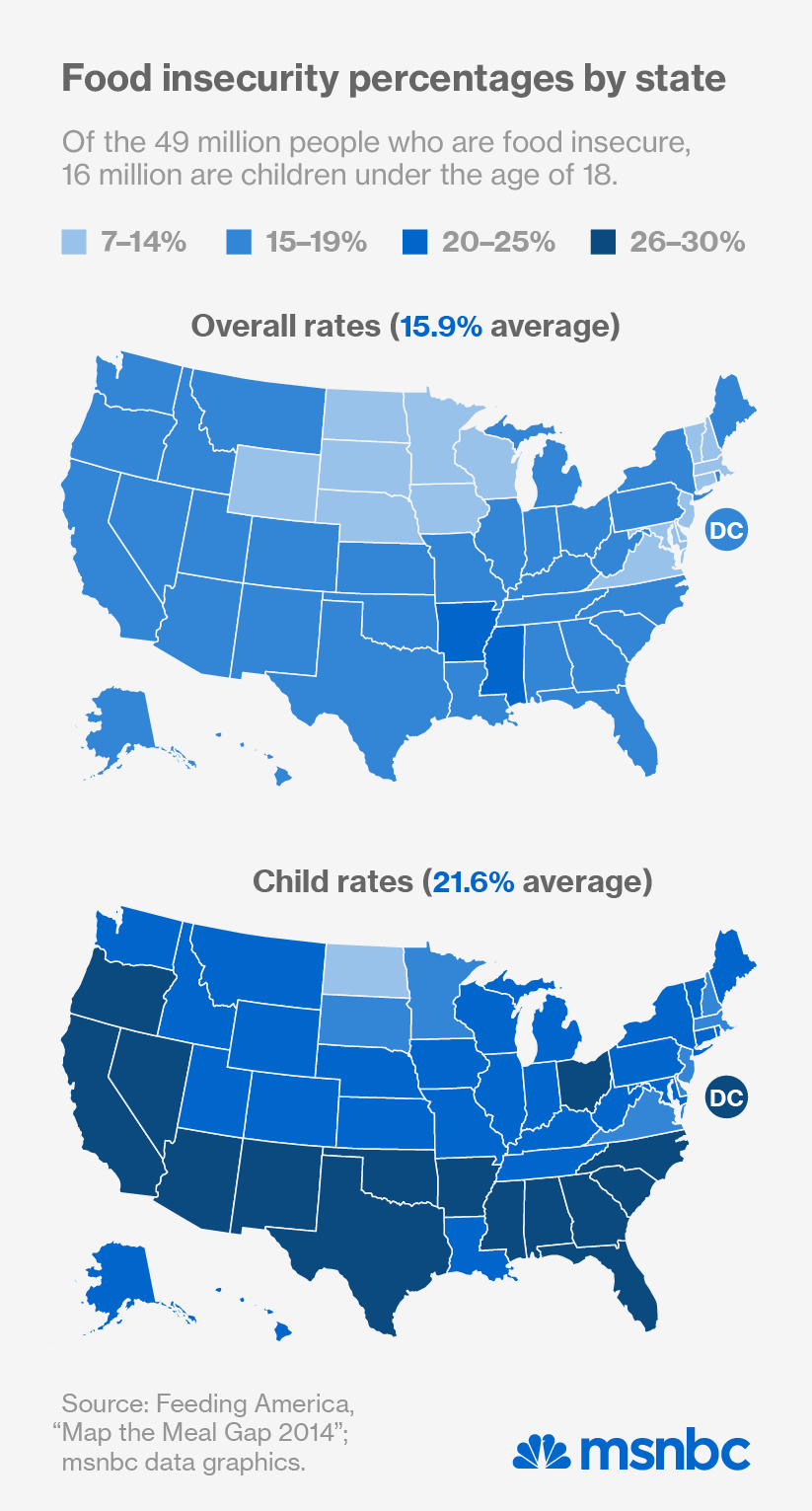
America already has a food security problem, but not one which can be attributed entirely to climate change. An estimated 49 million Americans currently suffer from food insecurity, which is defined by the U.S. Department of Agriculture as lack of access to “enough food for an active, healthy life.” That lack is driven by politics, not scarcity. Billions of pounds of food go uneaten each year, even as increasingly harsh food stamp cuts make it more difficult for food insecure populations to buy any of it.
Now, a growing body of evidence suggests that climate change could make the situation even more unstable. The 2014 Climate Assessment paints a grim portrait of declining crop yields, rising food prices, and disrupted supply chains. And that’s just in the United States.
“In an increasingly globalized food system with volatile food prices, climate events abroad may affect food security in the U.S., while climate events in the U.S. may affect food security globally,” according to the report. “The globalized food system can buffer the local impacts of weather events on food security, but can also increase the global vulnerability of food security by transmitting price shocks globally.”
In late March, the United Nations’ Intergovernmental Panel on Climate Change projected that climate change could raise global food prices by as little as 3% and as much as 85% over the next three and a half decades. In the United States alone, dairy production could drop by as much as 30%. When yields go down and prices rise it can have serious public health consequences, according to Oxfam America climate change policy manager Heather Coleman.
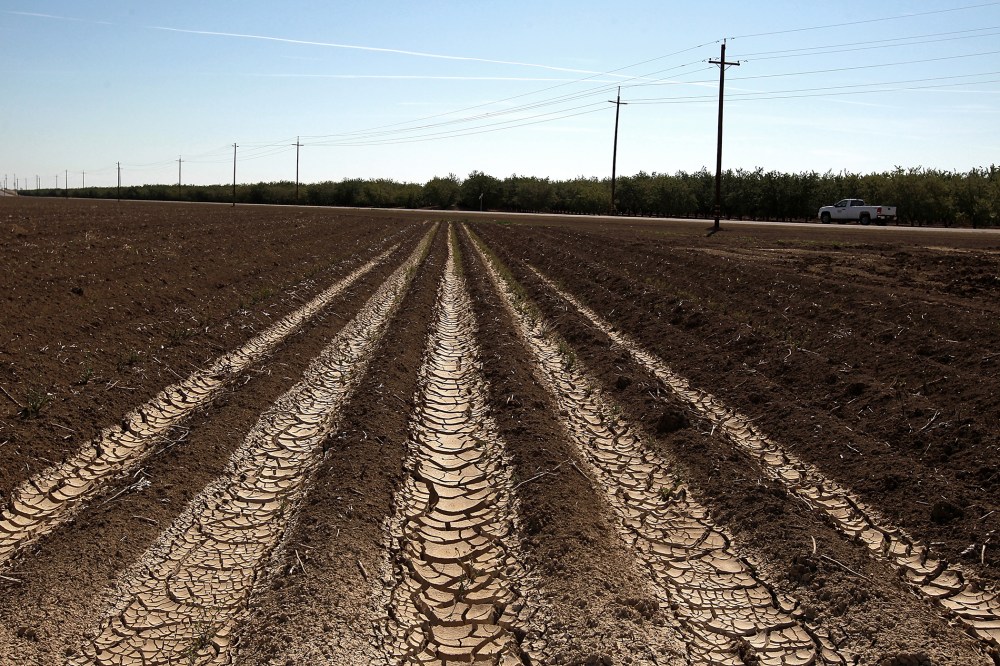
“As the price of food goes up, diets shift in relation to food prices,” she said. “So the pattern is that people purchase lower quality food, and therefore less nutritious food.” A related dynamic could already be playing out on the West Coast, where California is currently getting blasted by a drought of epochal proportions. That drought—which may have been exacerbated by man-made climate change—has jacked up food prices made it harder for food banks in the area to access fresh produce, according to California Association of Food Banks executive director Sue Sigler. “There are an awful lot of unemployed people needing assistance and food prices continue to rise, so that hits both food banks and households,” she said. Gov. Jerry Brown, D-Calif., approved a drought relief package at the beginning of March which takes some of the pressure off by giving additional funding to emergency food assistance programs. But that package is a one-time response to a once-in-500-years emergency, not an attempt to adapt to a new normal. It remains to be seen whether the United States will be able to adapt its agricultural infrastructure for the worsening climate ahead.
Ned Resnikoff is an urban policy analyst, researcher, writer, and editor. His byline has appeared in a variety of publications, including the New York Times, San Francisco Chronicle, Dissent, and The Nation. He writes the newsletter Public Comment, which can be found at publiccomment.blog. Recommended


