








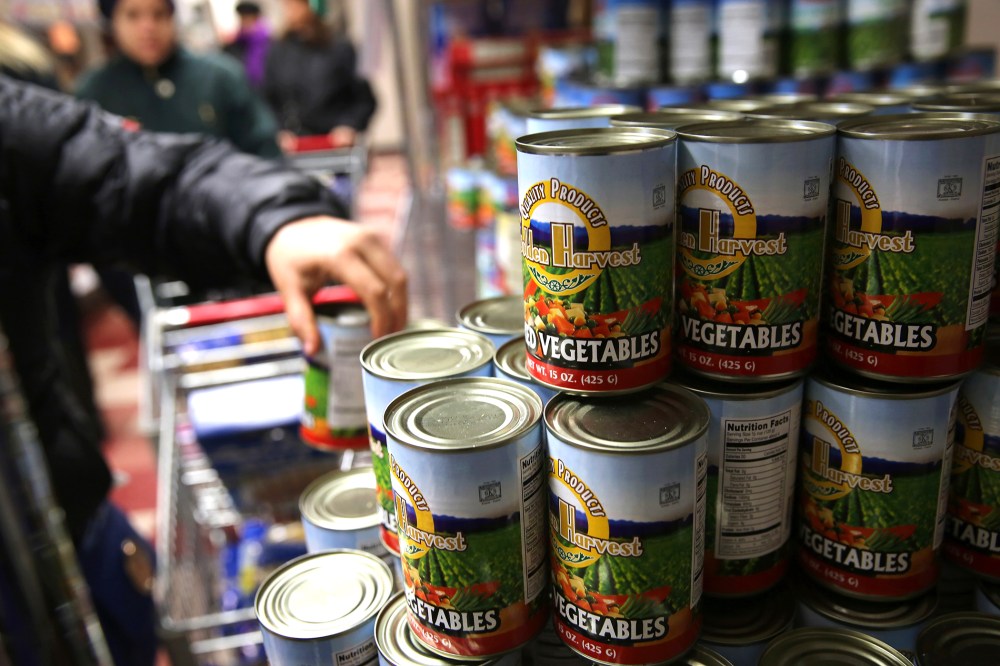
On Friday, President Obama added his signature to legislation that will cut $8.7 billion in food stamp benefits over the next 10 years, causing 850,000 households to lose an average of $90 per month. The signing of the legislation known as the 2014 Farm Bill occurred at a public event in East Lansing, Mich.
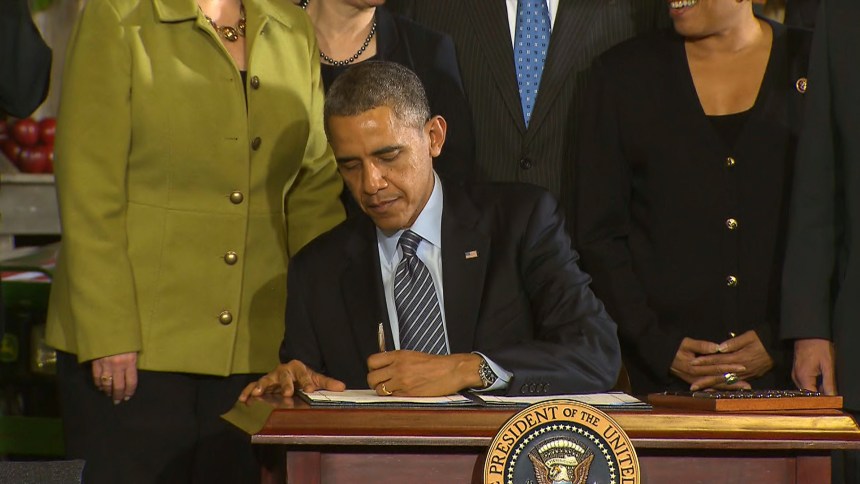
The food stamp cuts are one component of a massive omnibus bill which also includes billions of dollars in crop insurance and various other programs and subsidies involving American agriculture. Before he signed the legislation, President Obama praised it as an example of bipartisan problem-solving that would help create jobs and move the American economy forward.
“Congress passed a bipartisan Farm Bill that is going to make a big difference in communities across the country,” said the president.
Obama’s remarks also focused heavily on economic inequality, which he has previously called “the defining challenge of our time.” The Farm Bill, he said, would “give more Americans a shot at opportunity.”
When House Republicans originally argued for a food stamp cut of between $20.5 billion and $39 billion, the White House threatened to veto both of those proposals. During his Friday speech, the president did not say whether he was satisfied with the final $8.7 billion figure, or even mention the cuts at all. Instead, he praised the food stamp program and said that the final Farm Bill preserved much-needed benefits.
Related: The hunger crisis in America’s universities
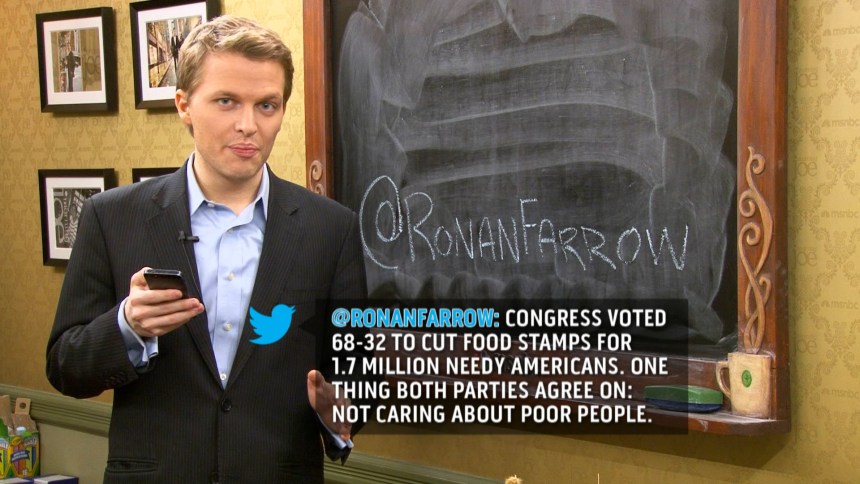
“My position has always been that any Farm Bill I sign must include protections for vulnerable Americans, and thanks to the hard work of [Senate Agriculture Committee chair Debbie Stabenow, D-Mich] and others, it does just that,” he said.
Stabenow, who played a key role in Farm Bill negotiations, fully embraced the cuts in a speech delivered shortly before the president took the stage.
“This is a nutrition bill that makes sure families have a safety net just like farmers do,” she said. “The savings in food assistance came solely from addressing fraud and misuse while maintaining the important benefits for families that need temporary help.”
Speaking to reporters on Air Force One before the speech, Agriculture Secretary Tom Vilsack made much the same point, saying that the $8.7 billion cut “probably makes the program more legitimate than it was.” In fact, the benefits reduction would eliminate the state-level “Heat and Eat” policies currently employed in 15 states and Washington, D.C. Left-wing opponents of the Farm Bill, including Rep. Jim McGovern, D-Mass., expect the burden of burden of the cuts to fall disproportionately on the elderly and disabled. “Poor people are getting screwed by this Republican majority [in the House] and Democrats in my opinion aren’t doing enough to push back,” he said. “I wish there had been more of a fight from the White House and others.” McGovern also admitted to being “puzzled” by the White House’s silence on hunger and food stamp cuts. He predicted that Republicans’ success in getting a several billion dollar food stamp cut meant that they would soon try again for even more. “They know they can’t get a $40 billion cut right off the bat, so what they’re doing is they’re chipping away at it,” he said.
Ned Resnikoff is an urban policy analyst, researcher, writer, and editor. His byline has appeared in a variety of publications, including the New York Times, San Francisco Chronicle, Dissent, and The Nation. He writes the newsletter Public Comment, which can be found at publiccomment.blog. Recommended


