








If an infinite number of monkeys banged randomly on typewriters for an infinite amount of time, one of them would eventually produce a pretty good sonnet. But would the monkey own a copyright in the sonnet?
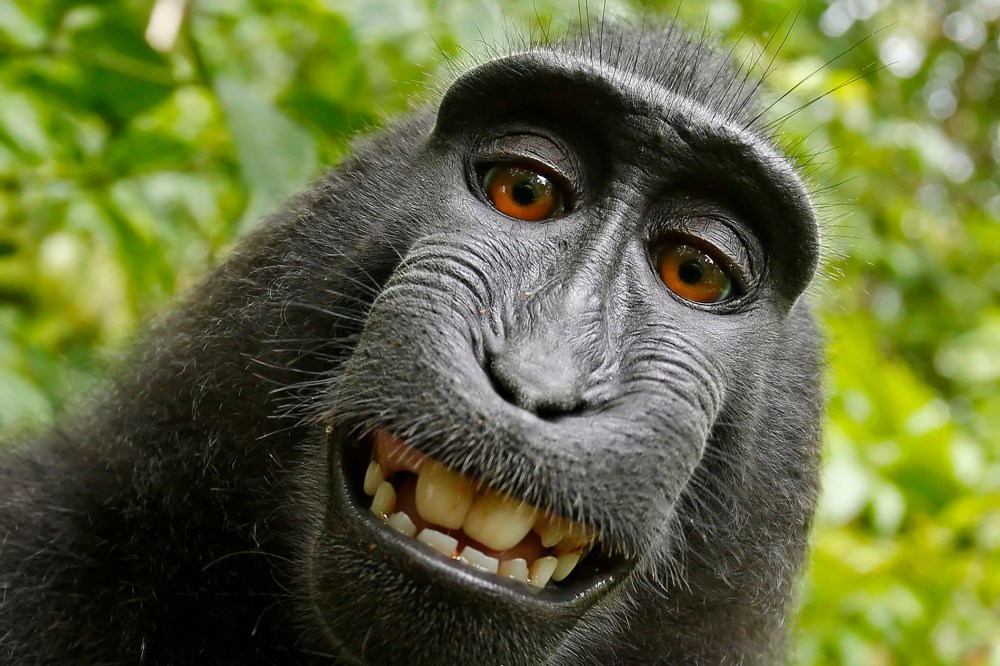
According to People for the Ethical Treatment of Animals, or PETA, the answer is yes. They are suing David Slater, a photographer, for copyright infringement, claiming that Naruto, the crested macaque monkey who took a famous selfie is the photo’s rightful owner, not Slater whose camera the monkey used.
While the case may seem far-fetched, it actually sits at the center of a major question in copyright law: Who can be an “author” of a copyrighted work?
RELATED: Appropriation art meets Instagram: Is copyright law ready?
The U.S. Constitution and the current copyright law provide that only “authors” can receive copyrights. But what does it mean to be an author?
We know that authorship includes more than just people writing books. Painters, choreographers, and architects all count as authors of their creations. As do photographers.
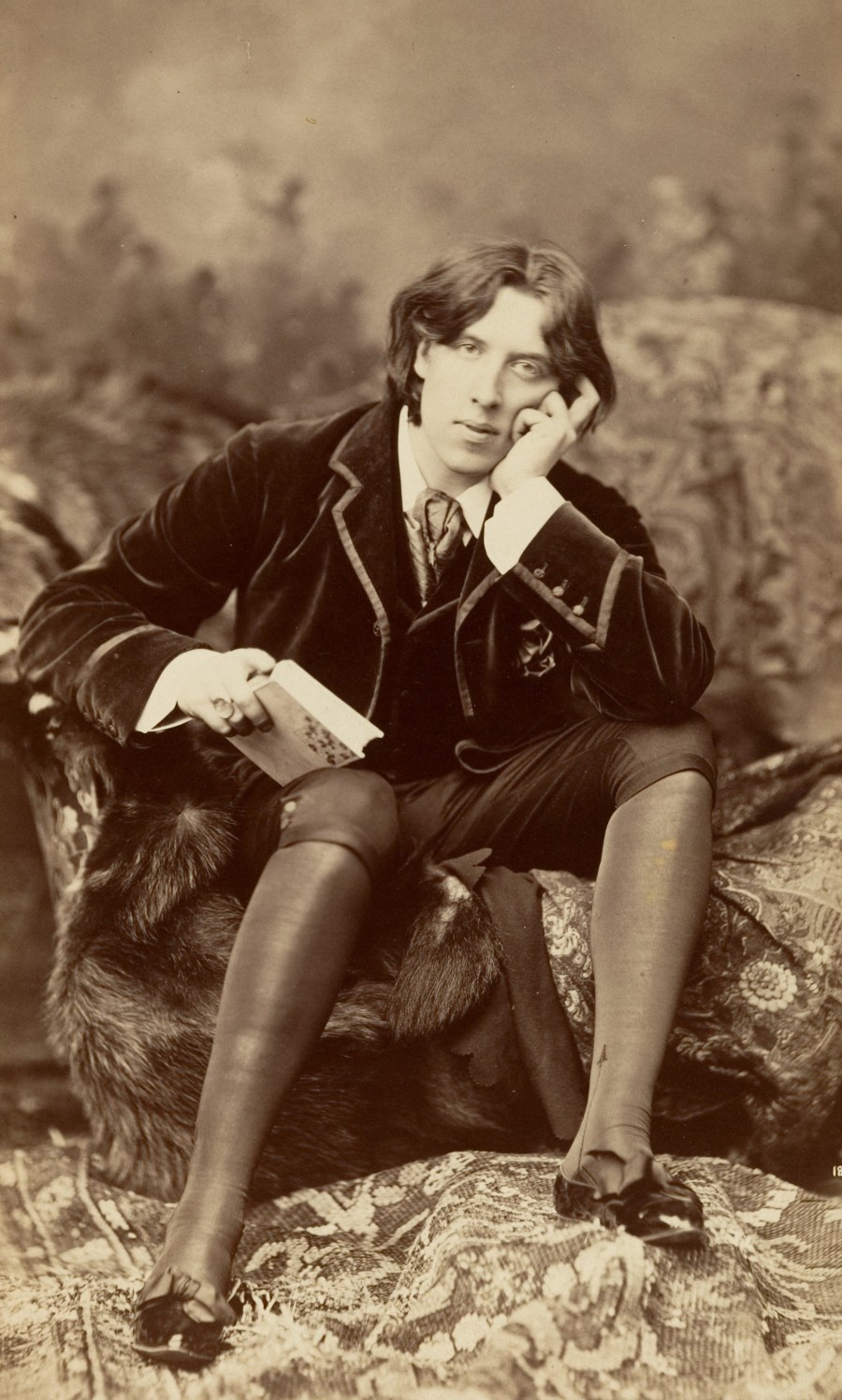
In a famous 19th century case, the U.S. Supreme Court explained that Napoleon Sarony was the author of a photograph he took of Oscar Wilde. The photo, said the court, arose from Sarony’s original mental conception. His decisions about lighting, posing, and framing produced a “new, harmonious, and characteristic picture.”
So did Naruto have a “mental conception” of the image that he was producing?
PETA’s lawsuit cites Slater’s own descriptions of Naruto’s behavior: “Despite the howling posture, the macaque was silent throughout, suggesting to me some form of fun and artistic experiment with its own appearance.” Naruto may not have understood that the camera could produce a photograph, but Slater’s statements seem to suggest that the monkeys were engaged in self-aware play with their reflections in the camera’s lens.
Despite these assertions, Slater claims that he is the photo’s author. He allowed the monkeys to play with the camera knowing that they would take interesting pictures of themselves. He might claim that he is like the director of a movie—he may not have held the camera or pressed the shutter, but the image derived from his, rather than Naruto’s, mind.
And finally, Wikimedia offers a third take on the situation: No one is the author of the photo because monkeys can’t be authors. Thus, the photo is in the public domain and free for anyone to use.
Each side has interesting arguments. As a conceptual matter, it is not obvious that Naruto’s behaviors are much different from those of a human infant. If a small child grabbed her parent’s phone, looked into the screen, and happened to snap a picture, would she not be the photo’s author? If she would, how is that different from what Naruto did?
RELATED: Pharrell, Robin Thicke ripped off ‘Blurred Lines’ from Marvin Gaye On the other hand, copyright law exists to provide incentives for creativity. Without the ability to make money off of their work, people would create fewer novels, movies, and paintings. But monkeys don’t seem to need such incentives to create. Whatever Naruto may have been thinking, we can be confident that he wasn’t motivated by the desire for financial remuneration. There will not be a tragic shortfall in monkey selfies if Naruto loses. But then again, the authors of love poems aren’t usually motivated by money, but the law doesn’t refrain from giving them copyrights. There%20will%20not%20be%20a%20tragic%20shortfall%20in%20monkey%20selfies%20if%20Naruto%20loses.%20But%20then%20again%2C%20the%20authors%20of%20love%20poems%20aren%E2%80%99t%20usually%20motivated%20by%20money%2C%20but%20the%20law%20doesn%E2%80%99t%20refrain%20from%20giving%20them%20copyrights.’ These might seem like questions of mere academic interest, but they have increasing importance in contemporary cultural production. Consider the case of Cindy Lee Garcia, the actress who was duped into performing in the anti-Muslim movie “The Innocence of Muslims.” Her claim to be the author of her performance in the film was recently rejected by a federal appeals court. And who is the author of the Internet-breaking selfie that Ellen Degeneres organized at the 2014 Oscars? Is it Ellen for organizing the photo or Bradley Cooper for snapping the picture? Or are they (and everyone else) joint authors? Ultimately, these questions may get even more challenging. If a computer programmer writes computer code that creates an artificial intelligence capable of writing music, who owns the copyright in the resulting song: the programmer, the A.I., both, or neither? What seems like a silly case about monkey selfies may go a long way towards answering these questions. Christopher Buccafusco is a professor at Benjamin N. Cardozo School of Law in New York City. His new article on copyright authorship is forthcoming in the Virginia Law Review and available to download here.
Christopher Buccafusco Recommended


