








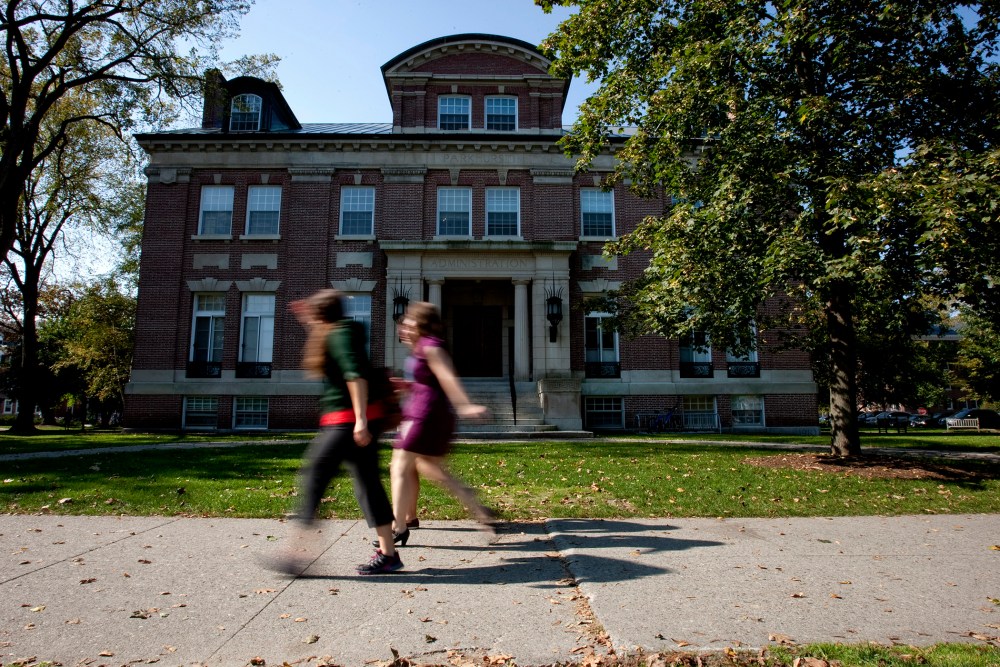
HANOVER, New Hampshire — When it comes to combating sexual assault on college campuses, the federal government already has what it needs to enforce the law and is not afraid to use it, one Obama administration official said Monday.
Speaking at a conference on campus sexual assault held at Dartmouth College, Assistant Secretary for Civil Rights at the Department of Education Catherine Lhamon said that despite the fact it has never been done before, she is prepared to cut off federal funding to schools that violate Title IX, the 1972 gender equity law.
Calling that one enforcement mechanism part of a set of “very, very effective tools,” Lhamon said, “If a school refuses to comply with Title IX in any respect, I will enforce.”
In her 10-month tenure at the Department of Education, Lhamon has threatened to withdraw federal funding from four schools. “It’s not surprising to me that we haven’t gone to the last step,” she said. “It means that so far the process has been working.”
Not everyone agrees. The conference takes place amid a steady stream of harrowing reports from survivors, work by activists to raise awareness of the prevalence of sexual assault on college and university campuses, and a flurry of legislative action. Representatives from 64 schools have come to Dartmouth for a four-day conference aimed at brainstorming ways to improve prevention efforts on college campuses, create more supportive response systems for victims of assault and violence, and create disciplinary systems that respect student rights and comply with federal civil rights laws.
President Obama convened a task force dedicated to the problem, and the task force issued an initial report with recommendations in April. There are currently 64 schools under investigation for allegedly violating Title IX, including Dartmouth. Students and alumni have criticized the school’s handling of sexual violence for years, and Dartmouth announced in June that students found responsible in certain sexual assault crimes would be expelled.
One task force recommendation that has already seen broad support is to have schools conduct anonymous climate surveys to gauge the gap between what crimes and problems are reported on campus and what students are actually experiencing.
At a series of roundtables convened by Democratic Sen. Claire McCaskill of Missouri and at a Senate committee hearing in June, activists and advocates asked legislators to increase the range of penalties available if schools don’t live up to their obligations. While Lhamon said Monday that more enforcement tools would be welcome, Lhamon told Iowa Democrat Tom Harkin at the Senate hearing that a greater range of penalties might lead schools to take threats to pull funding less seriously.
Following the release of the results of a first-of-its-kind survey of colleges on their sexual assault policies, McCaskill plans to introduce new legislation. When she announced the results of her survey on July 10, McCaskill said, “There are way too many schools that are failing. Just about every single institution in the country has room for improvement.” According to the survey, 41% of schools that responded had not conducted sexual assault investigations in the past five years, and more than 20% put cases involving student athletes under the authority of athletic department directors. Asked by one audience member whether schools could receive protection from Title IX-related sanctions because they were making “good faith” efforts to improve campus climates, Lhamon’s response left no room for interpretation or confusion. “If you satisfy the law, then you have safe harbor. If you don’t, you don’t.” Lhamon said. “We’re not considering a middle ground.”
Meredith Clark
Meredith Clark is a freelance writer and editor. She was previously a senior news producer for "Patriot Act with Hasan Minhaj," a reporter with MSNBC.com, the digital politics and culture editor at Glamour and a senior news and politics editor at Refinery29. She has written for Vulture, Rolling Stone, Self, Marie Claire, Cosmopolitan, The Daily Beast and Bustle. Recommended


