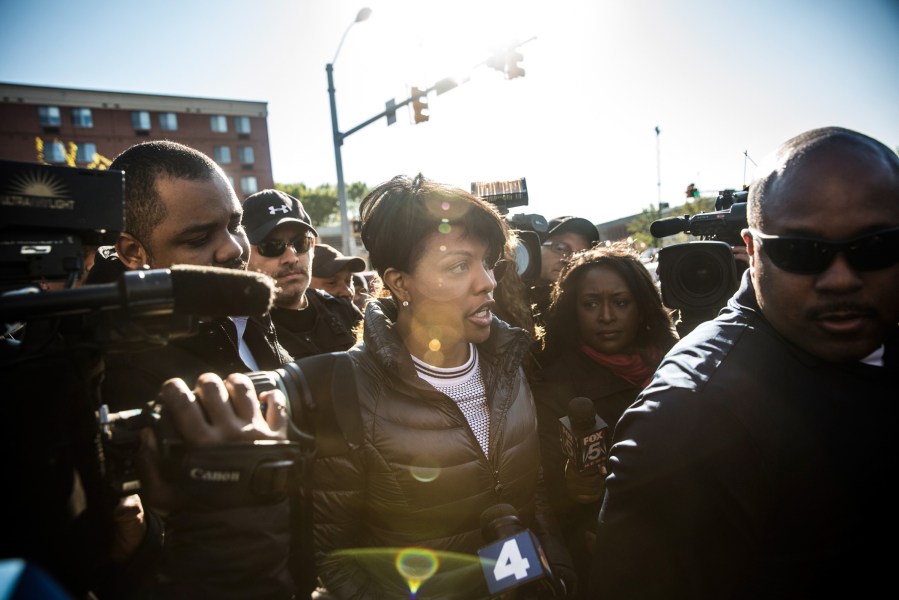
BALTIMORE — On her first day as attorney general, Loretta Lynch watched from afar as Baltimore burned. Public outrage over the death of Freddie Gray, a 25-year-old black man whose spine was 80% severed while in police custody, became the powder keg to the inequalities felt largely by communities of color. Now more than a week later, Lynch has no small feat ahead of her in dealing with the aftermath in Baltimore as she begins her historic tenure as the first black woman to serve as the nation’s top lawyer.
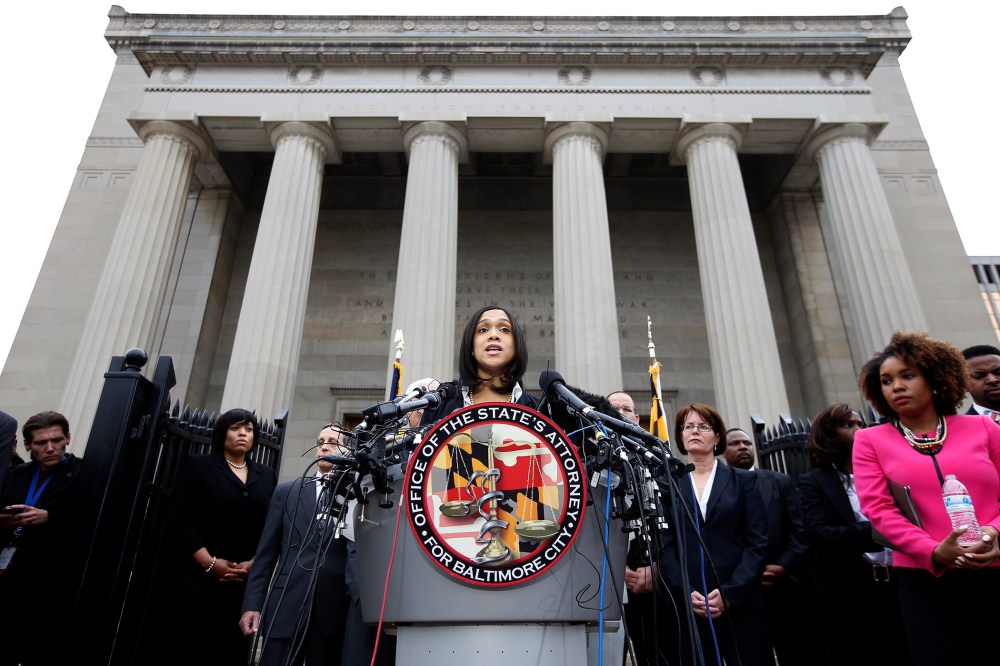
But she’s not alone. By the time Lynch traveled to Baltimore Tuesday to meet with Gray’s family and community leaders, local officials were already in the midst of repairs: There’s State Attorney Marilyn Mosby, who brought charges on six police officers; Mayor Stephanie Rawlings-Blake, who led the city amid days of turmoil; and Major General Linda Singh, who commanded thousands of National Guardsmen and women tasked with restoring peace.
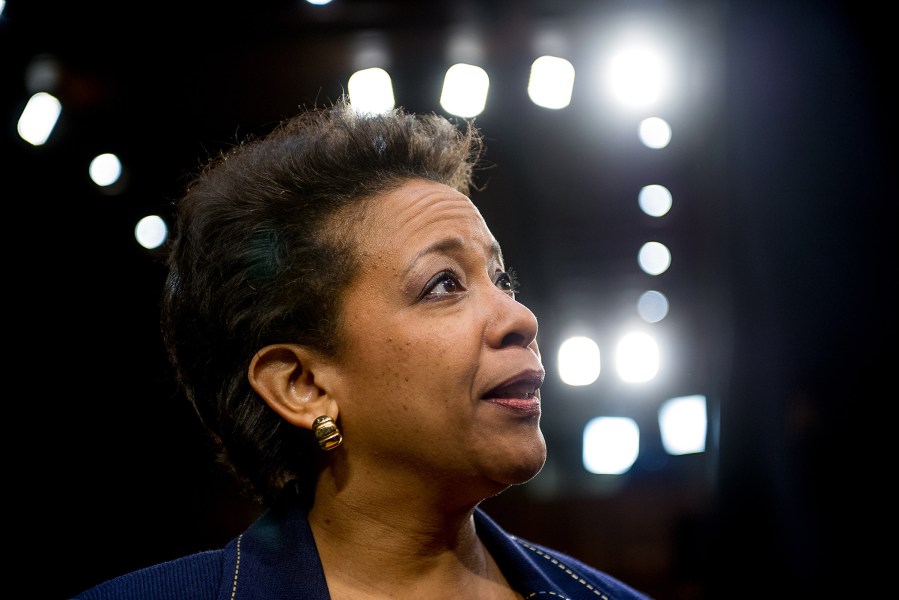
In the government’s response to the unrest, it’s more than just local and federal leaders stepping up to restore a sense of peace — it’s women of color at the center of it all.
The significance of the leadership dynamic was not lost on the women at the helm. “If, with the nation watching, three black women at three different levels can’t get justice and healing for this community, you tell me where we’re going to get it in our country,” Rawlings-Blake said at a National Action Network event last week, referring to herself, Lynch and Mosby.
The response marks an important test for each woman facing her first time in the national spotlight.
RELATED: Baltimore Mayor Rawlings-Blake lifts citywide curfew
Lynch is not the only one new to her role. In a single day, Mosby went from being an unknown as the youngest chief prosecutor of any major city to being a trending topic on Twitter. Meanwhile Singh, a 30-year veteran who served in Kosovo and Afghanistan, just took control of Maryland National Guard in January.
Trending: Maj. Gen. Linda Singh urges for peaceful protests http://t.co/6ym0XIPZ6s pic.twitter.com/BxXdXKhMuE
— wbaltv.com (@wbaltv11) May 2, 2015The sudden rise to prominence for so many African-American women is largely unheard of in this set of circumstances, says Dr. Marcia Chatelain, a professor of African-American history at Georgetown University. “This is an amazing moment that shows us a different type of black women’s leadership,” Chatelain said. “This time, it’s women in elected office who are front and center and able to give a voice rather than be sidelined by sexism.”
When Mosby brought charges on the six police officers involved in Gray’s arrest, she did so with both bravado and an air of authority. Her words were precise, her tone unwavering, as she related all sides affected by the case. To the Gray family, she gave condolences. To the Baltimore Police Department, she offered understanding and gratitude as the daughter of a police family. To the demonstrators roiled in the city and across the country, she listened. “I heard your call for ‘No justice, no peace.’”
It was exactly the type of press conference mixed with street theater that the community needed to see from an elected official, said N.D.B. Connolly, an assistant professor of history at Johns Hopkins University. “There is a sensitivity that is being exhibited by these officials that is really important for people to see,” Connolly said. “It’s very important in giving younger people a belief in the social contract.” RELATED: Criminal charges against officers bring calm in Baltimore Rawlings-Blake learned the hard way how much the the national scrutiny could sting. Under fire for referring to protesters as “thugs,” and being flat-footed at first in response to the turmoil seen last week, Rawlings-Blake has seen her every move under a microscope, potentially putting her re-election prospects in jeopardy. Others have criticized Mosby for being too quick and overly ambitious in issuing murder charges, particularly the police union, which argues indictments are unwarranted. Tessa Hill-Aston, president of the Baltimore City branch of the NAACP, applauded both women’s work thus far, but said the most pressing issues ahead of the local leaders is restoring trust. “Women have always been either on the side or pushing the agenda,” she said. “Now we are in the front showing that we have the leadership skills, in Baltimore in particular.” The prominence of black female leaders doesn’t start or end with the women in politics. On the streets, young female activists have been central to the peaceful demonstrations calling for a complete overhaul to a structure that disproportionately affects their brothers and sisters of color. “Black Lives Matter,” the organization and catchphrase that spawned a nationwide movement, was founded by women. Meanwhile from Oakland to Ferguson to New York, it’s been women who have lead the rallies, marches and acts of civil disobedience. During rallies against police violence on the streets of Baltimore, women have marched among their allies, holding bundles of burning sage — a cleansing purification amid rising tensions. Chatelain, of Georgetown University, suspects these episodes will not be the last of women raising public consciousness on these issues. “Now we have a generation of young activists who if they’re interested in public service, they now see African-American women taking elected office,” she said. “And that is really exciting.”
Amanda Sakuma Recommended