








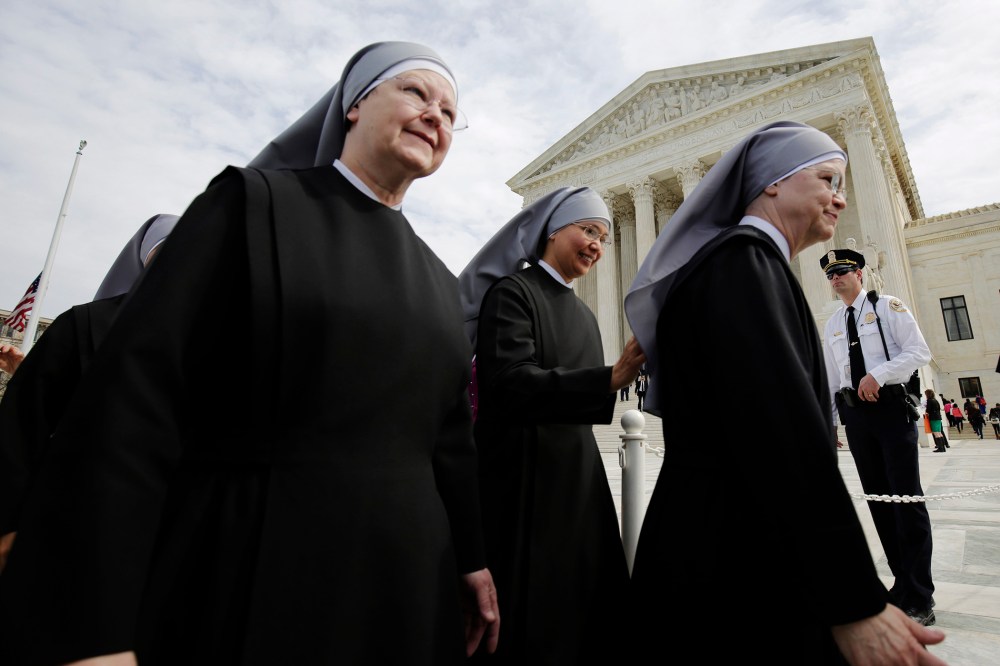
Just when you thought the five-year conflict between the Obama administration and conservative Christian groups over contraceptive coverage couldn’t get more convoluted, a new set of briefs filed to the Supreme Court raises a whole separate series of questions — and seemingly brings the parties no closer.
The dispute has already stretched over half a decade, dozens of lawsuits, and hundreds of briefs. It began when the Obama administration included contraception as part of its minimum coverage requirements for all healthcare plans under the Affordable Care Act, leading to objections from religious owners of corporations (see the Hobby Lobby case, for instance) and from the religiously affiliated nonprofit organizations still fighting the administration over how their employees will get contraception access. It will end, perhaps, at the Supreme Court this summer. Or perhaps not.
RELATED: Surprise signal from Supreme Court on birth control
On Tuesday, the government and the plaintiffs in Zubik v. Burwell each complied with the unusual request from the Supreme Court for a new round of briefs on “whether contraceptive coverage could be provided to petitioners’ employees, through petitioners’ insurance companies, without … notice from petitioners.” The petitioners are religiously affiliated hospitals, universities, and charities that say the Obama administration’s existing “accommodation” — which frees them from paying for the contraceptive coverage but asks them to notify the government or the insurer of their objection — still improperly implicates them. They are citing the same federal religious freedom law that the court cited when ruling in 2014 that for-profit corporations like Hobby Lobby did not have to comply with the regular coverage requirements.
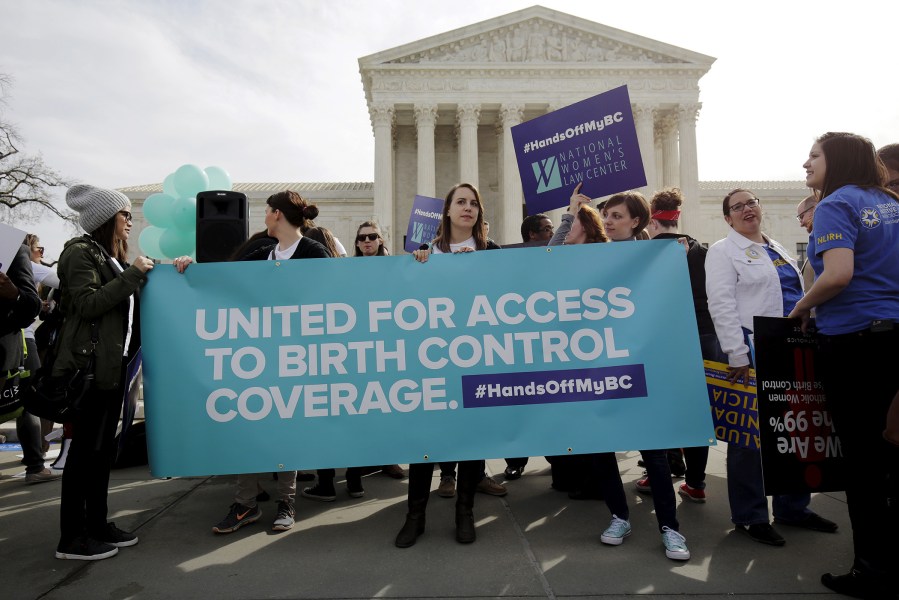
The request came after the justices already heard oral argument in the Zubik case, suggesting the court was having trouble resolving the dispute with the information it already had or that it was seeking to avoid a 4-4 tie that would leave the country divided. The brief order seemed to propose yet another option by which women could still get contraception while placating the religious groups. But even the meaning of each party’s response to the court was a matter of contention on Wednesday.
“We said ‘yes’ to the court,” the Becket Fund for Religious Liberty’s Mark Rienzi, who represents several plaintiffs, said on a call with reporters. “There certainly are ways that people can get contraceptive coverage that doesn’t involve the religious health plans.”
But according to women’s health advocates who support the administration’s position, that’s not at all what the plaintiffs said. “No one should be fooled,” said Brigitte Amiri, senior staff attorney at the ACLU’s Reproductive Freedom Project, told reporters. “What they’ve actually done is rewrite the court’s proposal in a way that is essentially no different from the fictional and unworkable policy they’ve already proposed. This is really their old idea of requiring a woman to buy a separate plan, dressed up in new clothing.”
RELATED: Who will bear the burden on birth control?
The plaintiffs’ brief suggests that insurers “make available to plan beneficiaries a separate plan providing the excluded contraceptive coverage, and must separately contact beneficiaries to inform them of the availability of that plan and how to enroll,” provided that it involved no action at all from the employers. Does that meet the implied goal of the court to balance the needs of women for seamless coverage of contraception with the religious freedom rights of their employers? Not according to the government, which already rejected exactly such a separate plan. At oral argument, when asked by Justice Samuel Alito about the plaintiff’s proposed alternative of a contraceptive-only plan, Solicitor General Donald Verrilli said, “The whole point here, Justice Alito, is that Congress wanted to eliminate even what were perceived by most [as] the small barriers …. even those small barriers work as a sufficient disincentive that many fewer people use contraception than would otherwise.” The plaintiff’s brief says such plans already exist. That, too, is disputed by women’s health advocates. “This is a work of complete fiction. No such contraceptive-only plan exists,” said Gretchen Borchelt of the National Women’s Law Center. She said such a plan would raise significant legal and regulatory problems. In its own brief filed Tuesday evening, the federal government said it might be open to changing its accommodation, but sounded skeptical that such a change would end the conflict, and asked that the court be definitive in its ruling. “A decision requiring a modification to the accommodation, while leaving open the possibility that even the arrangement as so modified might itself be deemed insufficient, would lead to years of additional litigation, during which tens of thousands of women would likely continue to be denied the coverage to which they are legally entitled,” they wrote. Each party now has to file a response to the other’s response by April 20.
Irin Carmon Recommended


