








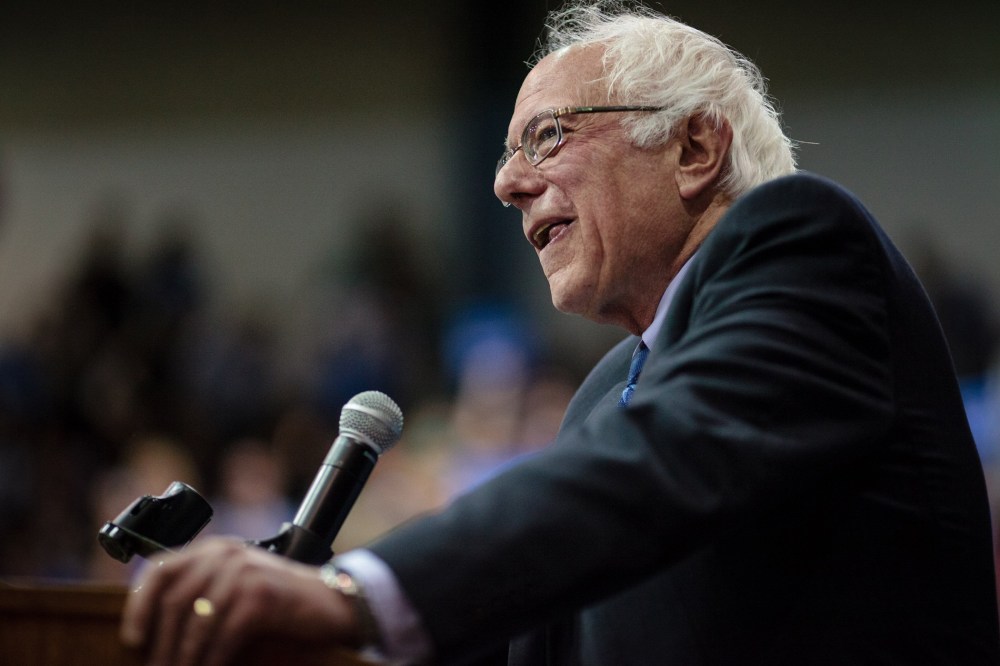
Bernie Sanders mini-winning streak ended Tuesday night in Kentucky, a state analysts expected he could win. The loss could take some wind out of supporters’ sails at a critical time as they face increasing pressure to unify the Democratic Party behind likely nominee Hillary Clinton.
But it was a mixed night for the candidates. Sanders pulled out a comfortable single-digit win in Oregon, where he is likely to walk away with a solid block of delegates.
The outcome will have negligible impact on either candidate’s path to the nomination, thanks to Democrats’ proportional delegate allocation system.

Instead, the most meaningful impact will likely be on the morale of Sanders supporters as he faces a virtually impossible path to winning the nomination.
Sanders’ campaign still pledges to take their fight all the way the Democratic National Convention, and the chaos at the Nevada State Democratic Convention this weekend gave the party a taste of what could come.
The threats against the state Democratic Party chair and Sanders’ defiant statement in response have led party officials to worry diehard Sanders supporters may not come back into the fold in November.
Demographically, Kentucky’s 90 percent white electorate favored Sanders, and his back-to-back victories in neighboring Indiana and West Virginia this week seemed to presage another win.
But Kentucky’s closed primary may have done Sanders in. He had yet to win a contest that allowed only registered Democrats to participate before Oregon, and owes most of his wins to independent voters.
RELATED: Bernie Sanders under fire after Nevada Convention chaos
Meanwhile, Clinton’s team saw an opportunity and took it.
The former secretary of state came off the bench in the primary to make a late play for the Kentucky. The front-runner, who had previously announced a laissez-faire attitude towards the remaining primary states, worked much harder than expected, putting in 13 events across the Bluegrass State.
Her campaign also outspent Sanders on TV advertising $178,000 to $107,000, according to data provided by NBC News partner SMG Delta.
It paid off. Clinton ended up squeaking out the narrowest of wins in the state — the kind which can be attributed to a bit more money spent on the airwaves, and a few extra events to get out the vote.
Sanders, meanwhile, had moved on to Puerto Rico, which votes June 5, and to California, the biggest prize of the year, which votes on June 7.
“We are going to continue to fight for every last vote until June 14, and then we are going to take our fight into the convention,” Sanders told supporters while campaigning in Carson, California Tuesday night. “Don’t tell Secretary Clinton, she might get nervous — I think we’re going to win California.”
RELATED: Bernie Sanders is still planning a convention fight
Officials with the Sanders campaign had long staked their chances on the Golden State and its 475 delegates. But Sanders is heading to the state hobbled by weaker than expected finances. Sanders’ one-for-12 record in closed primaries also doesn’t bode well for his chances in New Jersey and New Mexico, both of which hold closed primaries on the same day as California. Oregon was also a closed primary, but it seemed to favor Sanders in other ways, thanks to its progressive leanings and white complexion. Sanders has won both of Oregon’s border states that already voted — Washington and Idaho — and by wide margins. But Oregon has a unique election system, where all votes are cast by mail. Clinton has typically done well among voters who cast a ballot by mail, thanks to superior organization. The Democratic front-runner largely ceded the state to Sanders, who spent $123,000 on TV ads to Clinton’s zero. RELATED: Hillary Clinton the apparent winner in Kentucky primary Still, Tuesday elections results will have little impact on the delegate count. Clinton headed into the night 282 pledged delegates ahead of Sanders. She’ll likely leave with a lead still in the high 200s. Because Democrats allocate delegates proportionally, Sanders needs to not only win, but win by very large margins to close the gap with Clinton. He needs two out of every three remaining delegates to come out with the most pledged delegates, not to mention his large deficit among superdelegates. Some diehard Sanders supporters feel they’ve been robbed by a rigged process, and are eager to fight the Democratic Party, even if means disrupting the Democratic National Convention in Philadelphia this summer. The question is whether that kind of intense energy can be sustained through late July, more than a month after the primary contests have ended. Losses in states like Kentucky won’t help.
Alex Seitz-Wald Recommended


