








In a much-anticipated speech on democratic socialism Thursday, Sen. Bernie Sanders sought to place himself and his political philosophy squarely in the lineage of Franklin Delano Roosevelt and Martin Luther King Jr., whose calls for economic security were often dismissed by critics as socialistic.
Sanders, the longest serving independent in Congress who is now running for president as a Democrat, identifies as a democratic socialist, but he sought to portray his worldview as a not-so-radical idea in his remarks to a packed house of cheering students at Georgetown University.
“Let me define for you, simply and straightforwardly, what democratic socialism means to me,” Sanders said. “It builds on what Franklin Delano Roosevelt said when he fought for guaranteed economic rights for all Americans. And it builds on what Martin Luther King, Jr. said in 1968 when he stated that, ‘This country has socialism for the rich, and rugged individualism for the poor.’ It builds on the success of many other countries around the world that have done a far better job than we have in protecting the needs of their working families, the elderly, the children, the sick and the poor.”
RELATED: Bernie Sanders joins Snapchat: ‘What is this Snapshot thing?’
From there, Sanders ticked off a familiar list of policy priorities common to his stump speech and the left wing of the Democratic Party: Greater economic equality, universal health care, Wall Street reform, universal college education, paid family leave and so on.
His vision also includes political reforms to limit the power of the wealthy so there is “democratic socialism for working families, not just Wall Street, billionaires and large corporations”
Sanders also focused on the Black Lives Matter movement, immigration reform, abortion rights, LGBT equality and more as issues in his vision for greater fairness.
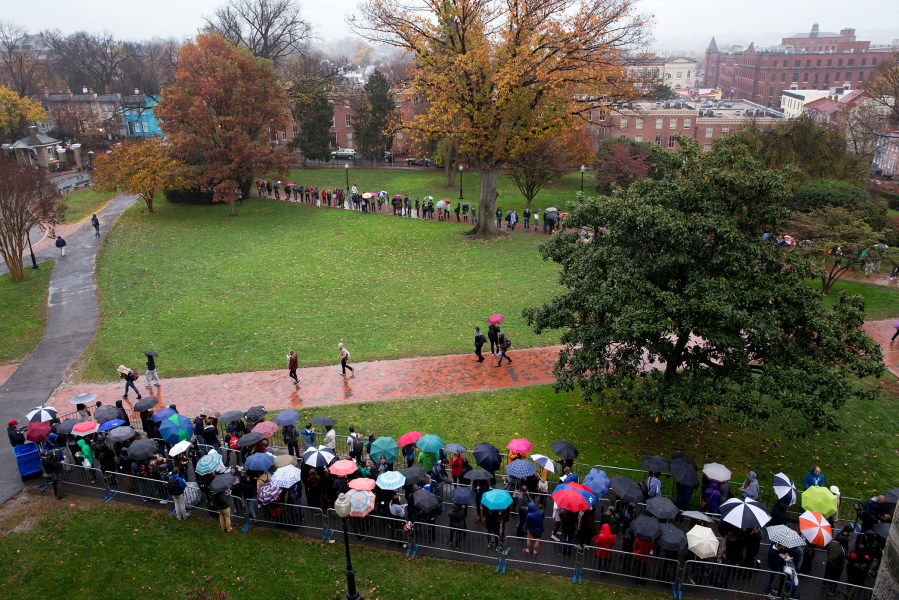
The senator and his campaign have been kicking around the idea of a major speech on democratic socialism for months, with Sanders telling reporters in October that he knew he “had some explaining to do,” because anything involving the word socialism makes some people “very, very nervous.”
The socialism label has been both a scarlet letter and a badge of honor for Sanders, who has worn it defiantly throughout his career. Aides at various points in his career have pushed him to drop the term, but he’s refused, preferring to attempt to change the popular conception of the term rather than chance the way he describes himself.
Still, the issue comes up in many interviews and even some people who like the senator say it distracts from his message. Gallup found this summer that socialism was the least popular quality in a potential president among a long list of potential characteristics. Just 47% said they could see themselves voting for a socialist – fewer than the percentage who said they would support a gay, Muslim, or atheist presidential candidate.
Given the fact that no major candidate has run as a socialist in 100 years, the speech is historic. “The speech that he’s giving today has the potential to be one of those defining moments of the 2016 presidential campaign,” said Mo Elleithee, a veteran Democratic political operative who now runs Georgetown’ Institute of politics, which sponsored the event.
Sanders has hesitated on giving the speech, but aides convinced him it was the right thing to do, pointing to a rich legacy. John F. Kennedy was running to be the first Catholic president and so he gave a major speech on religion. Barack Obama was running to be the first black president and so he gave a major speech on race. While there was some controversy about whether Sanders was delaying the speech, aides said they booked the venue a week ago. RELATED: Democratic debate turns feisty despite Paris attacks During his remarks, Sanders was defensive at times. “The next time you hear me attacked as a socialist – like tomorrow – remember this: I don’t believe that government should take over the grocery store down the street, or control the means of production,” he said. “But I believe that the middle class and the working families who produce the wealth of America deserve a fair deal.” At other times, he called for a cultural change beyond the reaches of even what a president can achieve. “We need to create a culture – an entire culture – which cannot just be based on the worship of money,” he said, decrying billionaires competing for which has the bigger yacht while children starve. But Sanders mostly leaned heavily on FDR, citing the president’s 1944 State of the Union Address in which he called for a second Bill of Rights. “He redefined the relationship of the federal government to the people of our country,” Sanders said. “He combated cynicism, fear and despair. He reinvigorated democracy. He transformed the country. And that is exactly what we have to do today.”
Alex Seitz-Wald Recommended


