








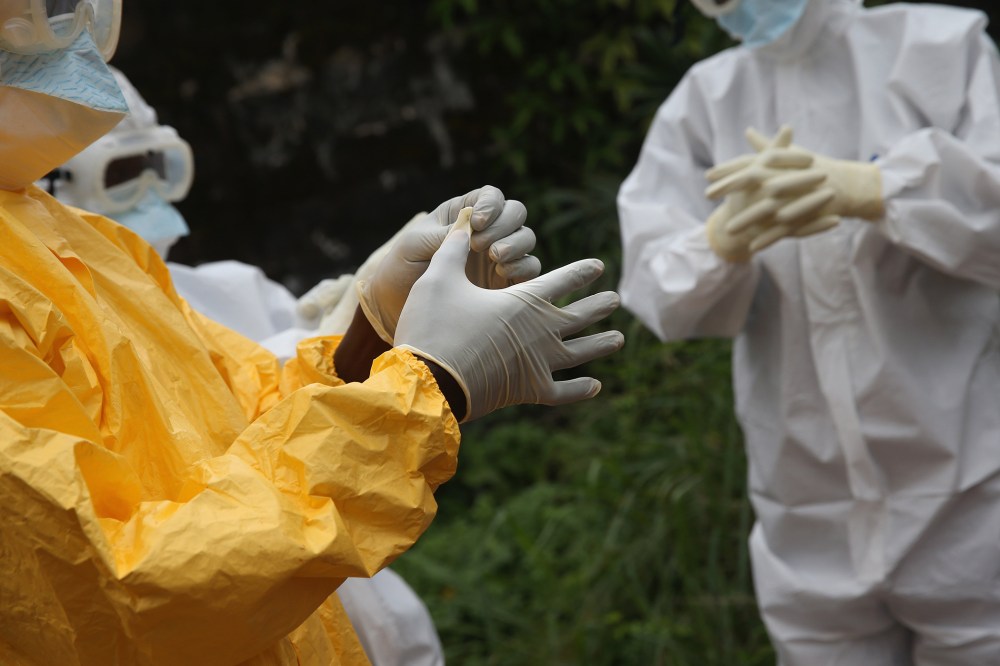
Before she left town on Sunday, there were a few things that Megan Vitek, a nurse, needed to get done: Return a big serving bowl to a relative, eat a scone from her favorite coffee shop in Washington, D.C., and pick up 25 pairs of goggles to protect her team from Ebola in Liberia.
Vitek, 29, carried her bike up the stairs to the Scooby Doo Mansion—the sprawling Victorian house she shares with four other women in D.C.’s Mount Pleasant neighborhood. There are still a few decorations on the porch from the folk concert that happened in her living room the night before.
RELATED: Here’s what Ebola czar Ron Klain has been up to
After dropping off the backpack full of goggles, she got inside her silver hatchback to pick up her friend Sara, who will also be heading to work at a rural Ebola clinic in Liberia’s Bong County, about 120 miles outside Monrovia. “If I’m being called to do this, in some ways, God is going to provide for me,” Vitek said as she drove.
“That doesn’t mean I’m not going to get sick, that doesn’t mean bad things won’t happen. But I feel pretty confident, and others do as well, that this is what I’m being called to do,” she said.
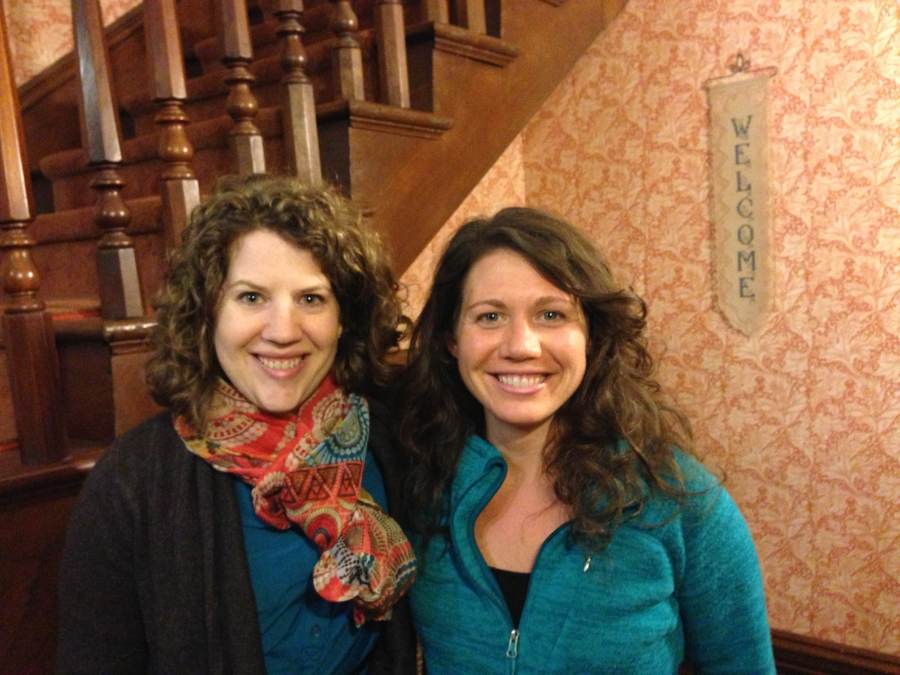
Health care workers are critical to stopping the Ebola epidemic in West Africa — and preventing it from spreading anywhere else. There are signs that the outbreak is slowing in Liberia, but aid groups and global health experts continue to worry that staff shortages could hamper the response there, as well as in Guinea and Sierra Leone. The biggest concern about a mandatory quarantine for returning health care workers is that it might deter them from going to West Africa in the first place, undermining the world’s best shot at beating Ebola.
Vitek still feels like the time is right for her to go. She had been feeling unfulfilled in her job as a primary-care consultant for insurer CareFirst and missed giving hands-on care to patients. She’s loved living in the Scooby Doo Mansion, but things at home are changing too: Three of her roommates have gotten married and moved out over the last six months. Then, she said, “Ebola happened.”
A friend who had helped take care of Dr. Kent Brantly — the American aid worker who contracted Ebola in Liberia — passed on a job listing from the International Medical Corps, an aid group working closely with the US. government in Liberia. They were looking for a nurse with her clinical skills to work in an Ebola clinic for a six-week stint. Vitek leapt. “I was open for something real,” she said. “As far as being called to it, the things felt into place. The events were very providential.”
RELATED: Ebola nurse Amber Vinson: I wasn’t reckless, I listened to CDC
She decided to quit her job at CareFirst. A friend from public-health grad school, Sara Phillips, had already been planning to leave her own job at a Dallas health-care clinic and decided to work with the same aid group in Liberia as well. Friends bought out an Amazon wish list for Vitek and added a Kindle for good measure; another came by the house to say goodbye and brought a bar of chocolate for her take on the plane.
Phillips packed some worship music to keep her spirits up and made sure her will was settled. In the last few weeks, she had become more anxious to get over there. Driving in her car, she heard a radio segment about the crisis in West Africa. She couldn’t contain herself. “I’m trying!” she said aloud in the car. “I’m trying to get there!”

By Halloween, it was nearly time to leave.
Vitek pulled up to an apartment building, where a huge inflatable headless horseman was perched atop an animatronic black horse that turned its head back and forth.
“Hi, friend,” Vitek said, greeting Phillips as she dragged two large blue suitcases out to the car.
“Hi …” Phillips said, embracing her.
In the car, they traded packing tips and the latest news from in Liberia. The U.S. government had built an Ebola testing lab near their clinic, drastically reducing the time that patients had to wait to find out if they had the deadly disease.
But their clinic won’t have everything: The bigger facilities have divided patients into three sections — suspected, probable, and confirmed cases, to better isolate the sickest patients. Theirs will only have enough staff to divide patients in two groups, Phillips explained.
“How did you find out all this?” Vitek asked her friend. “This is why I’m bringing you.”
Vitek has been buoyed by the outpouring of support from her friends and family. “There’s a general desire to give and to care for people — at least in my community that’s a pretty big part of who we are,” she said.
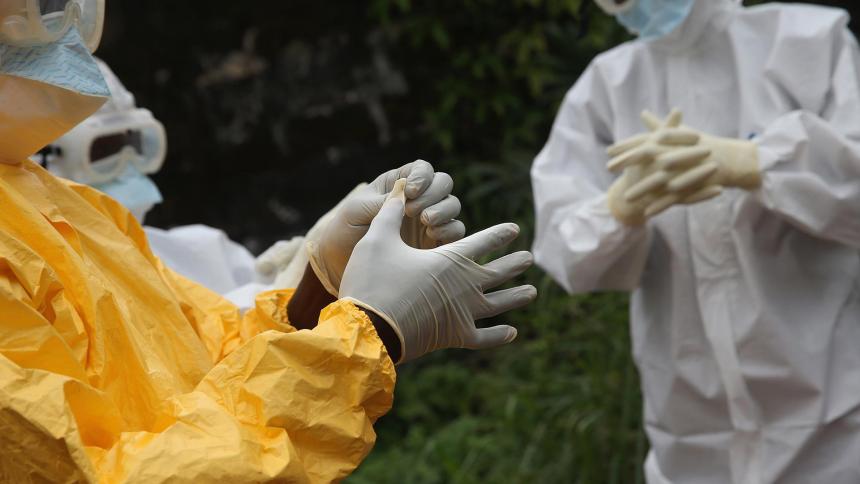
But both nurses also have friends who wish they weren’t going. Friends who worry what might happen to them over there. Friends who wonder what will happen to them — and anyone who gets near them — when they come back.
Vitek has already told her housemates that she would use plastic utensils when she returned and keep to her bedroom, avoiding the house’s common areas. But both nurses also expressed their frustration about the recent animus toward returning health-care workers and quarantine policies that went well beyond science-based, medical protocol. The day before, Kaci Hickox — a nurse who returned from treating Ebola patients in Sierra Leone — had taken a bike ride back home in Maine, violating the state’s quarantine orders. A judge ruled in her favor that morning, agreeing that she did not present any Ebola symptoms and pose a health risk to others. “Who is she going to infect on her bike? Seriously, I would do the same thing,” Vitek told her friends, having come back from her own ride through Rock Creek Park just a few hours earlier. “I was thinking about this — I’m actually that woman.” “She just watched a bunch of people die from Ebola. She has no interest in getting it, or spreading it,” added Phillips, who says she’s confident in the protocol that Doctors Without Borders have developed for returning healthcare workers. She has colleagues in Dallas who also want to go help in the Ebola wards, but wouldn’t be able to go if there were a mandatory 21-day quarantine, as it would be too much time off from work. Both acknowledge that the U.S. government has lagged in terms of its own Ebola protocols, however. They have no idea what kind of measures they’ll face when they’re scheduled to return in December, the nurses told friends who came to a prayer group at Vitek’s house before they took off. They had three days of training in Atlanta from the Centers for Disease Control and Prevention before their 20-hour journey to Liberia: from Atlanta to Frankfurt to Brussels to Dakar to Monrovia, then a four-hour drive through muddy roads to the clinic. For the moment, it was time to pray. “I pray that you would call more people to come and help, and that it would be firmly placed on the hearts of health care workers…” one friend said. “I pray for awareness of protocols—keep their minds sharp even when they’re really tired…” “I pray that you are with them in the midst of doubts and criticism of health-care workers…” “We also pray this might bring a cure for Ebola…” The nurses offered up their own prayers, too, holding hands as they sat on the couch together. “I do pray for the courage to move forward,” said Vitek. “Make us good soldiers, so we can know when is a good time to speak up and advocate, and when is a good time to just do the grunt work,” said Phillips. RELATED: Ebola aid groups worry about delays and staffing shortfalls One of their friends opened and closed the gathering with words from the Book of John, in which Jesus addresses his disciplines, equipping them for the journey ahead. “Rise,” she read. “Let us go from here.”
Suzy Khimm Recommended


