








Grand juries have been thrust into the national spotlight in the past few weeks, after panels in Staten Island, New York and Ferguson, Missouri decided not to indict police officers in the deaths of unarmed black men.
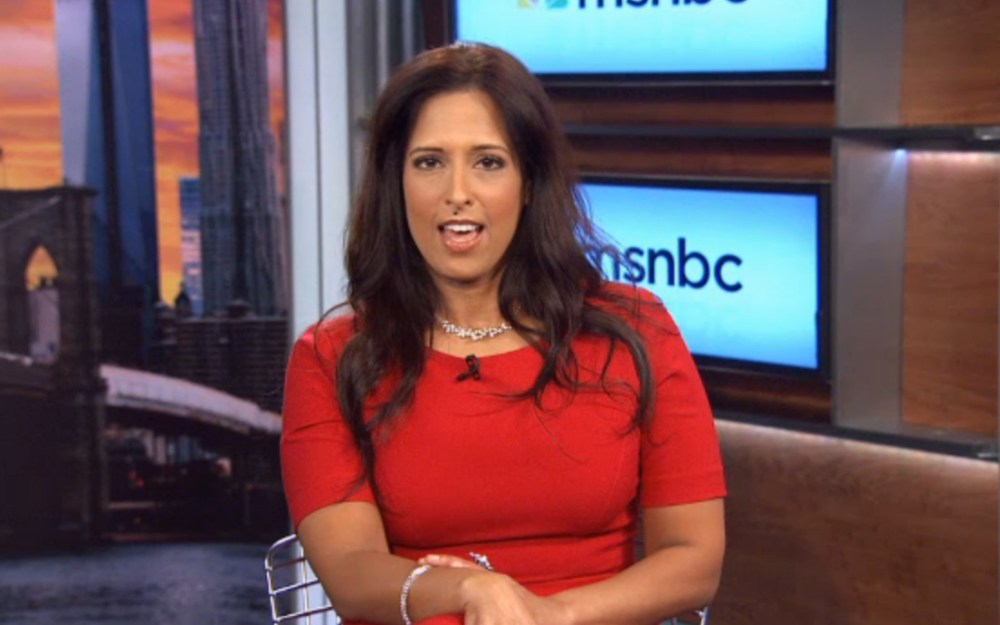
In the wake of these cases, Seema Iyer, a practicing attorney and legal analyst, answered some of msnbc’s questions about grand juries and how they work. Catch Seema Iyer, Esq. online tackling legal questions every Tuesday at 11 a.m. ET on msnbc.com.
What’s the difference between a grand jury and a regular jury?
A grand jury (12 to 23 people) is a body that investigates criminal conduct. Federal, state and county prosecutors utilize grand juries to decide whether probable cause exists to support criminal charges.
A regular jury (6 to 12 people) — aka a petit jury — hears only trial cases. A regular jury decides the facts. The judge presiding over the trial decides the law. A petit jury decides:
- In criminal cases — whether the prosecution has proved their case beyond a reasonable doubt.
- In civil cases — by a preponderance of evidence (which means 51%).
In criminal cases the decision must be unanimous.
How is the grand jury chosen, and how does the grand jury process function?
Grand jurors are chosen from the same group of people as trial jurors. When you receive notice for jury service you could be called for either one. The judge will ask very few questions, unlike when selecting a petit jury, when the judge and lawyers ask many questions.
Grand jurors will only be excused “for cause,” meaning they cannot be fair and impartial. Of course jurors, in general, are often excused for logistical reasons (scheduling, etc). Grand jurors are expected to serve anywhere from a month to a year on average. In most cases it’s a few months. And they sit a few days a week.
Grand juries hear cases from prosecutors all day long, and all different types of criminal cases. Usually the cases are felonies. The grand jury physically sits in a college lecture type of room in the same building as the prosecutor’s office. There is no judge present, just court officers and grand jury clerks. Prosecutors will come in, present evidence in the form of witnesses, documents, photos and video/audio. This is done often over the course of a day, a week or longer.
In most cases the accused has an opportunity — not required by law, unlike a jury trial — to testify, but is only questioned by the prosecutor. The defense attorney cannot question. But the grand jurors can submit questions to the prosecutor to ask witnesses.
At the close of evidence, the prosecutor reads legal instructions and the law to jurors. The grand jury may then vote an indictment, also known as “true bill.” To vote an indictment you only need a quorum. For example in the Ferguson case, quorum would have been nine out of 12 grand jurors. Most grand juries are 12 to 23 people.
In the cases of Ferguson and Staten Island, why did these cases go to a grand jury, instead of the prosecutor charging the officers themselves? When and why does a case go to a grand jury?
When a felony is committed, here is what can happen:
1. Without an arrest (when you do not physically have the perpetrator or know who he or she is) evidence can be presented to a grand jury. The indictment is called a “no arrest indictment,” which forms the basis of an arrest warrant, so when the suspect is found and arrested he or she has already been indicted.
2. After a person is arrested, the case is immediately — within a week, unless time is waived — presented to a grand jury.
3. After a person is arrested, he or she is not held in jail because the district attorney is investigating and unsure whether the case will be presented to a grand jury, or reduced to a misdemeanor, and a plea offer may be made thereby waiving a grand jury, or the case will be dismissed. 4. There is no arrest, you know who the perpetrator is and the case is presented to a grand jury. An arrest only occurs if a grand jury indicts. In the cases of Ferguson and Staten Island, both went to a grand jury because that is standard practice when a case involves a police officer. It’s not the law, just the practice. What is commonly said is that “no one would ever be a police officer if it was otherwise.” I believe these cases went to a grand jury because the accused was a police officer, had qualified immunity and the incident occurred while the police officer was on duty. What are the requirements for a grand jury to decide to indict someone? The only requirement is that probable cause exists to support criminal charges against the accused person. In essence, the grand juror must feel there is enough evidence against the person to proceed to trial. It is a very low standard. You could have one witness, a victim, come in and testify without any corroborating physical evidence and get an indictment. That is rare but it does occur in some cases of sexual assault with victims who don’t approach authorities until many years after an incident. New York Judge Sol Wachtler once famously said that a grand jury would “indict a ham sandwich.” If it’s that common for a grand jury to indict, why is it rare that police officers are charged? With regard to police officers, they have “qualified immunity.” A police officer is allowed to use deadly force in many more circumstances than a lay person, something the grand jury is instructed on. A police officer is allowed to use a gun; the incident occurred while they were engaged in official duties;and because a police officer is trained in ”law,” he or she can respond to criminal accusations far better than a lay person. Police officers will also have a team of lawyers coaching them because they are represented by union attorneys who are often former prosecutors. Since a police department is an agency of the prosecutor’s office there is an inherent conflict of interest. Imagine trying to indict your boss, colleague or sibling. In light of the outcry after the Ferguson and Staten Island grand jury decisions, is there any chance the law around grand juries would ever be changed or updated? I hate to use this line but I think it would take “an act of Congress” — perhaps state congressional action. I think there is a possibility for reform around a new law that would state, “if a police officer is accused of a crime a special prosecutor must be appointed to oversee the investigation.” As a whole, there really isn’t anything wrong with the grand jury system. If you are asking whether the system would change in that there would be a standard arrest even if allegations involved a police officer, I think not. Like I said, no one would ever become a police officer if they were in fear of being arrested any time they discharged their weapon.
Nisha Chittal Recommended


