








This is the Dec. 2 edition of “The Tea, Spilled by Morning Joe” newsletter. Subscribe here to get it delivered straight to your inbox Monday through Friday.
A lot is going on in the political world today, but all eyes should remain fixed on the controversy swirling around the Pentagon.
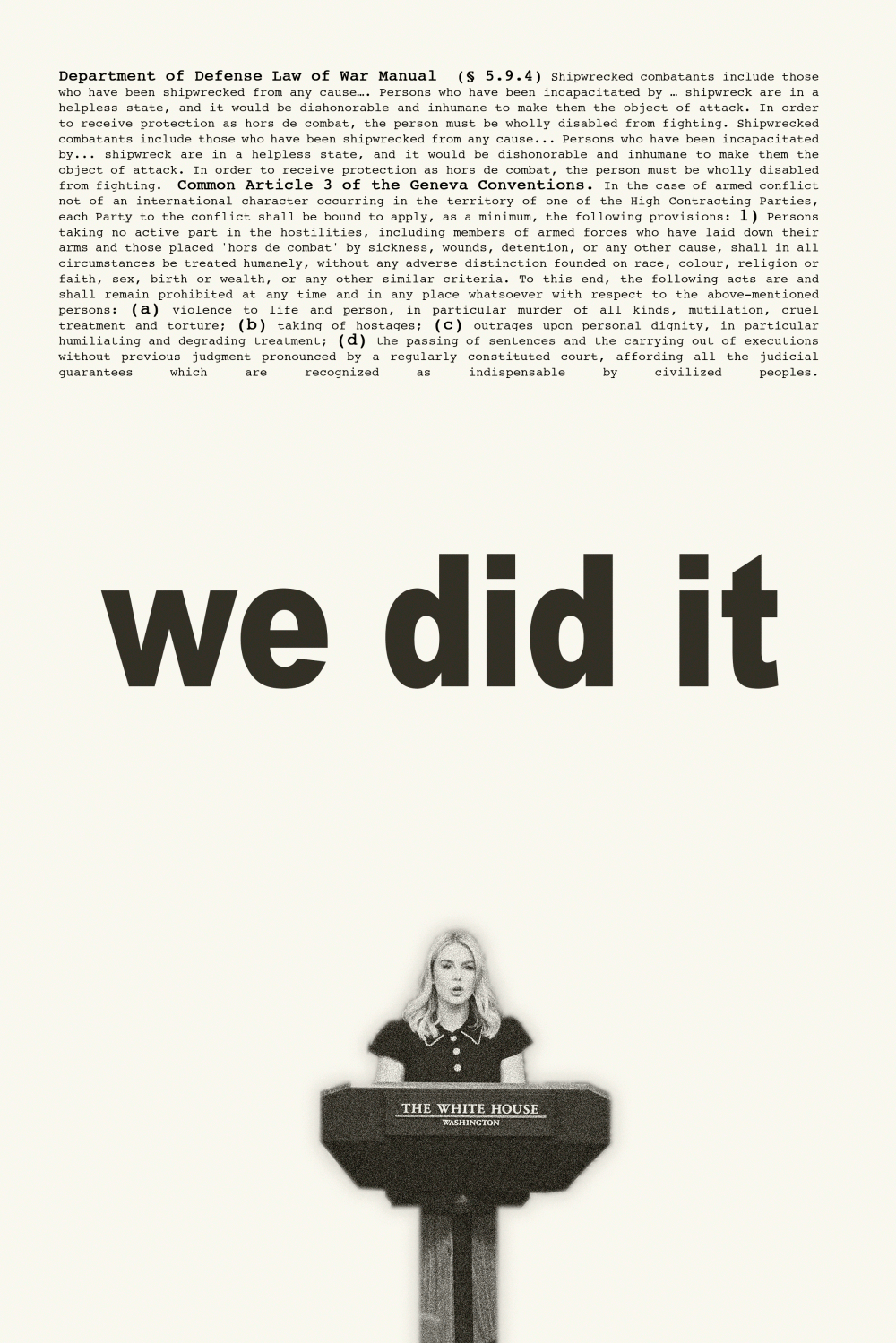
A few nights ago, Secretary of Defense Pete Hegseth mockingly responded to a Washington Post report that he ordered a commander to “kill everybody” aboard an alleged drug boat, setting the stage for a “double-tap” strike that some say could constitute a war crime.
Last night, Hegseth was too busy pointing fingers at military officers and scrambling into crisis mode to post childish pictures of cartoon figures firing missiles at Venezuelan boats.
Maybe that’s because the news keeps getting worse for Hegseth.
- Republicans on Capitol Hill are calling for investigations of the secretary’s actions.
- Loyal GOP foot soldiers are taking political aim at his approval of the Navy’s deadly second strike.
- Fox News legal analysts continue to question the legality of Hegseth’s order, as well as the entire Venezuelan military operation.
- The White House acknowledged that any officer who participated in the “double-tap” order did so with Hegseth’s explicit approval.
White House insiders and GOP senators have long held Hegseth in low regard. The president’s own team said he misled them during his vetting process. His clownish behavior during “Signalgate” was also seen inside the West Wing as a self-inflicted political wound that slowed down the president’s early momentum.
Now, with President Donald Trump and the Republican Congress suffering from record-low approval ratings, my bet is their patience with Pete Hegseth will soon run out.
For now, this scandal remains Hegseth’s problem.
White House insiders know that dumping the overmatched talk show host is the best way to protect the president from even greater political fallout.
“We don’t fight with stupid rules of engagement. We untie the hands of our warfighters to intimidate, demoralize, hunt and kill the enemies of our country.”
Secretary of Defense Pete Hegseth, Sept. 30, 2025
TO RUSSIA, WITH LOVE

Let’s try this again.
White House envoy Steve Witkoff has returned to Russia after a few rocky weeks of Republican infighting and an embarrassing Wall Street Journal exposé accusing him of being more interested in future business deals with Mother Russia than locking down security guarantees for Ukraine.
After an ugly first round of negotiations punctuated by pro-Vladimir Putin terms, GOP senators cried “nyet!” and called Secretary of State Marco Rubio off the bench to salvage the peace talks.
Weekend meetings in Miami that saw Witkoff, Rubio and Jared Kushner negotiating with a Ukrainian delegation ended with both sides agreeing the summit made progress.
But as the talks turn back to the Kremlin, foreign-policy bigwigs warn that the likelihood of further breakthroughs remains low.
“Putin thinks time is on his side,” Michael McFaul, former U.S. ambassador to Russia, told “Morning Joe.” “He thinks the Trump administration is going to walk away and he’ll be able to conquer more territory.”
The cost of the nearly four-year war on both Russia and Ukraine has been catastrophic. The Center for Strategic and International Studies has estimated that a combined 1.4 million soldiers have been killed or injured on both sides. Ukraine is facing a shortage of troops, and Russia’s economy remains in dreadful shape.
While Moscow is making incremental gains into Ukrainian territory, President Volodymyr Zelenskyy is now facing the greatest domestic crisis of his time in power. A corruption probe has taken down one of his closest allies: Andriy Yermak, his chief of staff, who was leading talks with the United States.
Witkoff and Kushner brokered a historic ceasefire deal in Gaza in October. Now the question is whether the two can succeed again with a Russian tyrant still focused on conquering the country whose leaders sit on the other side of the negotiating table.
A CONVERSATION WITH JONATHAN LEMIRE
Jonathan Lemire is reporting on the increasingly isolated figure dominating Washington politics and world events. As his poll numbers sink to historic lows, Republican leaders on Capitol Hill now worry if the president (who has crushed Republican dissent inside and outside of the Oval Office) can be forced to work with Congress and start campaigning on the road for GOP initiatives. Jonathan is skeptical and discusses his Atlantic article on the subject below.
JS: How isolated is President Trump right now?
JL: The most he’s been during his second term. The president is surrounded by aides who are afraid to tell him no, he has dramatically cut back on his domestic travel, he has stopped talking to local officials to get their pulse on what’s happening in the country, and his media diet is largely MAGA-centric, even with social media.
JS: Why is he so much more isolated in his second term than in the first?
JL: His campaigns and first term were defined by the Trump rallies. The president has stopped doing those because he, himself, is no longer running for anything. He also understandably has real security concerns — particularly after the assassination attempts. But his focus has also been elsewhere.
During this second round in the White House, President Trump has focused far more on foreign policy. He has cared far more about wielding executive power inside of Washington — whether through his retribution campaign or by tearing down the East Wing to build a grand ballroom.
Republican politicians and White House aides want him back on the road again. But outside of trips to his own clubs this fall, he hasn’t gone anywhere domestically.
JS: Is there anyone either inside or outside the White House that can occasionally give President Trump a reality check? JL: Not really, and that’s by design. During his first term, there were dissenting voices, whether that was John Kelly or James Mattis. That list was extensive and included Mitch McConnell on the other side of Pennsylvania Avenue. Trump has stocked his second-term staff with people who are true believers, so they’re going to enable him. They work to execute his ideas and provide very little resistance to the most dangerous ones. Occasionally, there’s an outside media figure or perhaps a family member who might be able to slow him down for a minute — but no one can stop him. JS: Is that because he feels like he was betrayed in the first term by people who told him “no”? JL: Absolutely. And he spent his four years out of power insisting that he would not let that happen again. Even during his last month in office in 2020 — when he mostly had acolytes with him — he vowed that when he won again, he’d be surrounded by people that would all be on the same page and would never stand in his way. A guest essay by Jonathan Lemire In the last few weeks, the “Morning Joe” set has talked about the remarkable bubble in which President Trump has placed himself during the first year of his second term. My sources are sharing their private concern that Trump is growing out of touch and that he isn’t focused on the issues he once cared about. Like I said to Joe in the interview above, I knew Trump didn’t have aides in the White House to tell him no; I knew that his media diet was a MAGA silo; and I knew that his domestic travel had been significantly pared back. But I wanted to do a deep dive with an Atlantic researcher on Trump’s schedule and report on how Republicans are increasingly concerned by the president’s isolation. What my researcher and I found was striking. As I wrote in the Atlantic: Beyond the rallies, Trump has dramatically scaled back speeches, public events, and domestic travel compared with the first year of his initial term. And that lack of regular voter contact has contributed to a growing fear among Republicans and White House allies: that Trump is too isolated, and has become out of touch with what the public wants from its president. I looked at Trump’s travel schedule from the fall of 2017, the first year of his initial term, to compare it with this fall’s, and I was surprised by the drop-off. Back then, he traveled into the country more than a dozen times from September to November to talk with energy workers in North Dakota, rally support in Alabama for a Senate candidate and explain his agenda directly to his supporters. During that same stretch this year, he barely traveled at all. This fall, he’s ventured beyond the Washington, D.C., metro area; his New Jersey golf club; and Florida, the home of Mar-a-Lago, only five times. Four of those domestic trips were to New York, including three to hang out with rich friends in luxury boxes at sporting events. Remember “Are You Smarter Than a 5th Grader?” UC San Diego just ran its own version with incoming freshmen — and the results were jarring. A new university analysis shows that one in eight students arrive unable to handle basic high-school math. Many test at a fifth-grade level. And when asked to round 374,518 to the nearest hundred, only 39% got it right. So the university created a remedial class to reteach the basics. The surprise is who lands in it: 94% of the enrollees had already taken advanced math — precalculus, calculus, statistics — in high school and earned an average A-. These math-challenged students had transcripts that said “future engineer.” But their placement tests read: “Not so fast, Billy Madison.” UC San Diego is now weighing whether to reinstate standardized testing. It may help, but the larger problem may be our schools’ failure to teach the fundamentals, while practicing grade inflation with average students. And as UC San Diego’s own data shows, when your standard drops for too long, the math eventually catches up. This week, actress Minnie Driver joins us to discuss Season 5 of “Emily in Paris” and her upcoming movie, “Run Away.” Want to ask a question? Send it over, and we will pick our favorite to ask on the show!
Former Rep. Joe Scarborough, R-Fla., is co-host of MS NOW's "Morning Joe" alongside Mika Brzezinski — a show that Time magazine calls "revolutionary." In addition to his career in television, Joe is a two-time New York Times best-selling author. His most recent book is "The Right Path: From Ike to Reagan, How Republicans Once Mastered Politics — and Can Again." Recommended


GOP FRETS OVER BUBBLE-WRAPPED PREZ
EXTRA HOT TEA
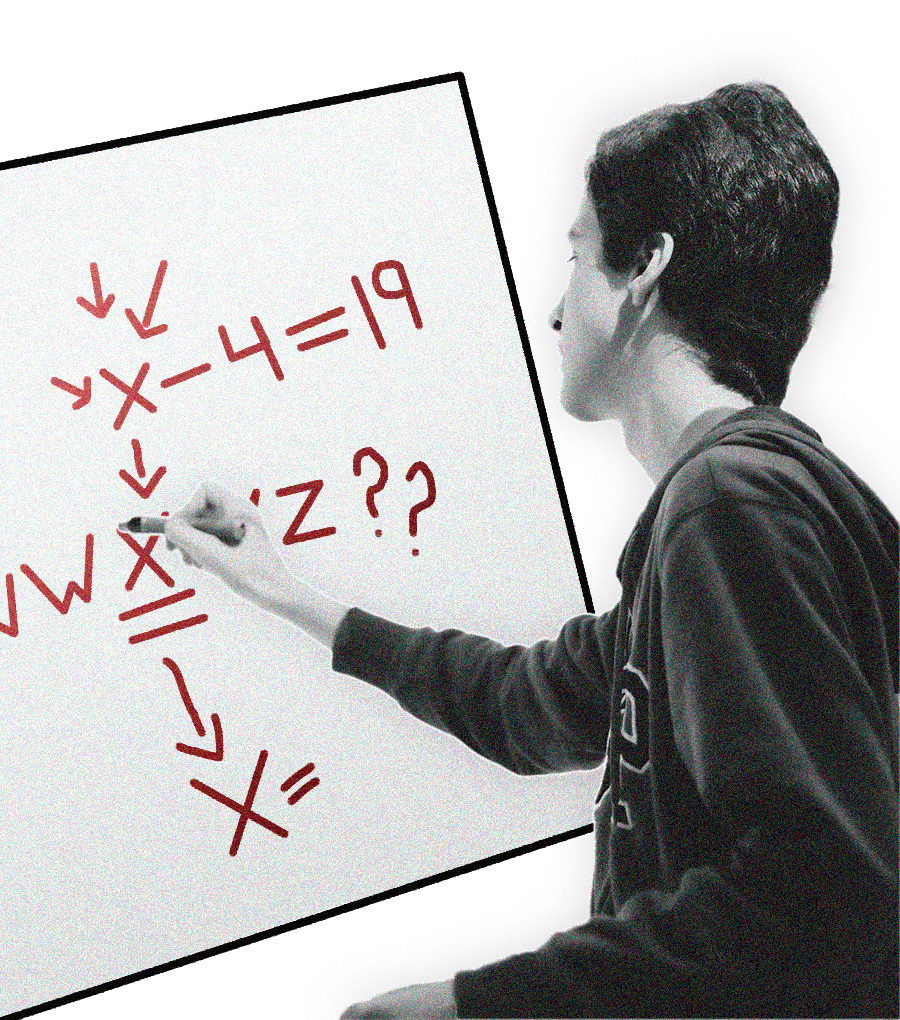
THE DEREK ZOOLANDER CENTER FOR KIDS WHO CAN’T ADD GOOD
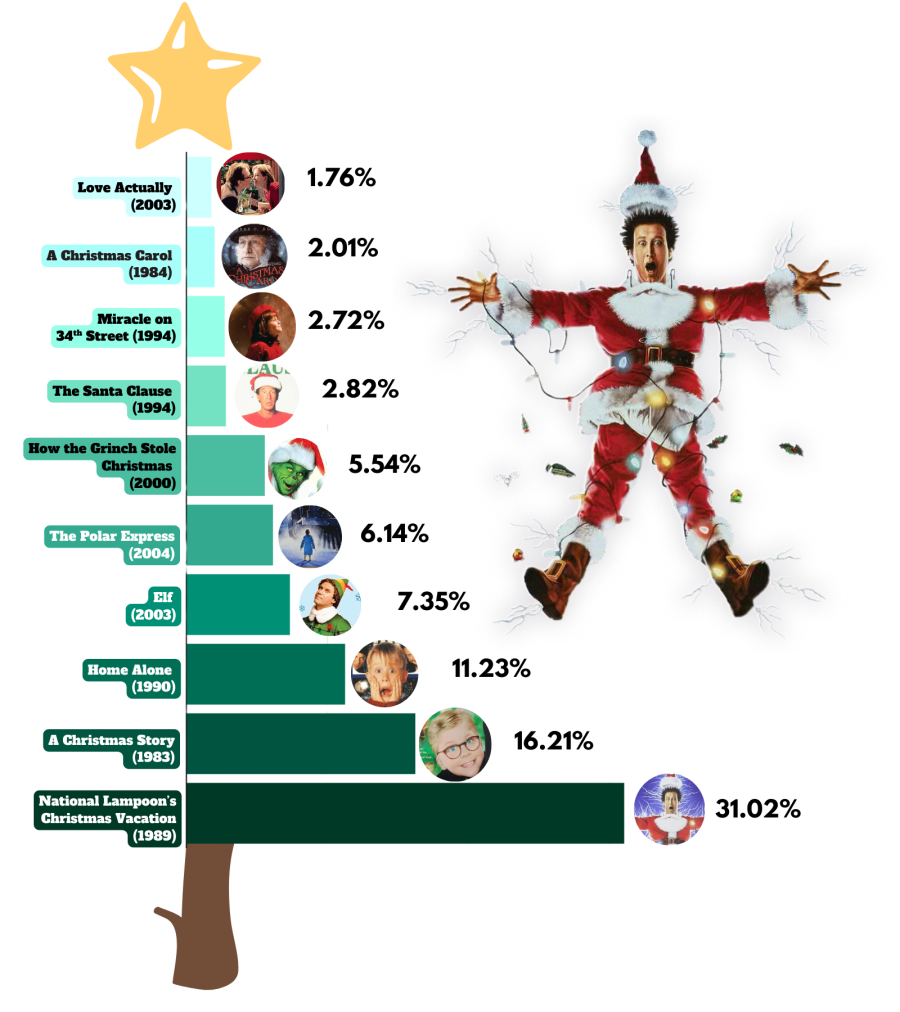
AMERICA GOES TO THE POLLS: THE MOST POPULAR CHRISTMAS MOVIES 🍿
CATCH UP ON MORNING JOE


SPILL IT!
