








By Dr. Dave Campbell
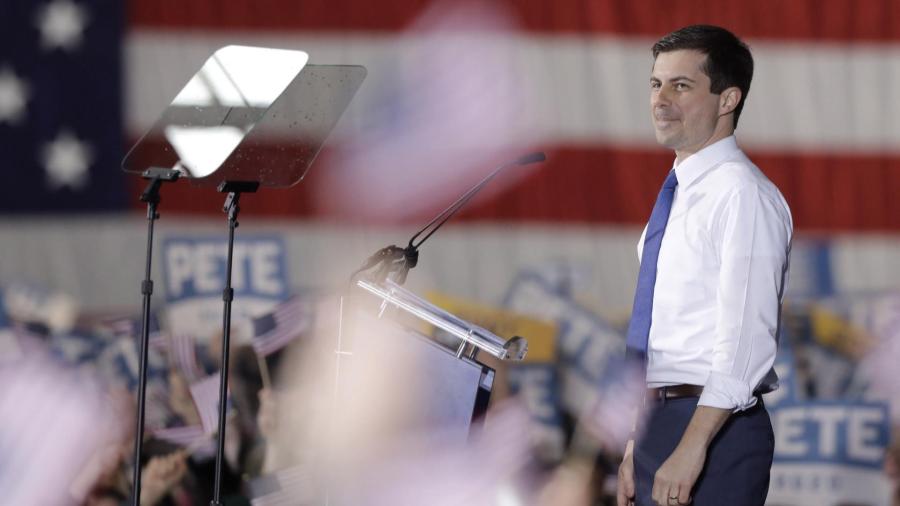
I first met Mayor Pete on a recent evening in Manchester, New Hampshire. The thirty-seven-year old Mayor of South Bend, Indiana is a Harvard-educated Rhodes Scholar. He is the first major openly gay candidate for president, as well as the first millennial with a real chance to win. A deeply religious person, we talked life, family, service, policy, his health and the future of health care in America.
Watch: Dr. Dave Campbell talks with Mayor Pete in Manchester, NH
It is more important than ever that a presidential candidate’s mental and physical health be known to the American people. Each person’s vote for president can be made with more passion and more practical knowledge by investigating the candidate’s health and the health of their family. All of us make decisions based on our experience, education, principles and integrity. In this voting cycle many of the Democratic candidates have already released years of income tax returns. My goal for the American people is to have the candidates be equally transparent in their disclosure of personal health information. The full-release of comprehensive medical records on all candidates, and interpretation by physicians, is vital before voters cast their ballots. It doesn’t need to be like pulling teeth.
Both the age and medical health history of candidates varies widely, spanning three generations and a wide variability in underlying health conditions. Pete Buttigieg is the youngest at thirty-seven and it would be impossible to be healthier, since he has no health problems. Senator Bernie Sanders is oldest at seventy-nine and based on what we know right now is in good health. On the Republican side, incumbent President Donald J. Trump at seventy-two has no major health issues either, according to government doctors.
MAYOR PETE’S PERSONAL HEALTH
By all standards, Pete Buttigieg, the mayor of his hometown of South Bend, Indiana, is young to be running for the presidency, or is he?
If age is measured by years, then sure. He is two generations behind Senator Bernie Sanders and former Vice-President Joe Biden. However, a President Pete Buttigieg will be middle-aged in office if he wins two terms. When I mentioned this to Mayor Pete during our interview on health and healthcare in early April 2019 he was pleasantly caught by surprise.
He said, “Cool. Wow. What counts as middle-aged? That’s interesting.”
“Forty-five,” I responded.
“Alright, alright, there you go,” he quipped.
“So, you’re not as young as everybody says you are,” I said.
Mayor Pete let out a sigh of relief and said, “Good…Good…I guess…No, it’s been interesting, the age thing especially because many of the voters.” He paused as I interrupted.
I saw the puzzled and pained look on his face and felt concern that I had hit a raw nerve, which was not my intent. I said, “That hurt, didn’t it, when I said…”
“A little bit, yeah, thought I was supposed to live forever. But our kind of generational appeal is, seems to be, resonating with young people for sure. But especially with older people. With people my parents age. They seem enthusiastic about the idea of a new generation stepping up and leading. And I think about that a lot in terms of how we build an alliance,” Mayor Pete said.
“Because, of course, politics, at least good politics is a practice of addition and multiplication, and you’re building a coalition, and I’m really excited about the sort of innate support that a lot of older people feel for younger leaders,” he finished.
Just as the last words rolled off his tongue, a huge American flag came into our view from inside the large, black SUV that was transporting us from the classic New England college town of Durham, situated along the Great Bay at the mouth of the Oyster River, back to Manchester, New Hampshire. “Look at the size of that flag. Is it a gas station? Something else? Crazy. Seems out of proportion to me,” he noted.
As we talked about the giant flag, I asked Mayor Pete how somebody’s experiences and frames of reference inform their decision-making, to gain a deeper understanding of his basis for healthcare policy. We discussed the recent death from cancer of his father and how personal things that he has experienced speak to how he will be thinking of other American’s in his decision-making for their health.
Mayor Pete said, “Well one of the things I’ve reflected on and talked about on the trail is, you know, you want your decision-making to be as free as possible from things that shouldn’t matter. And so, as example of that, that I reflect on a lot in the context of healthcare coverage, is that while we were making decisions about supporting dad in his final weeks, as he was losing his struggle with cancer, we were just thinking about the medical side, not the financial side, except for one period where we were looking at long-term care. And you don’t want a family to have to think about that when you’re experiencing, however difficult they are, … moments that can be really-important. You know, some of the best conversations I had with my dad were in some of those struggles. Taking him to the hospital and bouncing around from one experience to another also meant we spent the day together. And there’s a lot to do. There’s a lot of hurry up and wait, just like in the military.”
As Pete Buttigieg, twenty-three years my junior, only two years older than my oldest daughter, I thought about the “hurry up and wait” that is endemic to military service in the United States. I thought of my experience as a surgeon in the United States Army Reserve Medical Corps years ago, in the time of the Gulf War, code-named Operation Desert Shield. My grey hair, Florida sun baked skin, and middle-aged paunch, compared to Pete’s dark hair, Indiana sun-protected smooth skin and weight in the normal range was a sobering reminder of how quickly time passes for all of us. I thought of my own mother, father and younger brother who all died within the last few years and how important Mayor Pete’s time spent with his father before he died was in the further development of Pete Buttigieg’s humanity and his role as the potential leader of the free world.
“And so, you know, some of the conversations I’m really thankful for happened in that context. But it’s because there’s one thing we’re really having to deal with and that was his health, not his finances,” said Mayor Pete. “I’ve seen that over, and over again. I remember a case I was actually, bizarrely found myself on the scene of an overdose situation. I was coming out of an event and there was a kid lying on a lawn, kind of frothing at the mouth and somebody was trying to call 911. And first I assumed the kid was having a seizure, then I was two other kids there too. It was teenagers and that was when I realized this was not a seizure. This was a drug experience. They were probably, it was probably due to the synthetic, so-called synthetic marijuana which is highly toxic. Stuff that a lot of kids get from convenience stores because it’s hard to regulate.”
“I thought he was kind of rolled over on his side and I was propping him against me,” Pete said. He indicated lifting the kid’s chin, “because I thought he was going to choke, and I wasn’t sure if these kids were going to make it. They did. But the one who was in the worst shape, by the time the EMT’s got there he was starting to come out of it, and they brought him back. He was saying, and this was…maybe like a fifteen-year-old, ‘Don’t take me to the hospital. I don’t have any money’. I’m thinking, like how does this kid think, that’s his problem.”
“How did he even think of that as he’s coming out of being nearly comatose?” I asked.
“I guess my point is,” Mayor Pete explained. “You know when our decisions are affected by our range of opportunities and our freedom to make a good decision depends on the constraints we’re under, and part of government’s job, I think, sometimes is to get out of the way. Sometimes it is to get there and tear down obstacles that get in the way of living a good life. Living a life of your choosing and choosing well. Or with being able to do that, so you know every American, every family, every day is making decisions. And we can’t make somebody thrive. That’s up to you. But, we can definitely empower people to thrive, through the services we provide. The kind of framework we create for everybody to live in, the rules we’ve laid down, left and right, boundaries for our life choices.”
He went on, “And the great thing about democracy is we all get to decide together on what those rules ought to be.”
If age is measured in physiological terms, something we physicians often speak of, Mayor Pete is a spring chicken. Throughout the several interviews spread over two days with me, the picture of youthful health. My first impression of the clean-shaven, handsome young man with a tightly cropped and full head of dark hair was that he is physically fit and mentally sound. After just a little conversation, it was obvious he was well-spoken, thoughtful and compassionate. He was kind enough to look past my chattering teeth as we walked through a street and then park in Manchester, where the ambient temperature was balmy for northerners, and those from the mid-west like Mayor Pete, but downright bone-chilling for someone freshly arrived from warm South Florida. They say your blood is thin (whatever that means) if you’re from the Sunshine State. Well, mine was downright as thin as water.
Despite on tour in Afghanistan as an officer in the United States Navy Reserve, deployed while still the Mayor of South Bend, he came back without injury. He fitness was put on display when we shared a workout in the gym of the Holiday Inn Express in Manchester, New Hampshire. As a retired Major in the Army Reserve Medical Corps, I can attest retired Lieutenant Peter Buttigieg’s ability to still pass the Navy Reserve Physical Fitness Requirements. He knocked out a brisk thirty-minute run on the treadmill with a smooth stride. His strong legs were on full display. His effortless running technique spoke to his regular habit of running both on the campaign train and back home in South Bend with his running mates. If I had been his commanding officer, or supervising physician for a military fitness test, I would have had him pound out 54 curl-ups, 44 push-ups, and a 500-yard swim, and that would have been for a male 25-29 years old in the Navy Reserve. But the water in the swimming pool was way too cold to touch, let alone dive into, and there was no curl-up bar, and I didn’t want to try to go push-up for push-up with him, so I let it pass. My judgment as a team doctor for 18 years was that Pete would have completed the requirements with time and energy to spare.
In the carpool karaoke interview from Durham to Manchester (following in the footsteps of trail-blazing work of The Late, Late Show with James Corden), freshly showered and dressed for the day after our work-out, I asked Mayor Pete about his thoughts on how the concept of the buddy system, like used in the military with Battle Buddies, scuba diving, and with friends and family that benefit by mutual support, may benefits health and healthcare in our American society.
“We have seemingly gone away from the buddy system in the United States to the detriment of our health,” I asked. Mayor Pete picked up the conversation.
“I think that’s right, you know, I hadn’t really thought about it in terms of the buddy-system, but I did read a really interesting book, came out recently, called “Palaces for the People.” And it’s partly about cities,” Mayor Pete said. “But it’s really about a subject called ‘social infrastructure’, what the author called it. He started out by looking into this question. There was a horrible heatwave in Chicago in the ‘90’s and as you might expect, lower income neighborhoods tended to have more fatalities. But he dug into the data and what he actually found was that there were two neighborhoods next to each other. Both minority low income neighborhoods. One of them had a lot of fatalities during this heatwave. The other one in terms of its fatality rate was safer than wealthy neighborhoods like Lincoln Park on the Northside. And he went in to say ‘why’ and as he explored what was going on, he found for a number of reasons, many of them accidental, one of the neighborhoods was set up in a way that people knew their neighbors. They checked on each other and there was a really strong social fabric and the other the reverse was the case. And so, people were more isolated. And the larger point is that, when people are checking on each other and looking out for each other, you’re safer. Everything from your survival rate in a tornado to your likelihood to develop different diseases is enhanced if you have people around. We know the social isolation of seniors is a major public health risk.”
Sitting from my vantage in the backseat of the comfortable SUV, camera’s rolling, I felt that I was listening to a future of America that would be appealing to many voters. With just a simple concept of the buddy system under discussion, I had uncorked the flow of knowledge that has become the harbinger of good things to come for the health, healthcare and well-being of those living in the United States.
“There’s a lot of these things we could do something about, some of it’s cultural, some of it I think requires some regard and support for things like family, things that conservatives talk about more, faith communities can do this,” said Mayor Pete. “But it’s also our responsibility, I think just as a, as a country, as a set of communities, there’s some public responsibility to try and create the spaces where these kinds of interactions can happen and foster a culture were that happen.”
If age is measured by wisdom, accomplishment, use of God-given talents, genetics, environmental factors like quality education, and preparation, then Pete Buttigieg is anything but young. He was the president of his high school class in South Bend, the recipient of the JFK Profiles in Courage award in high school for an essay about the Independent Senator from Vermont, Bernie Sanders. After a college degree from Harvard, he went on to receive the highly-competitive and prestigious Rhodes Scholarship. Pete Buttigieg completed post-graduate studies as a Rhodes Scholar at the University of Oxford. He was in good company following in the footsteps of former President of the United States Bill Clinton, and former United States National Security Advisor and United States Ambassador to the United Nations, Susan Rice. Elected mayor at twenty-nine and then commissioned as an officer in the United States Navy Reserve, Pete is anything but young in experience.
The road from historic Durham to Manchester, weaved through the historic heartland of the America I had only read about, as a Floridian. There were many answers to questions in my mind filling the pages of Pete Buttigieg’s book, “Shortest Way Home,” published earlier this year. Thank goodness I had already made the time to read it. It was well worth the time and was effortless, an easy, enjoyable, entertaining read, and contains a wealth of information that brings Pete Buttigieg and his friends and family to life. He describes being in Kabul, Afghanistan, deployed on active duty as a naval officer, encountering a local Afghan proverb which says, “A river is made drop by drop.” This local wisdom made Lieutenant Buttigieg picture the St. Joseph River coursing through his home town of South Bend some seven thousand miles away.
Mayor Pete envisions the United States as a country where the health of the American people can be improved step by step, or drop by drop, incrementally, by harnessing institutions that already exist, improving them, expanding them, to bring safe, quality and compassionate health care to all. Much as he enables optimal health and fitness in himself through attention to nutrition and exercise.
Mayor Pete arrived in the gym to join me at 0700. Sharp. Military precision. While some would still be groggy or grumpy after hundreds and hundreds of handshakes with Manchester citizens, dozens of questions from the gaggle of reporters, after a rousing stump speech to overflow capacity in the Currier Museum of Art, where people were left in the parking lot because of the rush of interested Manchester residents vying for a spot to see and hear Mayor Pete. Not him. He was ‘bright-eyed and bushy-tailed’ as my grandmother Helen used to say. He smiled warmly and greeted me, his staff and the Morning Joe crew with a pleasant demeanor. In the hours I spent with him in New Hampshire, I never saw him lose his temper or get fazed. When addressing the crowd, first outside in a light-drizzle with the temperature just above freezing, and then inside for the lucky three-hundred, with another hundred left outside as the museum couldn’t hold everyone for his stump-speech, while in the car, in the gym, to our walk outside in the street and in the park, Mayor Pete was always engaging and pleasant. At sixty myself, it was tempting to ascribe his vigor and brightness to youth, but it is so much more than that. He has a love for people that comes across in all the interactions I witnessed in those two days.
Mayor Pete says he makes healthy lifestyle choices. I asked him about alcohol and smoking.
“Smoking? You don’t smoke? Alcohol?” I asked.
“Nope,” he said. “Once in a while I’m guilty of a cigar but that’s about it.”
Satisfied, I moved on, knowing that I was barking up the wrong tree if I thought there was some health problem yet to be uncovered in Mayor Pete. There is not, he says.
Quite frankly, at thirty-seven, there weren’t any physical or mental health issues. He father recently died of cancer and his mother survived open-heart surgery. He reports stable vital signs. He seems to be in the sweet-spot of life as relates to health. Not so old to have acquired the inevitable clinical baggage of aging from sagging skin, grey hair, widening gut and a prostate growing like a grapefruit. He hasn’t `reached the day where chronic disease manifests in many. Illnesses that become more common with each passing decade face all of us in some form or fashion. Not yet for the mayor.
I probed for some weakness in his nutritional habits. It was like searching for a needle in a haystack without any needles. He wasn’t sneaking Skittles, scarfing ice cream sandwiches, or secreting M & M’s. Too bad, I could have used a few. I sensed the grueling nutritional pressure for a presidential candidate moving incessantly from event to event, city to town to rural gathering, always with food spread temptingly for the candidate. Pete Buttigieg rarely eats at the campaign events. He relies on Kind bars to keep him going. We laughed about the lessons learned by watching candidates in the past shoveling in food while the cameras were rolling and how unflattering that footage can be. Open mouths, scrambled eggs and cameras are a bad combination for a presidential candidate. However, good fortune was shining on Mayor Pete the morning of our carpool interview. He was able to score an egg-white omelet and brisk cup of coffee at a local diner, absent the TV cameras.
Even with all my best physician-journalist sleuthing, some on camera, and some off, probing Mayor Pete’s current and past medical history was like shaking an apple tree after all the fruit has been picked. Nothing was there. He will rank not just as the youngest presidential candidate for the 2020 presidency, but he will be the standard by which others’ health is measured.
I asked Mayor Pete about his experience with injuries while deployed to a combat zone. I mentioned that my oldest son, Staff Sergeant, Gregory Campbell, United States Marine Corps, has been deployed three times, and seems to have, at least that which he has admitted to me, of the singular injury of developing his first and only cavity in a tooth, which he ascribes to dip and chewing gum to stay alert while on watch.
I told him my son’s story and asked Mayor Pete, “No cavities while overseas?”
“No, no cavities,” Mayor Pete said as he smiled ear to ear with his pearly whites on full display. “I had to see the doc once about something that happened to my eyes. I think because of some sand in the air when I was in Herat, on the Iranian border. But, no thankfully, on my way out I got some excellent dental care that made sure I was ready to be deployed. It was my civilian dentist that was going to do the whole crown thing and I mentioned it during a pre-deployment workup and the doc said, ‘well, you know I could probably take care of that. And the conservative thing would jut be to do blah, blah, blah…’ I didn’t really understand what he was saying and said, ‘well, do you think we could arrange that?’ and he said, ‘yeah, lean back’.
“An hour later, I’m holding on to my jaw and it was fixed,” Mayor Pete said with a grin.
Sand is the enemy for service-members deployed to the Middle East. It not only gets into the eyes, but also weapons, food, and sensitive parts of the body not designed to accommodate grit.
“We were talking about Lasik surgery, Afghanistan and the sand?” I asked.
“I remember that was a thing,” Mayor Pete said. “I just stick with contacts.”
“How about mental health? How do you stay healthy on the trail? You’ve got a tough schedule,” I asked Mayor Pete while we were just getting to know each other, walking through a wide-open park in Manchester.
“Obviously, campaign life puts a lot of pressure on somebody’s mental health,” said Mayor Pete. “And I think a lot about how to stay rooted. Part of its time management. Making sure you have a decent amount of sleep. Maybe not as much as I’d like but enough that I can function. Making sure I’m in touch with the things that are really important in my life, especially my marriage, my family, my parents-my mother,” he said. He had a slight hesitancy in that statement that probably reflects the difficulty we all face in coping with grief and sorrow caused by the death of a parent. “And also, my faith, I think is part of that, at least it is for me,” he continued. “Physical exercise, of course, is part of how you can take care of mental health. But when you’re sprinting a marathon which is what a presidential campaign is, you’ve got to stop and be intentional about that. And, luckily, I have a team that I think is aware of the importance of making sure that I’m taking care of (that). We make sure that every now and then there’s a down day where I can just gather my energies and take care of things around the house and just be human before going back into this crazy process,” he said. “How about general mental fitness?” I asked. “You know, I think there’s this relationship between mental and physical fitness,” said Mayor Pete. “You’ve got to keep it all in balance. And it’s about balance. You will inevitably have times when you’re under a great deal of stress and times when you’re down and times when you’re not. But that’s where relationships matter so much. It’s where quality time with people you love matters so much. It’s something I think we’ve learned gradually to be more intentional about. But it’s still a little bit unfashionable, especially in hard-working professions to admit, for example, that you do in fact need a certain amount of sleep. That there’s nothing wrong with taking a nap every now and then. And I think we’re still learning as a culture to really embrace those things that we know are such an important part of mental health and health in general,” he said. We know from information already in the public domain that other candidates are attuned to staying healthy, or at least managing their illness with medical attention. It will be important for the American people to learn as much as possible in the coming months about the health of all the candidates. Their health history, and that of their family, may play a role in their policy decision-making. It may also play a role in their fitness if elected. Ultimately, it will be the voters in America that decide what health and health care information is important. MAYOR PETE’S HEALTHCARE POLICIES-BROADLY Health and healthcare policies are top of the mind for the mayor of South Bend, running for the presidency of the United States. He sees lessons learned in positions of leadership as pivotal in his learning process. And his experience and preparation for the presidency goes beyond his time as mayor. When Lieutenant Peter Buttigieg was serving as a junior officer, a specialist in intelligence services, he also served in a supervisory role in monitoring the health and fitness of his fellow sailors. Maybe, the lessons learned started when he was class president of his high school senior class? SOCIAL DETERMINANTS OF HEALTH Pete Buttigieg’s role as mayor places him squarely in charge of public works and municipal policies. In that role, he oversees existing projects, and develops new projects that positively impact social determinants of health for the people living in South Bend, Indiana. According to MedicalEconomics.com, The Centers for Disease Control and Prevention (CDC) reports “social determinants of health are the conditions in which people live, learn, work, and play that can affect a wide range of health risks and outcomes. Everything from access to healthy food and housing to safe neighborhoods and education are considered social determinants and, in theory, can serve as predictors of-and factor into-population health.” Mayor Pete is an advocate for addressing the root cause of disease in his constituents, and by extension the American people, if elected president. He and his husband, Chasten, use the same philosophy in their own family life. I explored this side of Mayor Pete’s personality. I spoke of social connectedness as a recognized metric of well-being. I asked how he would make social connectedness work for communities beyond those faith-based, or in communities with ethnic diversity? I asked him about the responsibility for local, state or federal government to bring disparate groups of people together, to enhance social connectedness? “Sometimes you can just create something, and my mind goes to local opportunities,” he said. “Right?” he asked. I nodded my assent. “Public art is a good example,” Mayor Pete said. “We have a great piece of public art called, ‘River Lights’ that kind of paint, uses LED’s to paint colors on the cascades of the river in South Bend. And it’s a place people come to because everybody likes seeing something beautiful. People with radically different backgrounds. So families cohere because they go there together, but also strangers get to know each other because they run into each other there, and enjoy this little feature together. And so, a lot of it is literally just the spaces that we can open-up through often local government work. And, you know, there can be a national environment that supports that. It’s one of the reasons things like ‘Support for the Arts’ are like there is a public health outcome. Just for good support of the arts.” South Bend, under Mayor Pete’s watchful eye, is working to improve safety while simultaneously making the city attractive as a place to stop, shop, go to diner, and enjoy the arts. Lowering the risk of accidents caused by, and the nuisance of having your vehicle smack into a pothole- a jolt to those with low back and neck pain– is just one of Mayor Pete’s public works projects. His early motivations for public works, leadership, literature and history is found tucked inside “Shortest Way Home”. He writes: Academically, it didn’t take long to decide that I should major in Harvard’s program in History and Literature. Plenty of subjects had been interesting in school, but it was literature that had captured not just my mind but also my emotions. I had wanted to explore it deeply ever since reading Robert Frost’s “The Road Not Taken” in Mr. Wylie’s sixth-grade English class at Stanley Clark School. At twelve years old, it felt like sudden enlightenment when we learned that this poem wasn’t just about two roads in a forest but about the choices we make in life. Once I figured out what a metaphor was, I saw them on every page of text. I wanted to read every great author, maybe become a novelist. And doing History and Literature together meant that I could study pretty much anything that had a past-ideas, politics, foreign countries, and global affairs. Besides road improvements and the never-ending chore of filling potholes caused by melting snow, then freezing ice, Mayor Pete’s projects include streetlights to improve safety and a sense of comfort in the dark of night, outdoor activities to augment social connectedness, enjoyable places to gather for community engagement, for people of South Bend to unwind and enjoy the arts and create a sense of community. He places community engagement high on his list of importance as mayor. I came to understand from my discussions with him he will do the same for all of America, if elected president. Mayor Pete is using these projects and concepts to improve the physical and mental health of his constituents, friends, neighbors and family. He is promoting social connectedness to improve well-being. He is learning on a smaller scale how to do the same for the American people on a larger scale. These concepts, if embraced by whichever candidate, left, right or center, wins the presidential election, for a seat in the White House after 2020, will guide all Americans to optimal health through the value of human-to-human interaction. OPIOID CRISIS The opioid crisis continues to plague the United States. The synthetic opioid fentanyl is rapidly increasing as a cause of unintentional overdose and death. Oftentimes, victims have more than one substance in their system at the time of death. Heroin, cocaine, alcohol, methamphetamine, and a myriad of novel synthetic substances continue to place Americans at risk of overdose and death. I asked Mayor Pete about his thoughts on the opioid crisis. “I’m cautiously hopeful that we’ve seen the worst of it,” he said. “but it’s going to take sustained action to really make good on that and bring things back to a better level. And some of that has to do with medication-assisted therapy. Some of it has to do making sure that we’re supporting people who are dealing with addiction, understanding that it’s a medical and not just a moral problem. Some of it has to do with accountability for drug companies and prescribers but in a way that doesn’t prevent prescribers from using prescription drugs as needed. I mean fentanyl, frankly was a blessing in the ICU when my father was near the end. But, of course we know it finds its way into the wrong places and can be lethal.” BROAD HEALTHCARE POLICY OVERVIEW On the big healthcare policy debates currently within the Democratic party, Mayor Pete supports a gradual move to Medicare-For-All. His views on the best way to proceed in changing the system derive from his experiences as a mayor. “You haven’t had a tremendous opportunity yet to talk about health and healthcare policy,” I said. “One of the things I figured out very quickly as mayor was that knowing how many different things determine our health, every decision could be a healthcare decision,” he said. Mayor Pete had a chance to speak with the Surgeon General and put a question to him. “You know in our community I don’t have formally a public health function. But I have a responsibility to make sure we have a healthy community. So how would you think about that if you didn’t have the resources or even the powers that you needed? But you want to be making a difference?” The Surgeon General pointed out that anything could be a health care decision. Safety concerns that limit walking in neighborhoods because of lack of functioning streetlights or sidewalks can impact health and are public health decisions. “Well, I’ve tired to have that mentality thinking about federal policy too,” Mayor Pete said. “So, in addition to my belief that we need to extend coverage to everybody, through a pathway to a Medicare-For-All environment, it’s also clear that things like environmental health matter. Making sure that other than carbon and climate which I think is top priority, that the EPA has a public health mentality when it’s prioritizing what kind of pollutants to be dealing with. But also when you’re thinking about housing policy and the place where you spend the most time, for most of us, is your house.” “In a community like ours the water may be perfectly healthy,” he said. “ But you’re still seeing elevated blood lead levels in the kids because its coming from the house paint. I think the federal government could help with using federal dollars locally to remediate homes. But, it’s expensive. We also need to research ways to have much of the impact for less of the cost. There’s no safe level of lead. So, I think about how the federal policy as a whole is supporting not just healthcare, and health coverage, but healthy homes, healthy communities and healthy living. MANCHESTER, NEW HAMPSHIRE SPEECH CURRIER MUSEUM OF ART Pete Buttigieg was introduced by State Representative Matt Wilhelm, only an hour after I had first met the mayor. He touched on many issues important to voters across the country, as he has again done in his speech in South Bend April 14, 2019, announcing his decision to run for the presidency. To do justice to his speech and make it available for the rest of the country, it is included herein: What do you think Manchester? Thank you, Matt for that great introduction. Thanks for the work that you’re doing and thank you for reminding us all, of the importance of the elections at hand. I know that I am here by way of the 2020 process. But, I think we all know that it is not time to be treating the Presidency like it’s the only office that matters. So much good work happens, and so much important work happens, and frankly our friends on the right figured this out, about twenty or thirty years ago, patiently and cleverly, they worked to build majorities in those local and state offices. So, its time for those with our values to be just as disciplined in doing that and I’m going to do my part to back (the roar of the crowd made the rest is this sentence unintelligible). Well, I’m having a pretty good two weeks. Mayor Pete had been standing down on a low platform on the ground level of the museum. Someone in the crowd yelled, ‘stand on your tippy toes, stand on top where everybody can see you’. I thought he would steady the course and keep on giving his speech. But no, he stopped, looked around, looked behind him at the raised platform he was standing in front of, and said, “Well, that’s not a bad idea.” He stopped everything, grabbed his microphone, and headed up to his new perch as the crowd roared. I couldn’t help but think of the situational awareness drilled into those of us who have served in the military. Mayor Pete put that useful learned behavior on full display then and there. There you go. It’s all good. It’s just a convention in campaigning, you’re supposed to be standing on an object of some kind. So, I think it’s what we expect to do. Look, thanks so much for being part of this and like I said, I’m mindful that this is a marathon. But we’re certainly thrilled with the way that our message has been resonating these last few weeks. And yet as I have these really good few weeks that we’ve been in the middle of one of the things I can’t stop thinking of is the worst few weeks of my life. Because those weren’t that long ago. And those were the weeks that were when my mother was ill and the weeks when, that wound up being, the last weeks of my father’s life. And I think about it a lot because I’m thinking about why politics matters. And in the toughest moment of my life or one of them, which is the moment that I was driving to where my father was getting his chemotherapy, because we had learned at that hospital with my mother that she was going to need open-heart surgery. And it’s not the kind of thing you tell somebody by text message, right? So, I had to go out and find him and sit down and tell him this, by the way mom’s fine, so just want you to know that. But I had these few things going for me even at that incredibly difficult and vulnerable moment in my life. And one of them was my husband. Maybe you’ve heard of him. I can’t wait to bring him back up here and introduce him to you. But he would be there staying with my mother while I was going out to find my father because he was a member of our family, in the eyes of the law, as well as in the eyes of my…(the crowd roared so loudly that I missed the following word or word). The only thing I had going for me that day and the days and weeks to follow as things got worse for dad, and better for mom, was that we were making some incredibly difficult as a family. And I say this as somebody who makes decisions for a living, but never could have been prepared for what we faced in those weeks. Another thing I had going for me was that people in Washington who had power over our lives made decisions, mostly before I was even born, to bring us something called Medicare. And because they made those choices, that when you reach a certain age America would take care of certain medical issues. The only things we had to think about as we made those wrenching difficult decisions was what was right for the family. What was right medically for mom and dad. We did not have to think about whether we would be made bankrupt by those medical issues our family was facing because someone made a choice. And I want every American to have that same…( crowd was roaring). Those moments propelled me just like the moment when I had to write a letter and put it in an envelope and mark ‘just in case’, and put it where my folks could find it, and in the moment just in case I didn’t come back safely from Afghanistan. And then the moment, thank God that I did come back safely, greeted by friends and family and supporters in South Bend. Thank you! Because what all of those moments teach all of us is the impact on our everyday lives of the decisions that are made in Washington. The thing about something that’s grotesque is you can’t take your eyes off it. And what’s going on right now in Washington is grotesque. So, we can’t take our eyes off it. It’s mesmerizing. We can’t stop watching cable and who will look better in this committee? And what’s the President doing this time? Who’s going to jail today? It’s mesmerizing. And yet it takes our eye off the most consequential things that are happening in that city because what goes on in Washington is everyday life for somebody, every time they make a decision. And what I’m about is making sure that we hold our politics and our policies and above all, all our politicians accountable to the standard of whether they make our everyday life better or not. That’s what this is about. That’s why we have politics. That’s why we bother with any of this, is because everyday life depends on the decisions that are made in that city, and at every capitol city in every state, in every hall of power, all the way down from a waste water board to the presidency of the United States. And every one of those decisions need to be guided by values. My interactions with Mayor Pete have given me the sense that he believes he can help shape our nation’s healthcare system into one that decreases health inequity, while expanding access, affordability, safety, quality and compassionate care. I believe the 2020 field of presidential candidates, and the incumbent, can grow and learn from each other regarding health and healthcare issues. People living in United States deserve to have their leaders never stop growing in their concern for the health of fellow Americans. I, for one, chose to be optimistic for my country, the country of my family, and the country of my patients. My inquiries into the health and healthcare policies of Mayor Pete Buttigieg and the other candidates for the presidency will continue.
The place for in-depth analysis, commentary and informed perspectives. Recommended


