








Sen. John McCain continued to slam the Obama administration for what he said was a too slow–and insufficient–response to the atrocities conducted under the regime of Syrian President Bashar Al-Assad even as the United States appeared poised to issue a missile strike as early as tomorrow.
Two years ago the president said Assad “must go,” the Arizona Republican said, but now, with the U.S. and its allies are considering military action, the White House has said the goal isn’t a Syrian regime change.
“If it isn’t aimed at regime change, what is it aimed at?” McCain said on Wednesday’s Morning Joe. “We’ve got to have a policy… I’ve yet to see a policy or a strategy.”
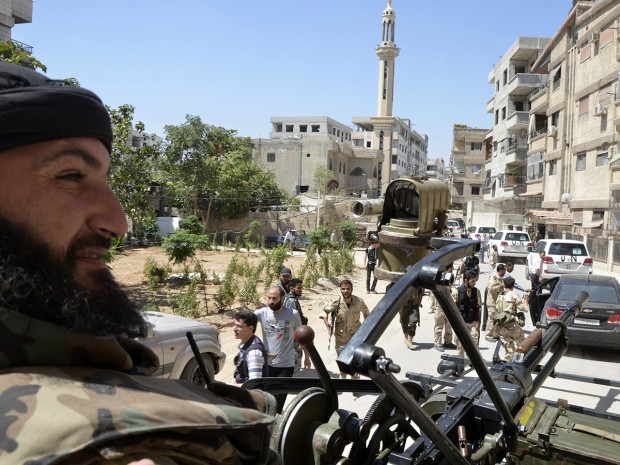
McCain has repeatedly advocated for a decisive attack against Assad and greater aid for the Syrian rebel forces whom he met with in May.
“We need to take out Bashar Al-Assad’s air force, which we can very easily do. We need to give [the rebel forces] the equipment and the weapons they need to succeed,” he said. “That would give them a chance to succeed.”
The White House has stressed it wants only a limited engagement with Syria after it says it reviewed irrefutable evidence that Assad used chemical weapons to kill Syrian civilians. At a White House press briefing on Tuesday, spokesman Jay Carney said supporting regime change was not being considered by the U.S. as it weighs its response.
“The options that we are considering are not about regime change,” he said. “They are about responding to a clear violation of an international standard that prohibits the use of chemical weapons.”
In a war-weary country, the president is balancing a desire to hold the line on chemical weapons with his desire not to involve the country in another Middle East conflict, former senior adviser David Axelrod explained.
“This is a president who was…launched by the fact that he opposed the war in Iraq,” Axelrod reminded Wednesday’s Morning Joe panel.
A Reuters poll released Tuesday found that a military intervention in Syria was even less popular than Congress—just 9% of Americans support a military intervention in Syria. That number rises to 25% if Syria uses chemical weapons. Nearly half, 46% of Americans say they oppose an American intervention. According to Reuters, fewer Americans support intervention in light of chemical weapons than did in a Reuters poll two weeks prior, indicating that the recent images of human suffering from chemical weapons is actually turning Americans against the idea.
But McCain believes the American people will support an intervention—as long as American troops aren’t sent in.
“We can assure the American people there will not be any American boots on the ground, but this has turned into a regional conflict,” McCain said, noting that the region has been destabilized and the price of oil has risen. “I think the important thing also is not to forget the 100,000 people who have been massacred. We have one million kids as refugees. I think he could get support for supporting these rebels without boots on the ground.” Air strikes on Syria are expected to begin as early as Thursday, officials told NBC News this week. The United Kingdom will bring a resolution before the Security Council on Wednesday “authorizing necessary measures to protect civilians” in Syria and condemning the use of chemical weapons, Prime Minister David Cameron said. Russia and China have previously vetoed resolutions on Syria and are likely to block this one. The president, vice president, and top administration officials have been working the phone the last 24 hours in hopes of building an international coalition for the strike against Syria. But on Tuesday, the Arab League declined to support a retaliatory strike—a move that hampers the president’s coalition, Axelrod said. On Tuesday, McCain blamed the president for not responding to Syria’s first reported use of chemical weapons in June, according to The Daily Beast. “Assad was able to use chemical weapons before and there was no response, and so why not do it again? This should surprise no one,” he said. “They viewed that not as a red line but as a green light, and they acted accordingly.” Watch the full discussion here.
Jane Timm Recommended


