








Immigration reform is back on the congressional negotiating table after massive Latino voter turnout that overwhelmingly backed President Obama’s re-election Nov. 6.
On Sunday, Sens. Chuck Schumer (D-NY) and Lindsey Graham (R-SC) announced on separate talk shows that they were restarting talks on immigration reform.
“We have nobody to blame but ourselves when it comes to losing Hispanics,” Graham said on CBS’ Face the Nation.
The Republican senator promised to “tear this wall down and pass an immigration reform bill.”
Schumer described a Democratic plan that would include a path to citizenship and a way for immigrants to work legally, along with a secure border.
The Latino community is large, but not particularly wealthy, so the “only way to get attention is to have huge voter turnout,” explains Brent Wilkes, the national executive director of the League of United Latin American Citizens (LULAC).
And turn out they did: Latinos made up 10% of the electorate in 2012, compared to 9% in 2008 and 8% in 2004, according to NBC News.
They voted 71% for President Obama and just 27% for Republican challenger Mitt Romney. That percentage represents a continual decline of the Latino vote for GOP presidential candidates in the last few years: John McCain captured 31% in 2008; President George W. Bush earned 40% in 2004.
This trend has left Republicans scrambling to adapt to changing demographics that will no longer let the party rely on white voters for victory.
“That was the rallying cry,” Wilkes said. “We said if you want progress on the issues that matter to you, all you have to do is vote.”
Former House Speaker and onetime presidential hopeful Newt Gingrich called Romney’s far-right stance on immigration during the presidential race “a disaster” for the party on Tuesday’s Morning Joe. The Latino demographic is now a “make or break it” part of the electorate, he added.
“You can’t say I’d really like to get your vote over jobs, but by the way we’re going to kick out your grandmother,” Gingrich said. “It doesn’t work.”
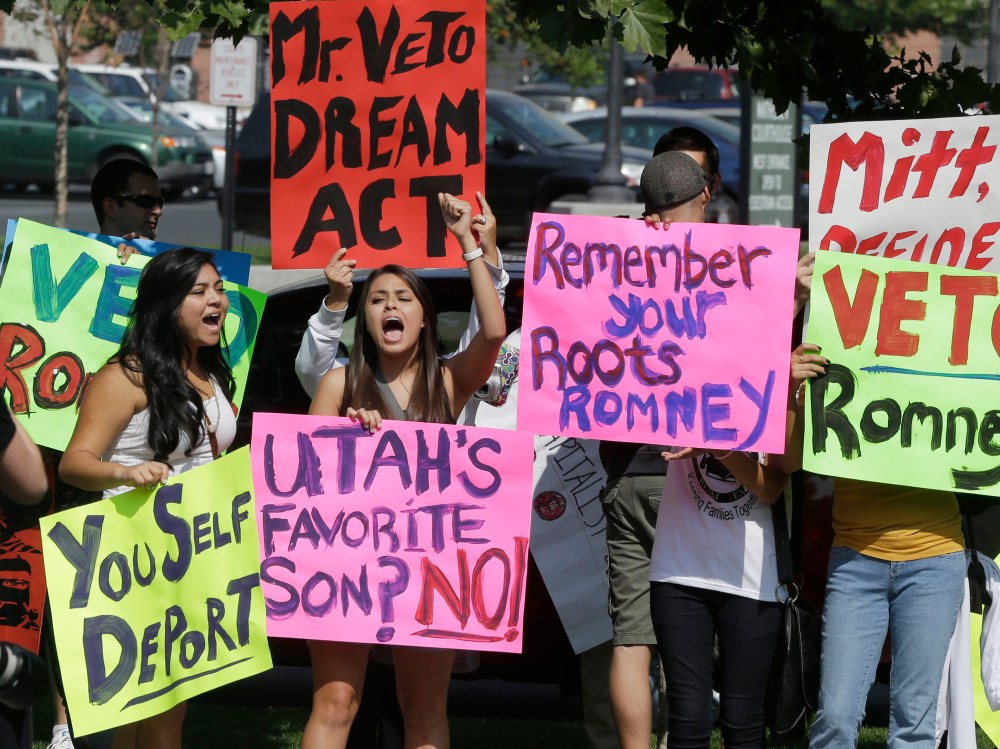
Though his position evolved and softened somewhat during the campaign, Romney rejected plans from more moderate Republicans during the primary that included paths to citizenship, saying “amnesty is a magnet” that simply encourages more illegal immigrants.
Lynn Sanders, a race and politics expert at the University of Virginia, called it “imperative” that the GOP soften its stance on immigration in order to survive within the country’s changing demographics.
“It’s really imperative that the GOP soften or be more creative or be more open about people finding ways for immigration reform,” she said. “The GOP needs an immigration reform stance and they need that maybe for moral or human values, but they really need it for their own survival.”
The party’s leadership appears to have gotten the message—somewhat.
In an interview last week, House Speaker John Boehner endorsed passing “comprehensive” immigration reform, adopting the term of advocates pushing for citizenship.
“I’m not talking about a 3,000-page bill,” he said later. “What I’m talking about is a common sense, step-by-step approach [that] would secure our borders, allow us to enforce the laws and fix a broken immigration system.”
An aide to House Majority Leader Eric Cantor added that legislation would need to include a broader plan for the estimated 11 million people living in the U.S. illegally, the Wall Street Journal reported.
“We understand that we can’t keep kicking this can down the road,” the aide said.
Latinos are the largest growing demographic in the country and political scientists have long predicted their future political weight. “People have been saying Latino voters are a sleeping giant so much it’s a cliché in our field.” Sanders said. Now that that political giant has “manifested,” as Sanders puts it, the question of immigration reform is not when but how. Perhaps one of the most symbolic questions is whether or not the party will support a path for illegal immigrants to gain legal, so-called guest worker status or full citizenship. Wilkes, though, wasn’t convinced that a guest-worker measure would really attract votes for the GOP. Republicans who want to “get serious” about attracting Latinos to the party should “go all in” he said. “Let people become citizens,” he added. “There’s no other real benefit to citizenship other than the ability to participate in democracy.” More importantly, Wilkes said, citizens build stronger communities: workers can be unionized, they qualify for healthcare, and contribute to the economy long-term. LULAC partnered with other Latino advocates to register voters for 2012. Wilkes estimated it registered 300,000 Latinos. It also made 30,000 callers to voters on Obama’s behalf. Obama’s field organizers also zeroed in on Latino voters, launching a voter education and Latino outreach program even before the Republican primary. LULAC and other Latino advocates of the president were disappointed the president did not push for immigration reform during the first two years of his term when Democrats had control of Congress, but now expect reform to be accomplished by April 2013. “We want to get the bill passed by April,” Wilkes said. Wilkes, however, wasn’t surprised immigration reform wasn’t accomplished during Obama’s first term. “The first minority president is going to focus on things that benefit everyone [in his first term], lest he be characterized as someone who is catering to minority groups,” he remarked. Although he saw a Tea Party surge in 2010 that “wiped out” immigration reform efforts when Latinos were made into “scapegoats,” particularly in states like Arizona, Wilkes is optimistic following the election. “Latino voters have showed they’re the difference makers in elections and the Tea Party is not,” he said.
Jane Timm Recommended


