








Richard Nixon was in a makeup chair when he met Roger Ailes. Maybe it was the makeup chair that set Ailes off. He was looking at the man who might have been president now if he had just sat in the makeup chair CBS offered him in Chicago before the first televised presidential debate in American history. Nixon had ignored the network’s makeup artist and used a drugstore product called Lazy Shave to cover his heavy five o’clock shadow. Nixon once said, “I can shave within 30 seconds before I go on television and still have a beard.” The day after the debate, the Chicago Daily News ran the headline Was Nixon Sabotaged by TV Makeup Artists? Richard Daley, the all-powerful Democratic mayor of Chicago said, “My God, they’ve embalmed him before he even died.” Nixon lost the election to John F. Kennedy by two-tenths of 1 percent of the vote, 49.7 percent to 49.5 percent. In an election that close every mistake matters. A mistake like not getting the makeup right was the kind of thing that infuriated Ailes.
Now, seven years later, Ailes was meeting Nixon for the first time, in the makeup room of The Mike Douglas Show. At age twenty-six, Ailes looked like an assistant, but in fact he was the boss, the executive producer of the show. And Nixon was once again a presidential candidate in what was beginning to look like a crowded field coveting the 1968 Republican nomination.
Ailes wanted Nixon to be president, and he knew the most powerful force blocking Nixon’s path to the White House was television. To win the White House in the 1960s you had to understand and respect the power of television. Ailes knew that one of Nixon’s potential rivals for the Republican nomination understood everything about television: Ronald Reagan, the former film and TV actor. Ailes wondered what Nixon had learned about TV since the makeup disaster of the 1960 campaign.
Sitting in the makeup chair, Nixon offhandedly mentioned to Ailes how silly it felt to try to reach voters by appearing on an afternoon talk show like this one instead of a news show like Meet the Press. The Mike Douglas Show was targeted at housewives and usually populated by B-list show biz celebrities. In response, Ailes instantly rattled off a list of every bad move Nixon had ever made on TV. It was a long list. Ailes was a teenager when he had seen some of these things. This was not the way people talked to former vice president Richard Milhous Nixon. There was none of the deference Nixon had been accustomed to for decades. And he loved it.
On the spot, Nixon made Ailes an offer he couldn’t refuse: instead of trying to make Mike Douglas America’s biggest afternoon TV star, make Richard Nixon America’s next president.
With Ailes on the media team, the Nixon campaign was ready to make the move from being the worst TV campaign to the best. “Just tell me what to do and I’ll do it,” Nixon told his media team. “We’re going to build this whole campaign around television.”
Roger Ailes’s career in Republican politics, which included every day he ran Fox News, turned out to be longer than Richard Nixon’s. Ailes became more influential in Republican politics than Nixon ever was. We have reason to wonder who would be president today if Richard Nixon had not provoked Roger Ailes in The Mike Douglas Show makeup room. Such are the seeds that were planted in American politics in the 1968 presidential campaign
“Run, Bobby, Run!”
Bobby was a natural on television. In 1967, he was the only potential presidential candidate who could charm a TV audience just by being himself. All he needed was his smile. Bobby was the Elvis of American politics—the only politician who didn’t need a last name to identify him. But his last name was everything.
It was Bobby Kennedy’s last name that made every potential candidate fear him. As the field of candidates began to take shape in 1967, every campaign calculation depended on Bobby even when he showed no signs of wanting to run, even when he told people he wasn’t going to run.
President Lyndon Baines Johnson feared Bobby to the point of obsession. Johnson thought Bobby was the only one who could do the unthinkable—challenge the incumbent president’s grip on the Democratic nomination. Johnson was sure that Bobby was the only Democrat who might dare to run against him. He was wrong.
Nixon feared Bobby, too, as did every Republican planning a campaign. Nixon knew exactly what to fear. He had lost to a Kennedy before. Losing to a Kennedy meant losing to the Kennedy political machine, and it meant losing to the Kennedy style. A political machine can be beaten by a better political machine, though Nixon had never seen a better political machine than the Kennedys’. Kennedy style was something else. Nixon knew there was nothing Ailes could do for his image that could compete with Kennedy style.
Nixon couldn’t change his sharply receding hairline. At fifty-four, he was too old to do anything but tamp down his short dark hair as flat as possible on his head. Bobby’s hair had grown longer every year of the 1960s; now, at forty-two, he had the shaggiest hair in the United States Senate. His little brother, Ted, was the only other senator with as full a head of hair.
Bobby’s hair was beginning to grow over his ears—rock-musician length for the Senate then. And everywhere Bobby spoke outside the Senate chamber, he was treated like a rock star. That’s what Nixon and Johnson feared most about Bobby, the way crowds responded to him. They had never seen anything like it in politics. Nixon and Johnson were both old enough to remember the first time anyone saw fans screaming and swooning for Frank Sinatra in the 1940s before, during, and after every song Sinatra sang. America saw an even more intense version of that fan reaction when the Beatles landed in in 1964. And now Nixon and Johnson saw a version of it happening to Bobby.
Everywhere Bobby went, crowds worked themselves into frenzies. When he spoke, he didn’t sound like any senator they had heard before. His voice wasn’t stiff and self conscious. His language wasn’t stilted or senatorial. What Bobby’s audiences believed they were hearing was a man speaking from the heart about the moral issues of the day: racial discrimination, poverty, the increasingly unpopular war in Vietnam. Johnson and Nixon noticed that there was more political calculation in Bobby’s speeches than his audiences realized. Bobby never said what he would do about Vietnam. What mattered to his audiences was that he didn’t sound like Johnson, who had escalated the war and was drafting hundreds of thousands of young men into the army and sending tens of thousands of them to their deaths for reasons they couldn’t understand or accept in a little country they had never read about in history class. Bobby’s adoring audiences believed he would never send them or their friends or their brothers or their cousins or sons or grandsons or boyfriends to die in Vietnam. It could happen to anyone in America then. Anyone could lose a loved one in Vietnam. It was a daily fear for almost everyone in the country. Bobby would stop all that. That’s what his audiences heard, even if he didn’t exactly say it.
Underlying Bobby’s speeches was a force we had never seen before in American politics and something we’ve never seen since, something Shakespearean. When Bobby stepped up to a microphone, no matter how sunny the day, no matter how wide his smile, he was always framed in tragedy, the personal and national tragedy of the assassination of his older brother, the president of the United States, on November 22, 1963, in Dallas.
Bobby’s audiences knew his pain because they all felt their own version of that pain on that horrendous day in 1963 that shook the country to the core. In the Kennedys’ hometown of Boston it felt as if the world stopped. I was in Saint Brendan’s Elementary School in Boston when the nuns got the news that the president had been killed, the first Catholic president, something the older nuns never expected to see. Now they had outlived the forty-six-year-old Irish Catholic boy who had made them so proud. The Sisters of Saint Joseph were the strongest women I knew, but this was too much for them to bear. They simply couldn’t carry on. They closed school early and sent us home. We had never seen them cry before. We were all crying when the nuns got us into our lines to march us out to the sidewalk. Everyone we saw was crying. Every driver stopped at every traffic light. Men carrying tool bags were crying. Men carrying briefcases were crying. Boston cops were crying. Subway cars were filled with people crying who had left work early to go home and cry with their families, and to watch the Kennedy family’s ordeal unfold on TV. We watched Bobby holding his brother’s widow’s hand that night when she arrived back in Washington still wearing her pink blood-stained clothes. We watched him holding her hand at Arlington National Cemetery. Nothing could ever happen in this world to make us forget those images, which were only four years old in 1967, when Bobby’s audiences started chanting, “Run, Bobby, Run!”
They would reach their hands up toward the stage. They would try to touch his shoe, the cuff of his pants, anything. When Bobby reached his hand down to them, a thousand hands would fly up toward him. He would shake each one he could reach. It was as if he were blessing them, one by one. When they looked up, they weren’t just seeing Bobby. They were seeing Jaqueline Kennedy in her bloody clothes. They were seeing Bobby and Teddy Kennedy at their brother’s grave site. They were seeing history, painful history. Bobby had a movie star’s smile, but when he smiled, his audiences believed they were seeing a grieving man who was somehow strong enough to smile through his pain. Bobby was the only politician whose smile could make people’s eyes tear. And with those tears in their eyes, when they looked up at Robert Francis Kennedy, they were always seeing John Fitzgerald Kennedy. For them, justice demanded that RFK take JFK’s seat behind the desk in the Oval Office. History demanded it.
No other politician in our history ever had such an advantage. Or such a burden.
Bobby seemed to have softened since the assassination. But most people’s political views softened in the 1960s, the decade when even some supporters of racial segregation began to accept the inevitability of racial integration, the decade when gung-ho decorated combat veterans like future senator, presidential candidate, and secretary ofstate John Kerry returned from war to join Vietnam Veterans Against the War, an organization that began as six Vietnam veterans marching together in a peace demonstration in 1967. By 1967, few people in America held all the same political positions they had held in 1960.
In the 1960s, America was changing utterly, and, to borrow a phrase from William Butler Yeats, “a terrible beauty is born.” Yeats was referring to the failed Irish revolution against British colonial rule in 1916. Every revolution has that terrible beauty—the vision and bravery of the revolutionaries, the high-minded commitment to a better future, the one-for-all and all-for-one spirit, the daring acts of heroism, the inspired poetry and music as well as the death, the destruction, the mayhem, and the out-of-control rage. The 1960s had all of that. It was a decade like no other—a high-speed kaleidoscope of the civil rights movement, assassinations, Bob Dylan, the Vietnam War, hippies, America’s first real antiwar movement, organic food, the Beatles, massive riots in several cities, the first riots on college campuses, Woodstock, Black Power, countless bombings in the name of the peace movement, Broadway’s first naked musical (about hippies), thousands of military funerals for boys who hadn’t wanted to go to war, birth control pills, free love, the collapse of dress codes in schools and universities, vegetarian restaurants, young rock stars dying of drug overdoses, fifty thousand deserters from the U.S. military, women’s liberation, Muhammad Ali on trial for draft evasion, young men fleeing to Canada and Sweden to avoid the draft. When the 1960s began, parents worried about their kids maybe drinking too much at the senior prom. By the end of the decade, parents worried about their kids getting arrested for possessing marijuana or dying from a heroin overdose orbeing killed in Vietnam for a theory: the “domino theory” that if one country fell to communism then another one would and another and another. No one was left unchanged by the chaos of the 1960s. Among politicians, perhaps no one was changed more than Bobby Kennedy.
In September of 1963, two months before JFK’s assassination, Robert Kennedy went to Bismarck, North Dakota, to speak in his official capacity as attorney general to the National Congress of American Indians. The attorney general was under no political pressure to make the speech. Nothing was more ignored in American politics than the concerns of Native American tribes. JFK had lost North Dakota to Nixon by a wide margin. The Kennedys had no political debts to pay there. And there wasn’t one sentence of Bobby’s speech that would flip a Nixon voter in North Dakota. His opening line was “It is a tragic irony that the American Indian has for so long been denied a full share of freedom—full citizenship in the greatest free country in the world.” This was radical stuff. By extending the language of the civil rights movement to the rights of the tribes, Bobby had added the concerns of the tribes to the liberal list of just causes years before most liberals had given them a thought. He ended the speech by quoting Chief Joseph of the Nez Perce tribe, who in 1877 offered this prayer for the future: “We shall all be alike—brothers of one father and one mother, with one sky above us, and one country around us, and one government for all.” Bobby was becoming a liberal inspirational speaker years before most people noticed.
Bobby had made the decision to run only once before, and he made it at the last possible minute. He gave President Johnson his resignation as attorney general in August of 1964, nine months after the assassination. He quickly moved to New York and announced his candidacy for the Senate. That was after he initially resisted when some New York Democrats urged him to run, then became indecisive, and finally rushed to New York just in time to be nominated at the state convention on September 1. The Republican incumbent senator accused him of being a carpetbagger because he didn’t have an address in New York until days before he was nominated. With his suit coat off, his tie loosened, and his sleeves rolled up as he campaigned on the streets of New York, Bobby smiled through every word of his carpetbagger defense saying: “If the senator of the state of New York is going be selected on who’s lived here the longest, then I think people are going [to] vote for my opponent. If it’s going be selected on who’s got the best New York accent, then I think I’m probably out too. But I think if it’s going be selected on the basis of who can make the best United States senator, I think I’m still in the contest.”
Bobby easily won that first campaign, by ten points. But that didn’t mean he was eager to gear up for another one just three years later in all fifty states.
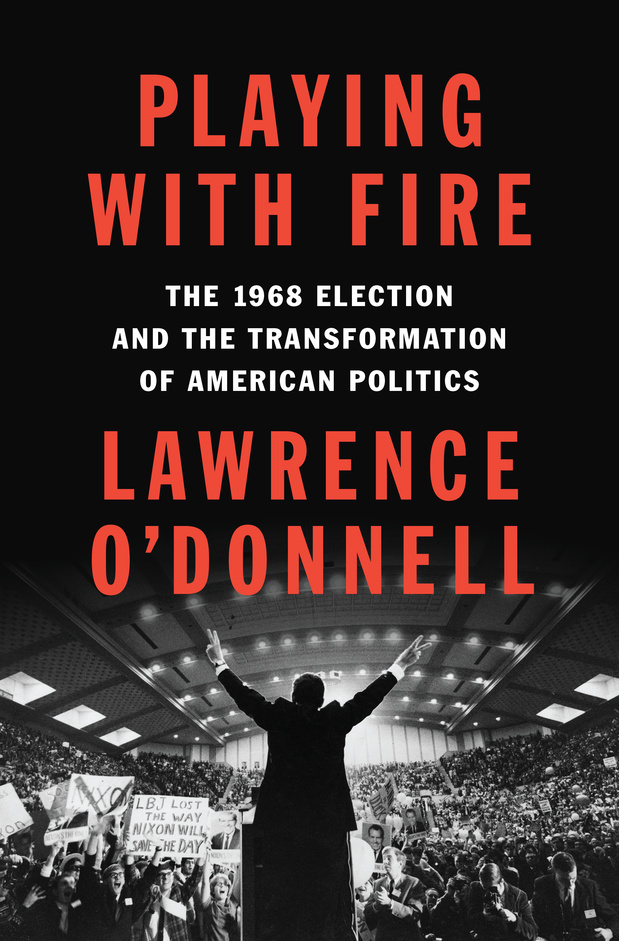
“Run, Bobby, Run!” Bobby was a realist first, a politician second, and a dreamer third. When he heard his audiences urging him to run for president, he knew he was hearing dreamers. Their dream was not so much another Kennedy presidency as it was a restoration of the first Kennedy presidency. They wanted to put their shattered dream back together. “Run, Bobby, Run!” Bobby knew what they wanted was impossible, crazy, maybe even political suicide. Running against the incumbent president for the nomination of his own party was madness. Running against Lyndon Johnson for the nomination that he owned was something more than madness. Johnson had been elected in a landslide in 1964, a year after the assassination, and except for his handling of the Vietnam War, he was the most masterful politician and strategist in the presidency since Franklin Delano Roosevelt. Johnson kept getting war strategy wrong and never paused to consider that there might not be a right way, that maybe the protesters were right, and the only smart move left was to get out of Vietnam. Johnson was always certain of only one thing about Vietnam: he wasn’t going to be the first president of the United States to lose a war. Another president might have faced significant opposition to the war in Congress by 1967, but Democrats controlled the Congress and Johnson controlled the Democrats with an iron fist. LBJ was ruthless with political enemies. Ruthless is the word people used to describe Bobby when he was protecting his brother on the way to and during the presidency. But you need power to be ruthless and LBJ had all the power in the Democratic Party now. Bobby knew all the levers of power Johnson could use to crush him if he launched a rebellion against the president. “Run, Bobby, Run!” No one was demanding that anyone else run. The Republican field of potential candidates was motivated entirely by the egos of the men planning to run. Nixon was likely the front-runner, with three governors circling him: Ronald Reagan, George Romney, and a New York Republican with a spectacular home on Fifth Avenue whose last name was a synonym for massive wealth: Nelson Rockefeller. Governor Rockefeller had challenged Nixon for the Republican nomination in 1960. He was a billionaire by inheritance, the richest man ever to run for president. He had a messy divorce in 1962 after rather publicly carrying on an affair with a married woman whom he then married in 1963. Three years later, in his successful reelection campaign, Governor Rockefeller greatly expanded the Republican definition of an acceptable marital history. Donald Trump should leave a thank-you note at Nelson Rockefeller’s grave in Sleepy Hollow, New York, for paving the way in Republican presidential politics for rich men of Fifth Avenue with complicated marital histories. The Republican field was beginning to look like the strongest group of Republican candidates in years. There was no doubt that President Johnson was going to be the Democratic nominee, and as a brilliant manipulator of the powers of incumbency would likely be reelected. Unless . . . unless Bobby ran. “Run, Bobby, Run!” Lyndon Johnson and Richard Nixon, the most ruthless Democrat and the most ruthless Republican, feared that dream, as did all the other Republican presidential hopefuls. And Bobby didn’t think a dream was enough to run a presidential campaign. Bobby was almost certain that challenging Johnson was hopeless, but it might be the only way to put pressure on the president to de-escalate the Vietnam War. The chants, the dream, the war, and antiwar Democrats privately urging him to do it all contrived to get Bobby thinking about it. It was a rerun of the way he had approached running for the Senate three years earlier. At first he resisted. Then he wavered. Then he resisted again. Then he wavered again. All the while, Johnson and Nixon and the others believed that Bobby held history in his hands. Bobby did not yet quite realize the extent that the 1968 presidential election would be about nothing less than life and death. In the nuclear age, all presidential elections were, by implication at least, about life and death because the commander in chief had the power to start World War III in minutes by launching nuclear missiles. But the 1968 election was going to be about the life and death of people we knew. In the spring of 1968, my cousin John T. Corley Jr. graduated from West Point, then visited us in Boston before he shipped out to Vietnam. Johnny was the tallest among us, six feet four inches, a West Point football star. We worried that he would be an easy target in Vietnam. Johnny wasn’t worried. He grew up on army bases with his father, a general, and was trained for combat and eager to try to rival his father’s World War II and Korean records, which filled their home with twenty-six awards and decorations, including a record-setting eight Silver Stars. My oldest brother, Michael, showed Johnny his draft notice that had just arrived in the mail. Michael was worried. He didn’t want to go to Vietnam. No one we knew wanted to go except Johnny. He wanted a career in the army like his father, and combat was part of that. Johnny advised Michael that the best way to avoid Vietnam might be to voluntarily enlist before being drafted because then he might get a better choice of assignments. Getting drafted was the fastest route to Vietnam. Michael took Johnny’s advice, enlisted, got easy assignments in the army and never left the United States. Johnny arrived in Vietnam on May 9, 1968. Over the course of that summer, his letters to Michael began to question the wisdom of the mission in Vietnam. Johnny earned a Silver Star in four months, on September 8, 1968, the day he was killed in action. His funeral was the first military funeral I attended. Tragedy has many faces but none quite like a general crying, saluting his son’s coffin. It was just another day in the life of America in 1968. The presidential election could end all that if Bobby ran on ending the war in Vietnam and won, as antiwar Democrats were assuring him he could. I was in high school in 1968 and I never heard my brothers and their college-age friends talk about career planning. They only talked about how to deal with the draft and Vietnam. There was no long-term planning, no career hopes and dreams. Life was a short-term game for many young men in 1968. It was as if they were prisoners who would only begin to think about life on the outside when they got outside. Their prison was in their pocket, the draft registration card that controlled their lives, blocked their hopes and dreams. The presidential election could end all that. The presidential election was the matter of life and death for real people we all knew. That meant that this time running for president didn’t have to be about ego. It meant that running for president couldn’t simply be a matter of political calculation. It meant that it wasn’t just about what was best for Bobby’s future in politics. It was about life and death. The death Bobby thought about was his own. He worried that announcing his candidacy might tempt an assassin. He knew assassination was driven more by madness than logic, and maybe getting the second Kennedy on his way to the presidency would capture an assassin’s twisted imagination. He was the only potential candidate who had to worry about a copy cat assassin going for another Kennedy. And so Bobby’s thinking about running was muddled and slow. He was leaning against running most of the time he thought about it. As he thought about it, Bobby, who had been the manager of his brother’s winning presidential campaign, could see every detail of what could go wrong with his own. But he could not yet see what the election was going to be about: life or death. And so Bobby held history in his hands for so long that someone who could see what the election was going to be about decided he couldn’t wait any longer and grabbed history out of Bobby’s hands, someone no one expected to seize the moment. Until he did. PLAYING WITH FIRE: The 1968 Election and the Transformation of American Politics by Lawrence O’Donnell. Published by the Penguin Press on November 7, 2017.
Morning staff Recommended


