








Introduction
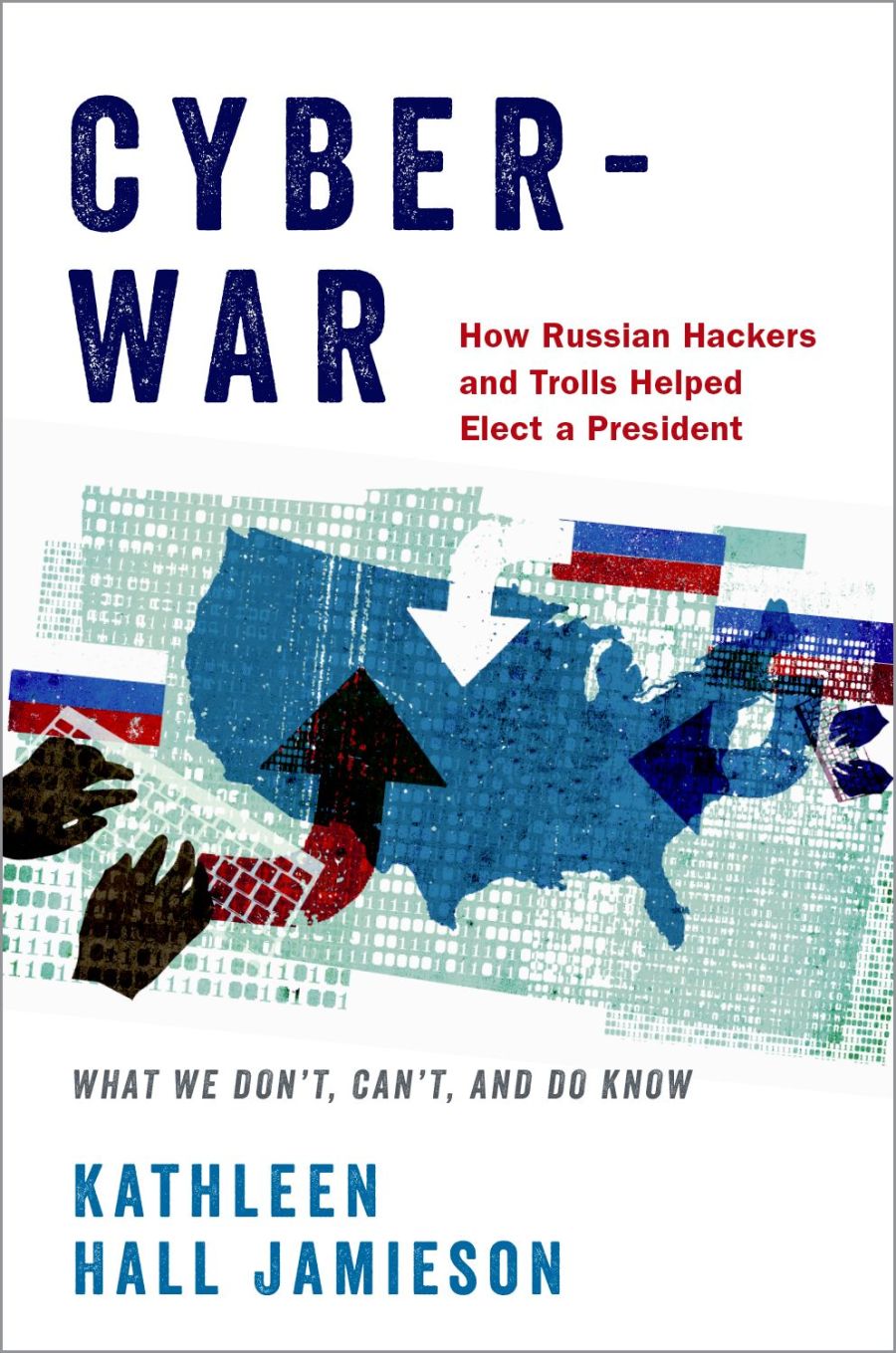
Imagine a strategy memo forecasting cyberattacks by Russian hackers, trolls, and bots designed to roil social discontent and damage the electoral prospects of a major party US presidential nominee, or, if she winds up winning, sabotage her ability to govern. Guaranteed payoff. No fingerprints. No keystroke record. No contrails in the cloud. To ensure that Americans would believe that disparaging messages about her were made in the US, use bitcoin to buy space and set up virtual private networks (VPNs) on American servers. Distribute hacked content stolen from the accounts of her staff and associates through an intermediary, WikiLeaks. Use identity theft, stolen Social Security numbers, and appropriated IDs to circumvent Facebook and PayPal’s demand for actual names, birth dates, and addresses. On platforms such as Instagram and Twitter, register under assumed names. Diffuse and amplify your attack and advocacy through posts on Facebook, tweets and retweets on Twitter, videos on YouTube, reporting and commentary on RT, blogging on Tumblr, news sharing on Reddit, and viral memes and jokes on 9GAG. Add to the mix a video game called Hilltendo in which a missile-straddling Clinton figure vaporizes classified emails sought by the FBI. Employ “online agitators” and bots to upvote posts from imposter websites such as BlackMattersUS.com to the top of such subreddits as r/The_Donald and r/HillaryForPrison. Drive content to trend.
To maximize the impact of your handiwork, use data analytics and search-engine maximization tools built into the social media platforms. To test and fuel doubts about the security of US voter information, hack the election systems of states. And, throughout the primary and general election season, seed the notion that if Hillary Clinton were to win, she would have done so by rigging the election, an outcome that would repay her assaults on the legitimacy of their leader’s presidency with doubts about her own. Were she instead to lose, she would no longer be a thistle in the toned torso of the hackers and trolls’ boss’s likely boss.
Every result but one produces desirable results for the Kremlin. Outcome one: Clinton is off the international stage. Outcome two: she wins but can’t govern effectively. Outcome three: the former Secretary of State is elected and the country simply moves on, but the sabotage nonetheless has magnified cultural tensions and functioned as a pilot from which to birth later success — perhaps when she runs for a second term. The only eventuality that damages the Russian cybersoldiers and their commander-in-chief is the fourth in which, in real time, the cyberattackers are unmasked by a vigilant intelligence community, condemned by those in both major political parties and around the world, characterized by the media as spies and saboteurs, the Russian messaging is blocked or labeled as Russian propaganda, and, when included in media accounts, the stolen content is relentlessly tied to its Russian origins and sources. None of that happened.
Instead, to the surprise of the Russian masterminds as well as both Hillary Clinton and Donald Trump, he won the Electoral College and with it a four-year claim on 1600 Pennsylvania Avenue. Although countrywide she bested him by almost 2.9 million votes, he unexpectedly captured an Electoral College majority by running the table. By the end of the evening of November 8, Florida as well as Wisconsin, Michigan, and Pennsylvania were in his column. The ways in which Russian hacking and social media messaging altered the content of the electoral dialogue and contributed to Donald Trump’s victory are the subjects of this book. …
Introducing the Trolls and Hackers, and Noting the Synergies between Them
Unlike the otherworldly creatures in Norse mythology who live in rocks, caves, mountains, and forests, the Russian internet trolls of interest here assumed guises that shielded their true identity as they marauded about in cyberspace creating the illusion that they were grassroots activists while posting provocative, often inflammatory content. … Of central concern are operatives belonging to the Russian Internet Research Agency (IRA) “troll farm” in St. Petersburg, where, as a July 2016 article in the New Yorker revealed, “they produced blog posts, comments, infographics, and viral videos that pushed the Kremlin’s narrative on both the Russian and English Internet.”
The timeline on which the trolls operated is telling. An analysis by the Wall Street Journal found that some of the Russian Twitter accounts with more than 10,000 followers “were created in late 2015 as the presidential primaries were in full swing.” According to an NBC News analysis of a database of 202,973 tweets sent by known Russian trolls, “Russian twitter troll volume increased significantly on July 21, two days after Trump became the official Republican nominee, and continued at the same intensity or higher for the rest of the year.”
To harness the fears and enthusiasms of US citizens to their cause, Russian discourse saboteurs crafted and placed ads on US platforms, organized rallies that would showcase cultural divisions, created imposter sites, and strategically messaged to millions on Facebook, Instagram, Twitter, YouTube, Tumblr, and Reddit, among others. With a focus on constituencies whom Donald Trump needed to mobilize, Russian messages stoked fears of the multicultural, multiracial, ecumenical culture that the Clinton Democrats championed and that unified her coalition of blacks, Hispanics, and northern, college-educated whites. At the same time, the trolls amplified accurate information disadvantaging Clinton and spread disinformation about her to discourage voting by key Democratic blocs. The impersonators’ core appeals are evident in election-related hashtags such as #TrumpTrain, #MAGA, #IWontProtectHillary, #BlacksAgainstHillary, and #Hillary4Prison, the Twitter account “March for Trump,” and Facebook accounts including “Clinton FRAUDation” and “Trumpsters United”… Tied to Russian spy agencies that included the General Staff Main Intelligence Directorate (GRU), the Russian hackers gained unauthorized access to stored Democratic emails, data, and memoranda. Initially the stolen content was released through the personas Guccifer 2.0 and DCLeaks.com. Then a more effective partner entered the scene. This helpmeet was WikiLeaks, a controversial organization described by its chief spokesperson, Julian Assange, as “an uncensorable system for untraceable mass document leaking and public analysis.” In January 2017, the US intelligence agencies assessed “with high confidence that the GRU relayed material it acquired from the DNC [Democratic National Committee] and senior Democratic officials to WikiLeaks.” The reason for this choice of distributor? “Moscow most likely chose WikiLeaks because of its self-proclaimed reputation for authenticity.” Assange denied that Russia was the source of the released Democratic content. The released Russian-stolen messages exposed Democratic oppositional research compiled about Trump, afforded the Republicans access to voting data in a number of states, altered the media agenda, and were used by the moderators to frame exchanges in two crucial presidential debates. Out of the hacked private conversations, Republicans, their allies, and the trolls fabricated scandals, among them the notion that Hillary’s campaign CEO was part of a bizarre secret cult. … Russian-hacked content and disinformation not only infected the news agenda but also tilted the balance of discourse in battleground states against the Democratic Party nominee. Adapted from Cyberwar: How Russian Hackers and Trolls Helped Elect a President – What We Don’t, Can’t, and Do Know by Kathleen Hall Jamieson. Copyright © 2018 by Oxford University Press and published by Oxford University Press. All rights reserved.
Morning staff Recommended


