








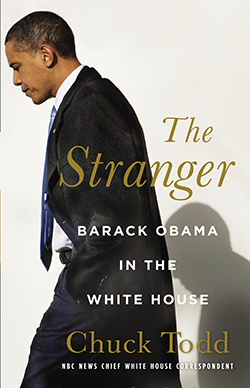
The transition period is an awkward time for a president-elect and an outgoing commander in chief. For the two and a half months between Election Day and Inauguration Day, there are in effect two leaders of the United States, and at a moment when one party is handing power to another, their policies can differ dramatically. Few presidential transitions in the nation’s history have had the potential to be as fraught as the transition between George W. Bush, the man who orchestrated and authorized the wars in Iraq and Afghanistan, and Barack Obama, the man who campaigned against one and only barely accepted the necessity of the other. But after the September 11 attacks, during which one of the hijacked aircraft was apparently destined for the White House, Bush had made a smooth transition a priority, regardless of which party would take power once he left. Obama’s team, Bush told his staff, was to be given full access, to ease their path to power so there wouldn’t be so much as a hiccup when the old guard handed power to the new.
That didn’t mean the transition period wasn’t a confusing time for the incoming president’s personnel. They had spent two years in a virtual bunker together, working around the country against
— and beating — some of the most established names in Democratic politics. They had rallied for hope, for change, for a new way to do business in Washington. But as the unadulterated glee of winning a national campaign wore off, some of the illusion that they would truly be able to change Washington right off the bat went with it.
For one thing, once campaign aides had recuperated for a few days and started considering their positions in the White House, they found the beginnings of a team already in place. And instead of reuniting entirely with those who had helped the candidate win the election, they were meeting senior members of the transition who had long careers in Washington, and even stints of employment in the Clinton administration and the Clinton campaign, behind them. Of course there was John Podesta, who had by now been leading the transition effort for months. Carol Browner, who had headed the Environmental Protection Agency in Clinton’s White House and was a veteran of Washington politics, had been brought in early to help staff several agencies. Federico Pena, Clinton’s HUD secretary, was on the advisory board; so was Bill Daley, Clinton’s old commerce secretary. Old keys opened old doors, while campaign foes became friends. Tom Vilsack, who had run briefly in 2008 and then endorsed Hillary Clinton, was tapped to run the Agriculture Department, an important outreach position the president could use to woo voters in farm-heavy midwestern states. And so it went.
Sometimes the exclusion was quite literal. Dan Pfeiffer, an Obama aide since his old boss, Senator Evan Bayh, had made it clear he wouldn’t run for president, left Chicago in a daze after helping elect the nation’s first African American president. The Monday after Election Day, he walked into the transition office’s headquarters, a run-down government building halfway between downtown Washington and Capitol Hill, with an aging McDonald’s facing the street. But no one had told the Secret Service that Pfeiffer, who would direct communications for the transition office, was allowed in the building. While he waited for the oversight to be fixed, Pfeiffer watched in amazement as Jamie Rubin, a
Clinton administration State Department veteran and a vocal surrogate attacking Obama during the primaries on behalf of Hillary’s campaign, breezed right through security, his credentials already taken care of.
This was change they could believe in? To Obama aides and outside observers alike, the evidence was suddenly pointing in the other direction: longtime Washington hands crowded transition team meetings and would eventually hold the more important posts in the White House. And just as mind-boggling to the campaign staff, a Bush Republican, Obama’s chief primary rival, and an emissary from Wall Street occupied the three most important cabinet posts Obama would fill. But, Obama would argue, he wasn’t selling out his ideals. Sure, the true believers who had been with him from the beginning ended up with lower-level political jobs, or at least positions that didn’t require Senate confirmation. He was merely demonstrating a pragmatic side, one that would reveal itself time and again during his first four years as president, sometimes at moments when pragmatism was seemingly at odds with the idealism that had carried Obama into office. His favoring of establishment insiders and veterans of presidencies past demonstrated to those who had been up close with Obama something they’d known was there but had hoped might fade come arrival at 1600 Pennsylvania. They saw the supreme self-confidence, at times bordering on arrogance, that defined Obama, the assuredness that allowed him to sit in a room with four-star generals, heads of state, senior senators, or business icons and believe himself their intellectual equal or superior. Obama wasn’t concerned about bringing big names, pillars of old Washington, on board an administration bent on change; as always, he saw himself as the change. Only months before, Obama had accepted his party’s nomination by proclaiming that “the change we need doesn’t come from Washington. Change comes to Washington.” He’d meant it — but perhaps not, it seemed, in the way his acolytes had imagined, since the only change apparent to them was him.
Morning staff Recommended


