








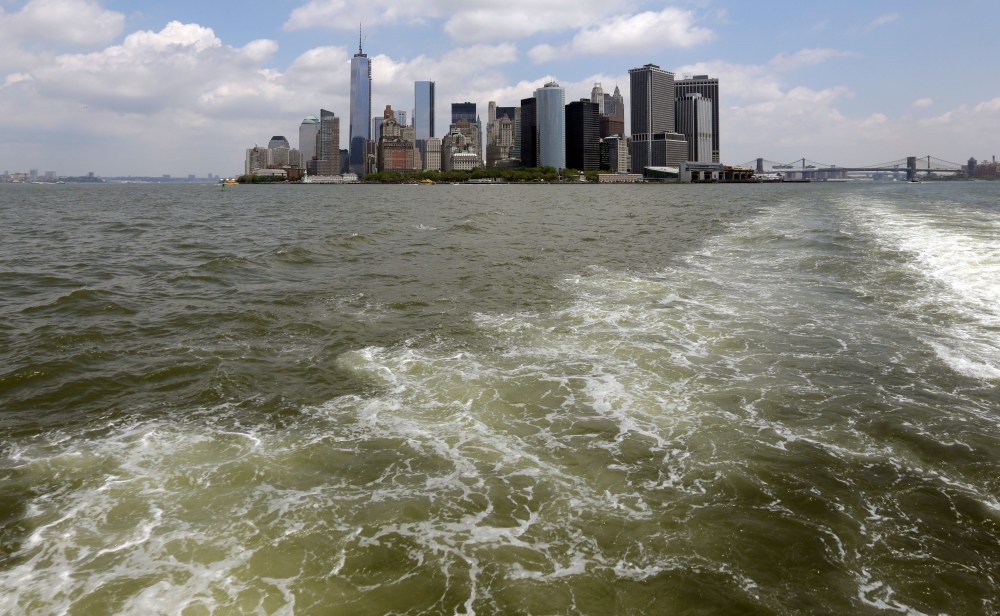
New York City Mayor Michael Bloomberg proposed an ambitious, long-term plan to insulate New York City from climate change on Tuesday.
Hurricane Sandy left much of New York City flooded, without power, and badly damaged; in the months after the storm, the city commissioned an in-depth examination and report on the city’s risks and developed a plan to protect the city from future storms and extreme weather brought on by climate change.
The plan proposes a variety of solutions, from the predictable (widened beaches and amended building codes) to the bold (building a sustainable island on the East side of lower Manhattan to shield the city from extreme weather, just as Battery Park City mitigated the damage on Manhattan’s West side.) It will cost the city nearly $20 billion—three quarters of which will come from Sandy relief funds and City capital funding, according to the mayor. The city will lobby the federal government for the remaining billions.
Recovering and rebuilding after Sandy will cost the city $19 billion—not to mention the significant lost revenue that businesses felt—but by mid-century, the city’s team of experts estimate that a similar storm could cost the city five times that much, the Mayor said.
“This is urgent work—it must begin now,” he said. He chided the federal government for not leading the fight against climate change.
“We haven’t waited for Washington to lead the charge on climate change,” Bloomberg said. “If we had, we’d still be waiting.”
The third-term mayor leaves office at the end of the year. But he hopes to get commitments in place before a new administration takes over. He called on New Yorkers to hold him—and his successor—accountable for making New York as resilient as possible.
New York City’s coastlines have 535 million square feet of built up homes and businesses and nearly 400,000 residents—roughly the same size as the city of Minneapolis. Retreating from these areas is futile, he said, as is denying climate change.
“Whether you believe climate change is real or not is beside the point—we can’t run the risk,” he said. “And as New Yorkers, we cannot and will not abandon our waterfront.” The mayor proposed a series of strategic flood walls, surge barriers, dunes, tidal barriers, and bulkheads built around the coasts strategically, to insulate the coastal areas, as well as building codes to protect homes and businesses against flooding and infrastructure improvements to prevent power, fuel, and telecommunication outages. The report also proposes studying the feasibility of building a sustainable, completely new island on the East side of lower Manhattan. “Call it Seaport City,” he said. “Yes, it would be expensive to build. But over time it could prove to be a great investment, just as Battery Park City has been.” In addition to restoring the coastlines, Bloomberg proposed a modification to a newly updated federal policy that makes flood insurance prohibitively expensive for many New Yorkers. Under the mayor’s plan, homeowners who make flood-related improvements would receive discounts on their federal flood insurance. Presently, homeowners are rewarded with discounts only when they elevate their homes—a costly improvement that isn’t always realistic. The 430-page report includes 250 recommendations for action.
Jane Timm Recommended


