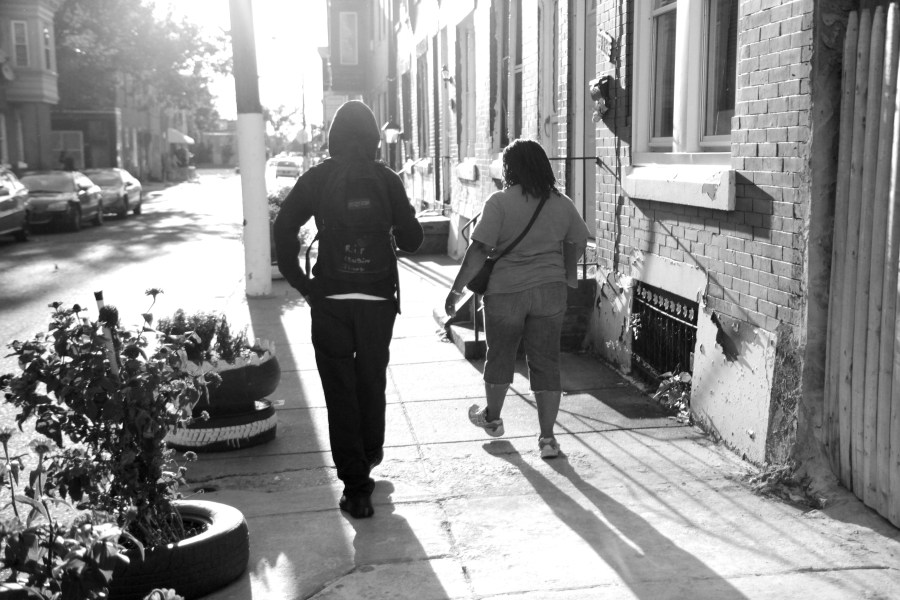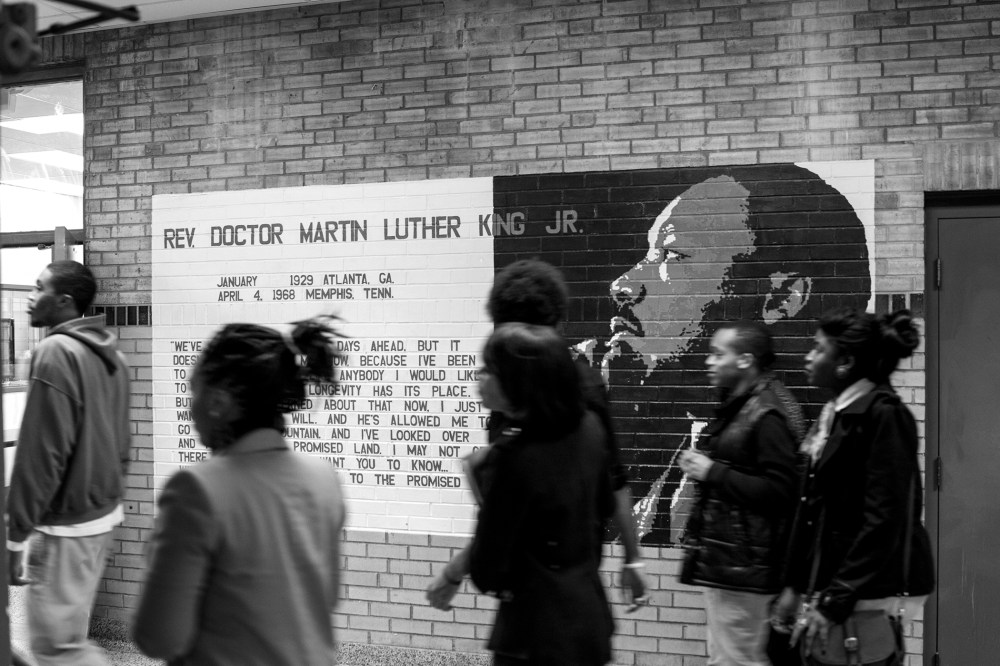
In Philadelphia, hundreds of children left home a little earlier as they headed back to school this year. A slew of school closures over the summer meant a longer, and often less safe, journey to other elementary and middle schools further away.
In the St. Louis suburbs, thousands of students transferred this Fall from failing school districts when a court order opened up new opportunities. But the exodus put an even greater financial strain on the districts they left behind. Now the students who chose to stay closer to home could soon find themselves displaced as the state mulls shutting down or taking over their schools. And in Chicago, the closure of nearly 50 schools has created “school deserts” in some neighborhoods, while the district starves other schools to the point of closure.
All across the country, from the old industrial Northeast to the West Coast, through the Midwest and to major cities in the South, mass school closings—the product of deep budget cuts and flawed policy planning—have forced tens of thousands of children further from home. But not all children. Interviews in major cities and a review of census and other data make clear that the vast majority of those affected are African-American and poor.
In district after district, officials have argued that the schools involved had been underutilized or were underperforming, and that by closing them, students have an opportunity to attend better-equipped schools. In Chicago, Mayor Rahm Emanuel said that “consolidating schools is the best way to make sure all of our city’s students get the resources they need to succeed in the classroom.”
But after years of closures and consolidation in districts across the country—Chicago alone has closed about 150 schools over the past decade—the burden of these academic experiments is being felt on a single community.
In Chicago, 88% of the students affected by the school closures are African-American. The numbers are just as glaring in Philadelphia, where 81% are black. In both cities more than 93% of the affected students come from poor families. The numbers have played out much the same way in Detroit, New York, Newark, NJ, Oakland and Washington, D.C. Parents of school children in each of these cities have filed federal complaints under the 1964 Civil Rights Act to fight school closings.
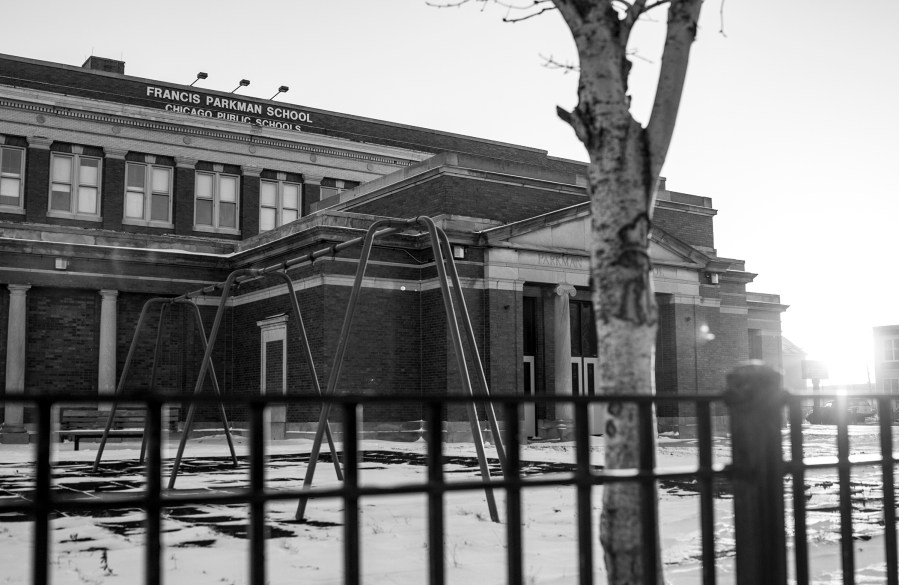
The closures in 2013 were built on a pattern: Across the country, 1,929 schools were closed during the 2010-2011 school year, according to the National Center for Education Statistics.
“You have poor kids all over the country but the mass closures are disproportionately affecting children of color,” Randi Weingarten, president of the American Federation of Teachers, told msnbc. “Instead of fixing a school and making public schools the center of a community where parents want to send their kids, you’re hurting communities, you’re hurting schools and you are sending kids outside of their neighborhood to places that in the long run, frankly, are no better than the places they left.”
The broader picture emerging from the communities hit hardest by deep budget cuts and mass school closings is stark. Many schools don’t have full-time nurses or school counselors. Students travel longer to school, often through unwelcoming neighborhoods. Classroom sizes have swelled to the point where some students don’t have desks to sit in. In Philadelphia, a sixth-grader died after suffering an asthma attack at a school where no nurse was on duty.
There, too, officials had portrayed school closures has something that would improve education for everyone. Mayor Michael Nutter said in June that the school board “made tough choices, but they made the right choice. We need to downsize the system.”
The shells of shuttered public schools litter many of America’s largest cities, some as vacant, hulking eyesores. Other buildings have found new life as charter schools or government offices. But opponents say the detritus of large scale closings, an overwhelming number of them elementary schools, has also included whole neighborhoods further destabilized by the closures. Recent studies suggest that very few students who are relocated because of school closures are transferred to higher-performing schools or fare much better academically.
“This is a civil rights issue,” said Jitu Brown, a community organizer in Chicago who has fought school closings there. “Their white counterparts deserve a quality education, but so do they.”
Parents, students and teachers have protested the mass closings, charging that the moves are part of a larger agenda to privatize public education, bust-up unions and continue the spread of charter schools. Charter schools are essentially publicly funded schools with private management that operate largely without the bureaucracy of a traditional public school. Charter schools have increasingly become competition for students and the public funds that follow them. Critics say that by taking funding from neighborhood schools, education officials are setting up students for failure.
Officials in many of the cities where mass school closings have occurred have invested in the expansion of charter schools. Supporters of charter schools say the schools offer parents a quality option over otherwise failing neighborhood schools.
Just last week, school officials in Newark set off a firestorm when they announced massive school restructuring, including closing some schools and placing a number of charter schools in current district-owned buildings.
“They say this is about choice, but it is about anything but choice,” Newark city councilman Ras Baraka said last week during a news conference. “They are saying we’re going to get rid of your neighborhood schools. This is a dismantling of public education. It is an irresponsible and radical plan. It needs to be halted.”
Days earlier, the Chicago Public Schools proposed the addition of 21 new privately run charter schools, after it made history over the summer when it closed nearly 50 (put exact number in here). The district claimed the closures were a cost-cutting measure that would ease the pangs of the $1 billion deficit the school district is facing. Despite the financial woes, a recent analysis showed that 21 new charter schools could cost taxpayers as much as $225 million over the next decade.
Andrea Zopp, head of the Chicago chapter of the National Urban League and a member of the Chicago school board, said the closings were a necessary step in addressing the city’s wide disparities in the quality of education offered to its students. “The school system failed them,” Zopp said. “We have had a variety of big efforts to fix public education. It’s tough. Fixing the schools is harder than it looks. But I think at a community level, often times people don’t know what a good education looks like. We confuse nice teachers with good teachers. And I think now we are seeing the impact of decades of undereducated children and we are seeing the cost of that. They can’t compete in the workplace. They can’t compete, they can’t work, it causes economic issue and the list goes on.” To those who have fought to keep neighborhood schools open and public education well-funded, closing schools could exacerbate the very issues that Zopp said the board is trying to counter. “The big point here is that in these low income communities it’s important that the schools get the resources that they need,” said Kia Hinton, a mother of three Philadelphia public school students and member of Action United, a social justice organization. “These students are not getting the resources that other students in other areas are receiving. And a lot of what’s impeding their learning has to do with societal issues like poverty, people not having jobs, violence, all of those things.” Race has hung over each and every school closing this year, directly impacting blacks and, to a lesser but still disproportionate level, Latino children. But it was a court ruling in Missouri that set the stage earlier this year for a drama more reminiscent of 1963 rather than 2013. Weeks after the Missouri Supreme Court upheld a ruling that allowed thousands of mostly poor black students to leave their failing school districts and attend better schools in far-off, affluent communities, white parents angrily denounced the decision. In town hall and school board meetings, they said that they feared that black students from poor communities would bring with them drugs and violence. Those fears never panned out. It is unclear what, if any, impact the flood of new students will have on the more affluent district. But it could tear apart the district they left behind. A flawed funding formula mandates that the failing school districts cover costs for their departing students at the new schools including the per-pupil cost the schools would spend to educate the students and transportation. The costs have soared so high that one school district, Normandy, will likely go bankrupt by May. Hiram Rivera, executive director of the Philadelphia Student Union, said a “line has been drawn in the sand,” across the feet of school children. “These are the final rounds and I don’t know how much worse it can get,” he said. “But if we are to fight for the types of schools our kids deserve, we need a pushback on a scale the country has never seen. It has to be on a national scale on the level of the civil rights agenda.” Rivera and student advocates across the country describe the collective brunt of mass school closings and flawed education policy as an assault on some of the most vulnerable demographics of children in the country. School deserts cross paths where social needs tend to be greatest, where food deserts exists, where there tends to be high levels of unemployment, poverty and violence. What’s at stake in the much broader debate over school closures and urban education policy is a whole generation of minority students already struggling with great social and economic instability. “Whether you take a kid and transfer him out of one school or school district or later send him to prison when you lock them up,” their opportunities fade, said Adolphus Pruitt, head of the St. Louis chapter of the NAACP. “We get calls from black kids in jail every day, saying, we need some help. They all have three things in common that are consistently true: they are black, they come from a poor socioeconomic strata and they’ve had a poor damn education,” Pruitt said.
Trymaine Lee
Trymaine Lee is an NBC News correspondent. Recommended