








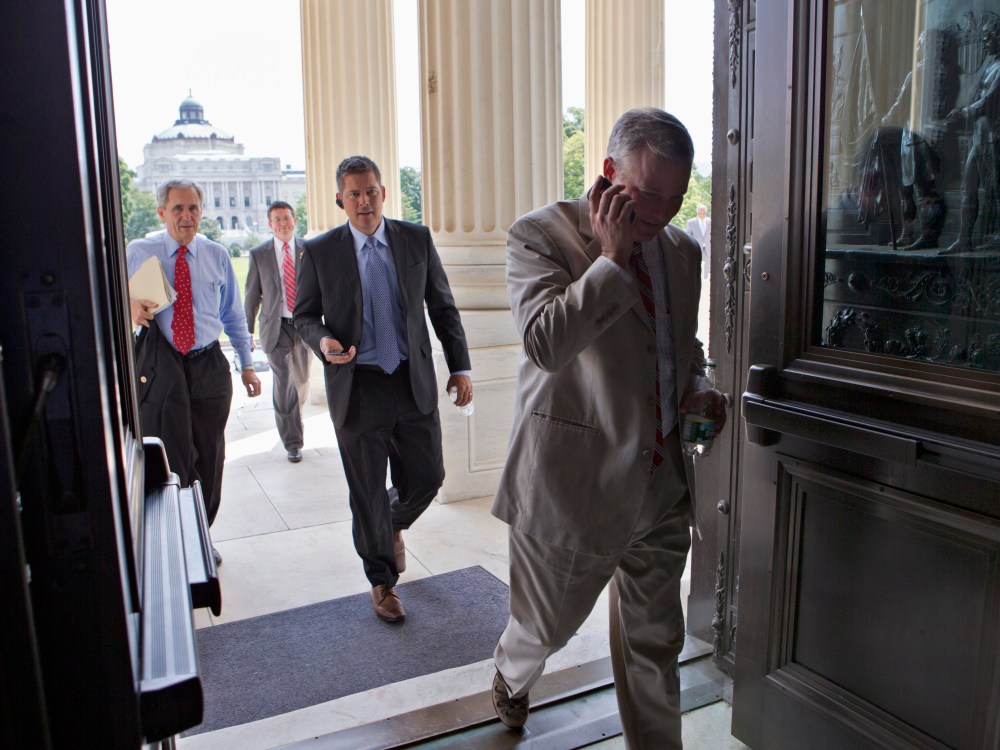
For a group of men and women notorious for gridlock and inaction, Congress has a lot on its plate when it returns to session Sept. 9 after a five-week recess. Even before President Obama began aggressively lobbying for congressional approval to launch military strikes in Syria, the list of urgent legislative problems was long and daunting, which means some things have dropped off the radar.
What’s first:
SYRIA: The Senate Foreign Relations Committee has already passed a resolution authorizing the use of military force to punish Syrian President Bashar al-Assad for using chemical weapons on his own people, and the full Senate is expected to vote on it this week. At this point, the president’s chances of success in the House, which will take up the issue this week, are far more murky. At a press conference at the G-20 summit in St. Petersburg, Russia, on Friday, Obama refused to answer questions about whether he would launch strikes if he did not get approval from both houses of Congress, which is a very real possibility. Leaders from both parties will have to work hard to convince antiwar and anti-Obama lawmakers to approve his plan.
DEBT CEILING/GOVERNMENT SHUTDOWN: A new fiscal year begins on Oct. 1, the debt ceiling must be raised, and a temporary spending bill must be passed in order to avoid a government shutdown. The 2011 debt ceiling fight led to the sequestration cuts that have devastated social programs and government agencies, and this round of budget negotiations are unlikely to reverse the austerity trend.
SNAP BENEFITS: Of all the programs threatened by austerity, Supplemental Nutritional Assistance Program benefits, otherwise known as food stamps, face the most immediate threat when Congress returns. During this summer’s debate over this year’s farm bill, House Republicans had proposed slashing $20 billion over 10 years, cuts that would drop millions from the program. Just before the recess, lawmakers announced plans to introduce a bill in September that would double those cuts. Democrats have condemned the move, but within the context of the larger budget fight, some cuts appear inevitable.
VOTING RIGHTS ACT: Members of Congress such as Wisconsin Republican Jim Sensenbrenner vowed to restore voting protections after the Supreme Court struck down key provisions of the Voting Rights Act. Sensenbrenner set an end of year deadline for legislation so that a revised act would be in place for the 2014 elections, although he could face opposition from Republicans looking to shore up electoral gains at the state level.
MILITARY SEXUAL ASSAULT: In addition to the resolution to authorize military force in Syria, Congress must also debate and pass this year’s defense authorization bill, which this will include major changes to the way the Pentagon deals with sexual assault in its ranks.
GOVERNMENT SURVEILLANCE: Anxiety over government surveillance is a high in the wake of the continuing revelations from documents leaked by former National Security Agency contractor Edward Snowden. The Senate held hearings in July on the NSA programs, but information continues to surface about the scope of U.S. activities that has led some members of Congress to propose changes. Sen. Ron Wyden, D-Ore., and Rep. Justin Amash, R-Mich., have both led efforts to rein in the NSA and could continue that work this fall.
What’s in danger of being forgotten? IMMIGRATION: When Congress left for break, it was unclear whether the comprehensive immigration reform bill crafted by a Senate gang would survive. The debate over how to reform the immigration system occupied much of the spring, but now, after a summer of revelations about domestic spying by the National Security Agency, increasing violence in Syria and Egypt, and a deferred health insurance mandate under Obamacare, immigration reform is in danger of suffering the same fate as this year’s attempt to pass new gun control regulations. The compromise created by bipartisan gang of senators left legislators in both parties dissatisfied, but failure to pass an immigration bill would be a major setback for the administration. GUN CONTROL: After the the Senate rejected legislation that would have expanded background checks on gun purchases this spring, more action to strengthen gun regulations is unlikely. And as the one-year anniversary of the Newtown, Conn., school massacre approaches, political will to revive efforts is virtually nonexistent. CLOSING GUANTANAMO BAY: When Congress debates this year’s defense bill, it will have the chance to ease or remove restrictions on transferring prisoners from Guantanamo Bay to federal supermax prisons and to other countries. Obama has taken advantage of the power he has to transfer detainees through a waiver process, but so far only two detainees have been released since he recommitted to closing the prison in May. A recent security scare in Yemen and the conflict in Syria mean any movement to close the prison and change course will be seen as being soft on terrorism. Congress has a total of nine legislative days in September.
Meredith Clark
Meredith Clark is a freelance writer and editor. She was previously a senior news producer for "Patriot Act with Hasan Minhaj," a reporter with MSNBC.com, the digital politics and culture editor at Glamour and a senior news and politics editor at Refinery29. She has written for Vulture, Rolling Stone, Self, Marie Claire, Cosmopolitan, The Daily Beast and Bustle. Recommended


