








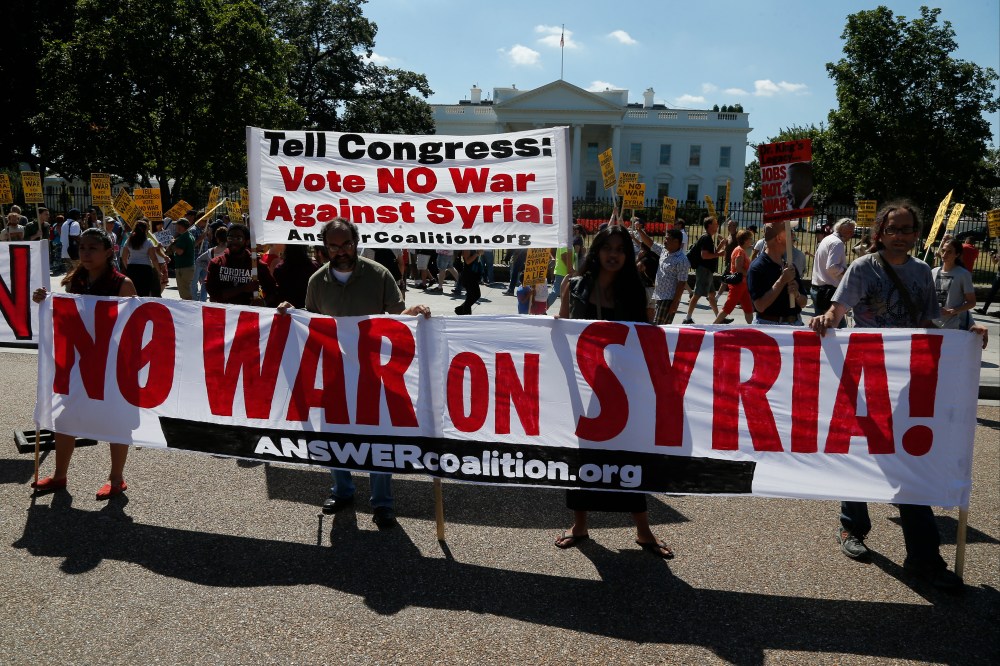
As the situation in Syria becomes more complex on the ground, the decision of whether to intervene has followed suit. By bringing the issue to Congress, President Obama has also invited the American people into the conversation. This is hardly the first time that public opinion has mattered in the decision to engage in a military conflict.
President Franklin Roosevelt campaigned on the promise that he would not send American troops to Europe and the public responded favorably at the ballot box. Pearl Harbor forced FDR to enter World War II which ultimately led to an economic boom at home, annihilated Adolf Hitler, and brought an end to history’s largest recorded genocide. A war that Americans did not want to be involved in wound up being a vital historical moment. Quite the opposite can be said of our most recent war in Iraq, which prior to the invasion, enjoyed popular support. The history lessons when it comes to public opinion and military action vary, but there is an essential difference between governing based on popular sentiment and how governing is meant to work in a Democratic republic.
On Sunday’s Melissa Harris-Perry our host and panel will discuss the domestic political complexities facing the Obama administration as the President comes closer to making a decision on Syria.
In other political news, race is becoming a major factor in mayoral races across the country from Detroit, to Boston, to New York City. As always, when there is breaking race news, #nerdland is here to cover it. Join us on Sunday as host Melissa Harris-Perry and her panel discuss the role that race is playing in these local elections and what on earth we are to make of Mayor Michael Bloomberg’s comments in New York magazine.
New York’s fashion week kicked off last week at Lincoln Center with designers showcasing their looks for the Spring 2014 season. Fashion week is an exciting and glamorous event packed with runway shows that rival Broadway and plenty of celebrity sightings. But this year’s fashion week is attracting a critical eye as the lack of diverse models becomes more and more apparent. According to Jezebel, during the Fall 2013 shows held this past February, 82.7% of the models were white, an increase from 79.4% the season prior. The lack of non-white models in both advertising and on the runway has prompted advocates like model Bethann Hardison to demand a change. MHP will be joined by a panel of fashion experts including: Lastly, we’ll have a very special treat. A guest we’re not going to tell you about now. But here are some hints: she’s sold more than 60 million books, counts legends like Meryl Streep among her many famous collaborators–and she has a special passion for cows. This is going to be an MHP interview not to be missed. (And that is just one of the surprises we have planned for Sunday.) Be sure to read what we’ve linked above, and watch Melissa Harris-Perry Sunday at 10 a.m. EST on MSNBC! Also, don’t forget to join us on Facebook and Twitter with the hashtag #nerdland.
Rachel Zuckerman Recommended


