








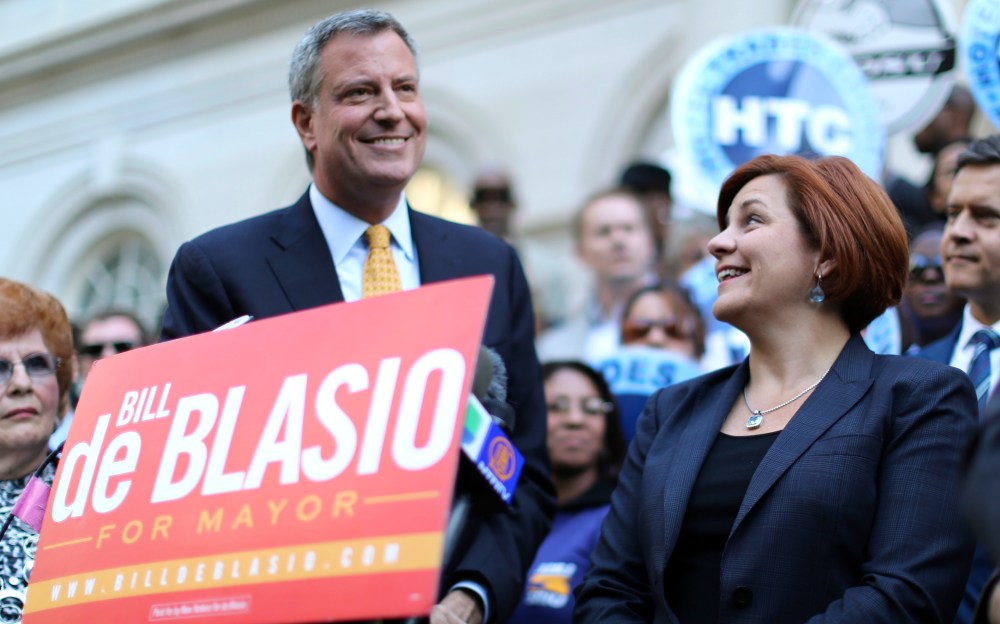
“Don’t cut the ‘fro, Dante! Don’t cut the ‘fro!” A Bill de Blasio supporter yelled this repeatedly at the New York City mayoral candidate’s son Dante outside (and later, inside) an election-night victory rally last Tuesday in Brooklyn.
Chopping off the most prominent hairdo in the five boroughs would be political malpractice. It would jeopardize the votes of those who fetishize the 15-year-old’s hair, but also take the focus even further away from why Dante de Blasio’s dad is likely to become New York City’s first Democratic mayor in 20 years.
He didn’t get what appears to be slightly more than 40% of the city’s small primary vote turnout purely because Dante has a giant Afro, or because he opposes “stop-and-frisk” and highlighted his son as a likely target. Those are micros in the macro, brush strokes in the larger progressive political painting that de Blasio has put on display for all New Yorkers.
Just ask the man who put Dante’s ‘fro on display in that ad.
“It’s easy to look at ‘stop-and-frisk,’ and say it’s about policing policies and how do we change them, but it’s really about respect,” de Blasio ad man John Del Cecato told me at the victory rally last week. “And when it comes to protecting hospitals and making sure they’re not turned into condos for the 1 percent, it’s really about dignity.”
De Blasio, the city’s public advocate, has been a skillful populist in the race ever since July, when he had to literally get arrested to get noticed beneath the shadow of then-frontrunner Christine Quinn. Sure, a combination of Anthony Weiner’s flameout and Quinn and fellow contender Bill Thompson’s failure to connect on any real human level certainly helped the 6’5″ de Blasio stand out in new ways. But when voters heard a father of children of color in New York City’s public school system speak about taxing New Yorkers making more than $500,000 per year to pay for after-school education programs and universal pre-K, and ruling out “stop-and-frisk” champion Ray Kelly’s return as police commissioner, they heard a candidate who had real cards on the table — and wasn’t afraid to speak in the language of progressivism.
Newly victorious, de Blasio’s political aim remained hard left, spotlighting NYC’s spiking income inequality with his “tale of two cities” theme. But my eyebrows raised when de Blasio not only positioned himself as the “unapologetically progressive alternative” (presumably to Mayor Michael Bloomberg’s 12 years in office) and just as notably, called the conservative approach to New York City governance a “risk.” To a woman and man, the de Blasio staffers I spoke with after that speech said the candidate doesn’t plan to make the pivot to the center many people expect candidates to make in a general-election campaign. That makes sense, because de Blasio has passed the test of running and winning while speaking “progressive.” And though it’s early, it’s clear New Yorkers dig what he’s selling… But as Occupy Wall Street marked its second birthday Tuesday, it was a reminder that de Blasio’s only real challenge may be convincing the people with whom his message most resonates that he’s more than talk. Saying you’re an “unapologetic progressive” only works if you never have to later apologize to progressives. Read the rest of this column now at theGrio.
Jamil Smith Recommended


