








Tax Day fell this year on April 15, as it typically does. The consequences of tax preparation can be especially surprising, however, for low-income filers who use the wrong people.
In an April 7 report, The New York Times detailed what happened to Brittany Dixon, a supermarket cashier and college student in Alabama:
Ms. Dixon, a supermarket cashier and college student, took her tax documents — a W-2 form and some education expenses — to the first place she saw, in a storefront near the interstate. The preparation took about a half-hour, and Ms. Dixon was told the amount of her refund — and that she would be charged nearly $400, about a quarter of the total, in fees.
She told the preparer not to file, she said, and found a service willing to do her taxes at no cost. But by then, the first preparer had already filed and taken its cut. “That was my whole car note,” Ms. Dixon said.
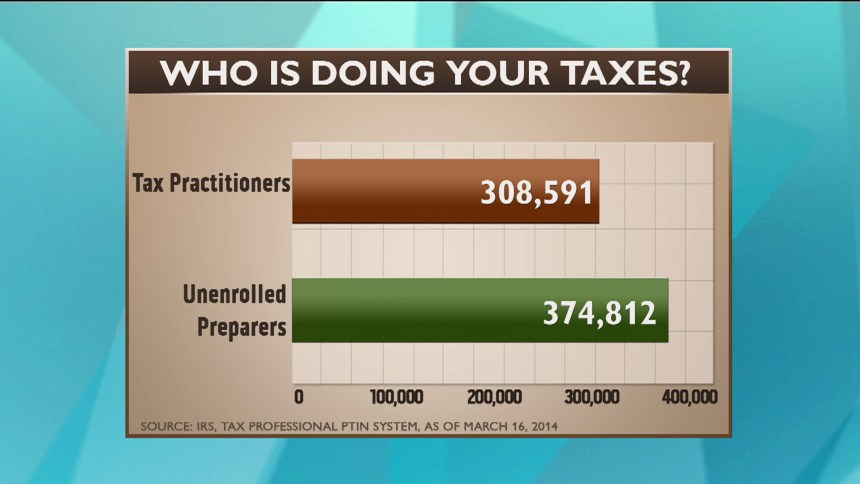
Per a report released by the United States Government Accountability Office on April 8, fewer than half of all preparers for this tax season were not subject to any kind of licensing or training regulations. All they have to do to get into a business that deals with more than $300 billion in anticipated refunds is to register for an identification number. As host Melissa Harris-Perry noted during her Saturday show, this has made tax preparation ripe for predatory practices that target low income communities, especially individuals who qualify for the earned income tax credit.
Harris-Perry spoke with Stephen Black, director of the Center for Ethics and Social Responsibility at the University of Alabama. Black is also the founder and president of Impact Alabama, a student service initiative that trains students to provide free tax preparation services for low-income families. She asked him why the issue begins with earned income tax credit filers, the majority of whom use tax preparers.
“It’s a huge amount of money that pours into low income communities in about an eight-week period in the last part of January through March all over the country,” Black said. “The challenge is between 65% and 70% of these families feel as though they need professional help. They’re intimidated by the IRS, they don’t want to mess up, they don’t want to get it wrong and they don’t have access to CPAs, to accountants the way upper-income families do because CPAs are not in the business of doing very simple returns where you don’t even itemize the return.” He added that majority of tax preparation around the country serves working-class Americans who are “working paycheck to paycheck.” But Harris-Perry estimated that most of that preparation is done at a a $600 to $800 per hour level for the amount of time spent actually working on a client’s return. Black warned that big chains like H&R Block, though they charge high rates, aren’t the real injustice. “The other mom-and-pop operations and the chains that have kind of sprung from the H&R Block model, who specifically prey on low income communities, and a lot of them just African-American communities, they open up in strip malls next to payday lenders and title pawn shops–and literally, they’re not even there by the end of April,” he said.
Jamil Smith Recommended


